
Will Your Robot Car Keep You Safe?
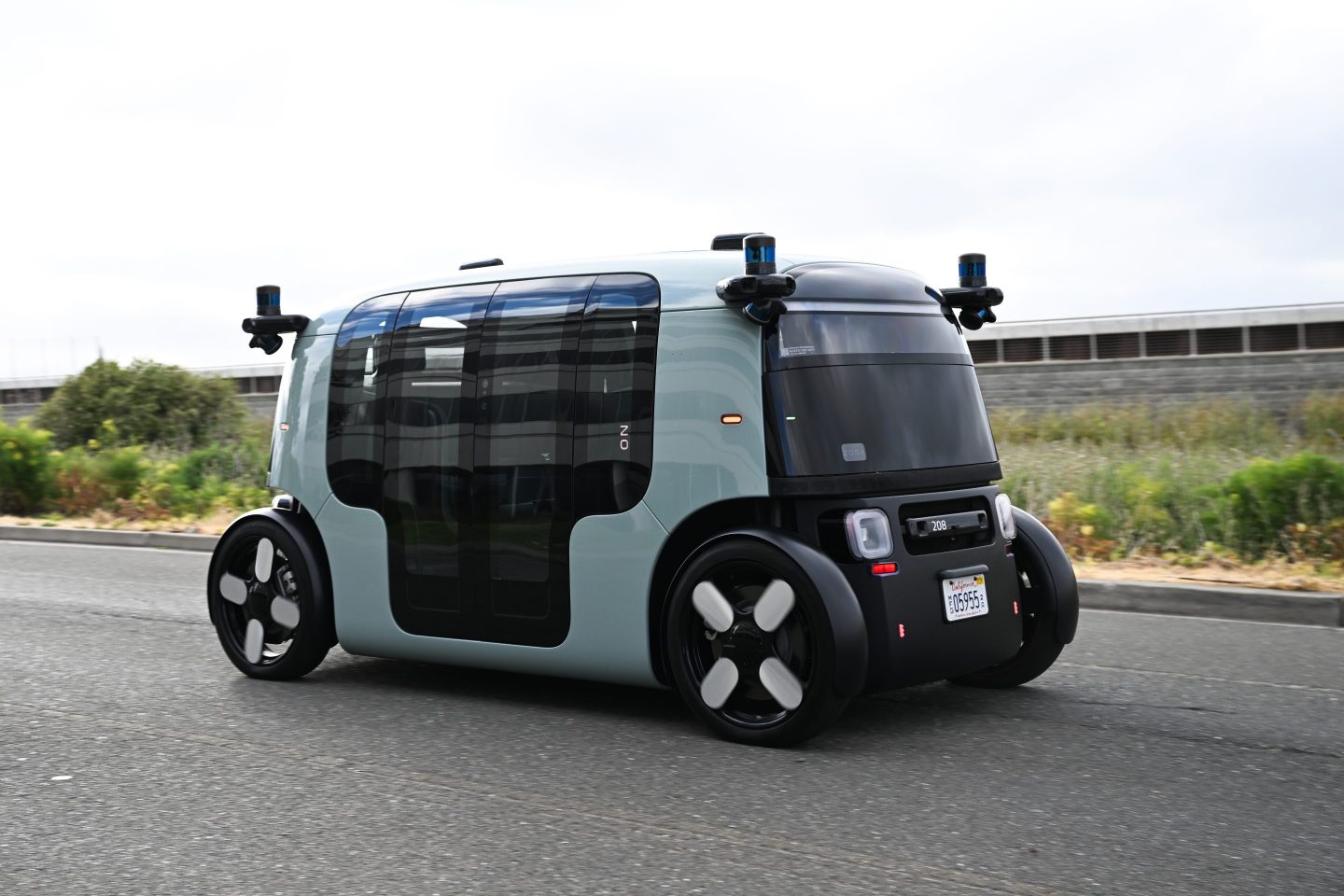
Autonomous cars use cameras, radar, and AI to drive without human input. Proponents say they could reduce 94% of crashes caused by human error. However, safety concerns remain: software bugs, hacking, bad weather, and ethical dilemmas. Current systems require human supervision. Full autonomy is coming, but trust takes time.
📚 Vocabulary
Words from this article that appear in our vocabulary books.
| Word | Definition |
|---|---|
| Accident | something bad that happens that is not expected or intended and that often damages something or injures someone |
| Adverse | displeasing; objectionable or bad # unfavorable |
| Aim | a thing you want to be able to do in the future (SYN goal) |
| Asleep | sleeping |
| Autonomous | by itself; with no association # independent |
| Average | normal or typical |
| Avoid | keep away from; keep out of the way |
| Can | used with see, smell or taste in the continuous tense |
| Choice | an option you have chosen to |
| Conditions | all the particular things that influence someone’s living or working environment |
| Constant | stable, fixed, firm |
| Construction | the way words are used together in sentence |
| Current | present |
| Data | facts; information |
| Drive | incentive |
| Earn | acquire, gain |
| Enough | as good, well, old, long, etc. as is necessary |
| Entirely | wholly,completely and in every possible way |
| Erode | to wear away; disappear slowly # deteriorate |
| Erratic | irregular: unpredictable, inconsistent |
| Eventually | finally: later: ultimately: in the end |
| Evidence | that which makes clear the truth or falsehood of something |
| Fall | decrease; go lower (SYN drop) |
| However | yet, but |
| Human | connected with people |
| Ideal | perfect; the best possible |
| Include | to have something as a part (SYN contain) |
| Integration | the process of becoming a full member of a group or society |
| Intermediate | in-between |
| Involve | include |
| Keep | continue or stay ina particular place or condition |
| Key | significant: critical, of paramount or crucial importance |
| Lane | a part of a wide road marked by painted white lines |
| Largely | mostly or mainly |
| Legal | allowed by law |
| Like | used to introduce an example (SYN such as) |
| Might | used to express the possibility that something will happen or be done, or that something is true although not very likely |
| Monitor | observe, check the progress or quality of (something) over a period of time |
| Moreover | additionally: in addition, furthermore |
| National | connected with all of a country |
| Operate | perform a medical treatment which involves cutting |
| Paradigm | — |
| Partial | not complete; not total |
| Pedestrian | person who goes on foot; walker |
| Per | for each |
| Prioritize | put tasks, problems, etc. in order of importance and do the most important first |
| Public | people |
| Rage | violent anger; something that arouses intense but brief |
| Ready | receptive |
| Remains | parts of objects and buildings that have been discovered recently |
| Require | to need sth or make sth neccessary |
| Responsible | able to act sensibly and intelligently |
| Revolutionize | change dramatically |
| Risk | danger |
| Safe | a person you can rely on |
| Say | the right to take part in deciding sth (give sb a say/have a say in sth) |
| Serious | important |
| Severe | harsh |
| Shift | change: move |
| Software | the programs used to operate a computer. *install* or *run* a piece of software |
| Stationary | having a fixed situation or place; standing still; not moving; not changing in size, number or activity |
| Take | require |
| Test | a medical examination of part of your body |
| Text | the written part of the book, newspaper, etc |
| Theory | explanation based on thought, observation, or reasoning |
| Trust | to believe that someone is good and honest and will not harm you, or that something is safe and reliable |
| Unpredictable | is impossible to say how it will change in the future |
| Virtual | (in computing) created by computers or appearing on computers or the internet. a virtual community/ reality/ office |
| Weapon | an object such as a knife, gun, or bomb that is used for fighting |
| Wheel | a circular object connected at the centre to a bar, used for making vehicles or parts of machines move |
| While | although |
| Work | get or have the result you want |
| Yet | however |
Comments (0)
Comments are published after admin approval.
No approved comments yet. Be the first to comment.