
From Desert Sand to Solar Power
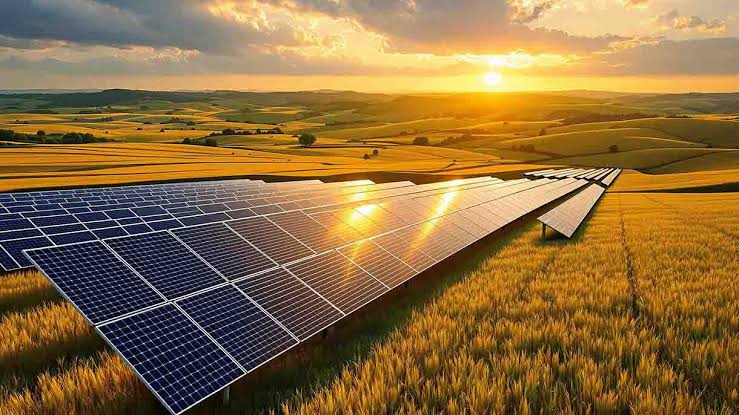
Solar panels start as ordinary sand. Through extreme heat, chemical baths, and precision assembly, sand is transformed into high-tech devices that generate electricity from sunlight. The process involves purifying silicon, growing crystals, slicing wafers thinner than a human hair, and assembling them into protective panels. Each step requires incredible precision, and the result is a silent, durable energy source that can last for decades.
📚 Vocabulary
Words from this article that appear in our vocabulary books.
| Word | Definition |
|---|---|
| About | a bit more or a bit less |
| Beach | an area of sand or small stones near the sea or another area of water such as a lake |
| Bright | having a lot of light |
| Can | used with see, smell or taste in the continuous tense |
| Coating | covering, cover, skim, skin;a thin layer of something that covers a surface |
| Conditions | all the particular things that influence someone’s living or working environment |
| Cover | the outside part of a book, magazine, etc |
| Create | invent, manufacture |
| Credit | iif you are in credit, there is money in your account |
| Cut | an injury made when the skin is cut with something sharp |
| Damage | harm or injury caused when sth is broken |
| Deposit | accumulate, lay down, put/set down |
| Detect | find out; discover |
| Device | an object or piece of equipment designed to do a particular job |
| Durable | lasting, enduring |
| Electrical | of or about electricity |
| Energy | the ability to be very active without getting tired |
| Extract | pull out or draw out, usually with some effort |
| Extreme | much hotter, colder, or more violent than usual |
| Flow | movement, motion, current |
| Frame | a flat object with a clear front surface used to put a photograph in |
| Gas | a substance like air, e.g. oxygen and hydrogen |
| Generate | produce |
| Grow | increase SYN go up, rise |
| Growing | increasing in size, amount, or degree |
| Hair | the mass of thin thread-like structures on the head of a person |
| Human | connected with people |
| Incredible | very unusual or much better than usual SYN extraordinary |
| Industrial | related to factories and machinery |
| Intermediate | in-between |
| Junction | connection-juncture |
| Large | extensive, big |
| Liquid | in a non-solid form, like water |
| Loss | have a negative balance after paying costs |
| Manufacturing | the business of producing goods in factories |
| Material | cloth for making clothes, covering furniture, etc (SYN fabric) |
| Melt | process of ice changing from a solid to a liquid due to high temperature |
| Method | a way of doing sth |
| Negative | saying no; minus; showing the light and shadows reversed |
| Ordinary | usual and typical |
| Per | for each |
| Precision | accuracy |
| Process | purify, cater, perform a series of mechanical or chemical operations on (something) in order to change or preserve it |
| Quality | goodness of sth |
| Ready | receptive |
| Reduction | a cut in the usual price of something (SYN discount) |
| Reflection | a picture or element thrown back # image |
| Roughly | almost: approximately |
| Sand | very small grains of rock |
| Screen | filter v |
| Silent | without any sound |
| Sophisticated | complex: refined: elaborated |
| Source | place from which something comes or is obtained |
| Stage | a period that forms part of an activity |
| Standard | normal; average |
| Sun | closest star to the Earth |
| Sure | certain about sth |
| Surface | the outer or top part or layer of something |
| Test | a medical examination of part of your body |
| Thick | (inf) stupid |
| Through | by |
| Tiny | very small |
| Trap | to catch and hold onto, usually by trickery; deceive # retain |
| Tube | a long cylinder made from plastic, metal, rubber, or glass, especially used for moving or containing liquids or gases |
| Undergo | experience |
| Vacuum | clean a carpet or floor using a vacuum cleaner (SYN hoover) |
| Vapor | moisture in the air that can be seen; fog; mist |
| Verify | prove to be true; confirm |
| Via | by means of: by the way of |
| Volcano | a mountain with a large |
Comments (0)
Comments are published after admin approval.
No approved comments yet. Be the first to comment.