
When Everyone Gets a Doctor
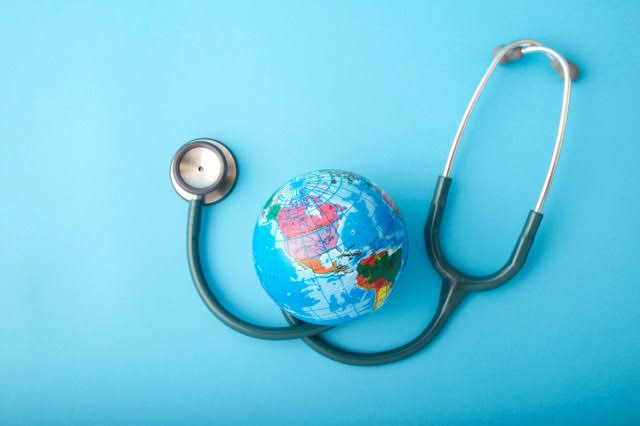
Universal healthcare means all citizens receive medical care regardless of income. Countries like Canada, the UK, and Japan have different systems, but they share key benefits: lower overall costs, better preventive care, and no medical bankruptcies. Critics worry about waiting times and taxes. Evidence shows that universal systems achieve better health outcomes for less money.
📚 Vocabulary
Words from this article that appear in our vocabulary books.
| Word | Definition |
|---|---|
| About | a bit more or a bit less |
| Access | 1)reach; how easy or difficult it is for people to enter a public building, to reach a place, or talk to someone 2) the right to enter a place, use something, see someone etc |
| Achieve | to get something done which was difficult |
| Advantage | a condition giving a greater chance of success |
| Afford | provide,to provide something or allow something to happen |
| Analysis | a careful study of sth in order to exlpain it |
| Annually | yearly-once a year- ever year |
| Approximately | roughly-more or less than a number or amount |
| Asthma | a medical condition which makes it diffirult to breathe |
| Average | normal or typical |
| Benefit | a thing that has a good or helpful result |
| Benefits | advantages a company offers in addition to the salary, perks INF |
| Blood | the red liquid that is sent around the body by the heart |
| Bulk | largest area: major part: great quantity: large part: large portion: majority |
| Burden | what is carried; a load |
| Can | used with see, smell or taste in the continuous tense |
| Cancer | a very serious illness in which tumours often grow in the body |
| Chronic | confirmed: inveterate: habitual: persistent, |
| Cite | refer to, quote |
| Compelling | 1) convincing-forcing 2) interesting |
| Completely | totally |
| Conditions | all the particular things that influence someone’s living or working environment |
| Consistently | regularly, uniformly |
| Core | center, hub, nucleus |
| Correlate | match |
| Costs | expenses |
| Coverage | the reporting of news in the press |
| Current | present |
| Debate | a discussion in which reasons for and against something are brought out |
| Detect | find out; discover |
| Diabetes | a disease in which your body can't control the level of sugar in the blood |
| Documented | proven with written evidence # proven |
| Eliminate | get rid of; remove; omit |
| Emergency | crisis, urgent situation |
| Employer | is sb who provides job |
| Evidence | that which makes clear the truth or falsehood of something |
| Expensive | costly; highly prices |
| Fair | significan |
| Fees | money you pay for the professional advice or service of a doctor, lawyer, etc |
| Financial | related to money management |
| Former | having a particular position in the past |
| Government | the group of people in control of a country |
| Hardship | something that is hard to bear; difficulty |
| Healthcare | the service of providing medical care |
| Hospital | a place where people who are ill or injured are treated and taken care of by doctors and nurses |
| However | yet, but |
| Ignore | pay no attention to; disregard |
| Income | the money you earn from work, plus any other money you receive |
| Intermediate | in-between |
| Key | significant: critical, of paramount or crucial importance |
| Leaves | PLURAL of leaf |
| Like | used to introduce an example (SYN such as) |
| Management | the control of a business or organization |
| May | used to express possibility |
| Mean | average, medium, mediocre |
| Means | ways # methods |
| Minor | having little importance |
| Moreover | additionally: in addition, furthermore |
| National | connected with all of a country |
| Nearly | almost, closely, approximately |
| Necessary | required |
| Negotiate | talk to sb in order to decide or gree on sth |
| Overall | in total |
| Per | for each |
| Population | people of a city or country |
| Pregnant | expecting a baby |
| Prevention | the act of stopping sth from happening |
| Primary | dominant |
| Protection | to keep someone or something safe from injury, damage, or loss |
| Provide | to supply; to state as a condition; to prepare for or against some situation |
| Public | people |
| Reform | make better; improve by removing faults |
| Regardless | without considering |
| Reveal | make known |
| Risk | danger |
| See | know or notice sth using your eyes |
| Seek | attempt |
| Service | help to other people |
| Share | a part of sth that has been divided |
| Stem | arise |
| Through | by |
| Treatment | the things a doctor or dentist does to make you better |
| Ultimately | finally, eventually |
| Urgent | demanding immediate action or attention; important |
| Values | beliefs about what is right and important in life |
| Vary | be different from each other |
| Wealthy | rich (SYN well off) |
| While | although |
| Work | get or have the result you want |
| Yet | however |
Comments (0)
Comments are published after admin approval.
No approved comments yet. Be the first to comment.