
The Trip That Invented Tourism

The Trip That Invented Tourism banner
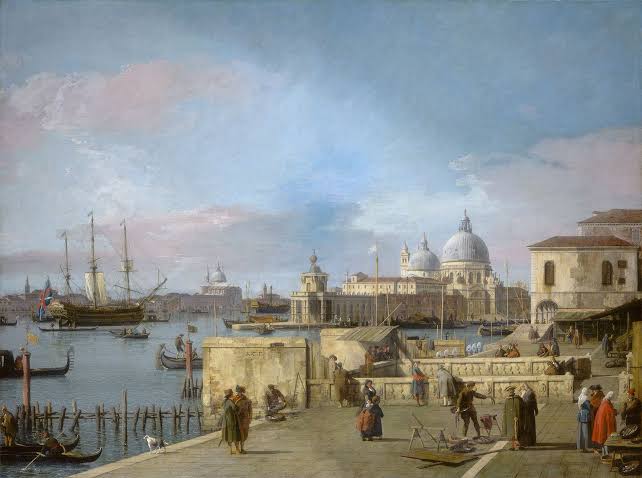
Before airplanes, before Instagram, young wealthy Europeans went on a journey called the Grand Tour. It lasted months or even years. They traveled through France, Italy, Germany, and Switzerland. They studied art, learned languages, and collected ancient statues. The Grand Tour was not just vacation. It was education. It turned rich boys into gentlemen. It also invented modern tourism. Without the Grand Tour, we might not have souvenirs, guidebooks, or the idea of traveling "just for fun."

📖 Level 1 - Beginner:

The Grand Tour was a long trip. Rich young men from England took it. They traveled across Europe. They went to France and Italy. They looked at famous paintings and buildings. They learned French and Italian. They bought souvenirs. The trip lasted many months. Sometimes it lasted years. The Grand Tour started in the 1600s. It ended around 1840. Then trains made travel faster. The Grand Tour invented tourism. Before this, people did not travel for fun. They traveled for work or religion. The Grand Tour changed that.

📖 Level 2 – Intermediate:

Before the age of mass tourism, there was the Grand Tour. Between approximately 1660 and 1840, wealthy young men (and occasionally women) from England, Germany, and Scandinavia embarked on a prolonged journey across continental Europe. The typical route began in Dover, crossed the English Channel to Calais or Le Havre, then traveled through Paris, across the Alps into Switzerland (Geneva, Bern), and into Italy. The Italian leg was the highlight: Turin, Florence, Rome, Naples, and sometimes Venice. Travelers stayed for weeks or months in each city. They studied ancient Roman ruins, Renaissance paintings, and Baroque architecture. They hired tutors to teach them French and Italian. They attended operas, fencing lessons, and dance classes. They also collected souvenirs: paintings, sculptures, books, and archaeological fragments — the ancestors of modern refrigerator magnets and postcards. The Grand Tour was expensive. A typical tour cost the equivalent of $200,000 to $500,000 in today's money. Only the aristocracy could afford it. The purpose was educational: to produce well-rounded gentlemen who understood classical culture and European politics. But the Grand Tour also had a dark side. Young men often gambled heavily, contracted venereal diseases, or returned with illegitimate children. By the 1840s, the Grand Tour declined. The rise of railroads made travel cheaper and faster. The middle class began vacationing. Tourism was born. The Grand Tour left a lasting legacy: guidebooks (starting with Thomas Cook in 1841), souvenir collecting, and the very idea that travel could be both enjoyable and self-improving. Every modern tourist follows a path first walked by an 18th-century lord in a powdered wig.

📖 Level 3 – Advanced:

The Grand Tour represents the origin point of modern secular tourism — the transformation of travel from necessity (trade, pilgrimage, military campaign) into leisure, education, and identity formation. Spanning roughly 1660 to 1840, this institution was primarily an English aristocratic practice, though German, Dutch, and Scandinavian elites adopted variations. The canonical route: cross the Channel from Dover to Calais or Le Havre; proceed to Paris (for French language, dance, and fencing); traverse the Alps (the Sublime, terrifying beauty of which became an aesthetic set piece); then into Italy, the heart of the Tour. The Italian leg followed a recognized circuit: Turin (courtly manners), Florence (Renaissance art, Medici collections), Rome (classical antiquity, Catholic spectacle, modern painting), Naples (Pompeii, Herculaneum, Vesuvius), and Venice (carnival, music, decayed opulence). Duration averaged one to three years, though some tours extended to five. Cost was astronomical: £4,000 to £8,000 (approximately $500,000 to $1,000,000 in 2025 dollars). A typical Grand Tourist traveled with a tutor (often a clergyman or academic), a courier (logistics manager), and several servants. Activities included: drawing lessons for architectural sketching; antiquities collecting (purchasing marble fragments, cameos, or even entire altars); language immersion; opera attendance; and social networking with continental aristocracy. The educational ideal was the cavalieri or uomo universale — a gentleman conversant in classical texts, modern languages, courtly deportment, and aesthetic judgment. The Grand Tour was also a known site of excess: venereal disease, gambling debts, and illegitimate children were sufficiently common that "Grand Tour bastard" entered the lexicon. The decline began with the Napoleonic Wars (1792–1815), which closed the Continent to English travelers. By the 1840s, railways made mass travel possible, and Thomas Cook organized the first package tours. The aristocracy's exclusive, years-long educational journey became the middle class's two-week holiday. Yet the Grand Tour's DNA persists: the gap year, study abroad, artistic pilgrimage, and the conviction that seeing the world improves the self. Without the Grand Tour, there would be no "Why We Travel" TED Talks, no virtual wanderlust, no Instagram feeds of Tuscan sunsets. The Grand Tour invented the tourist. And the tourist has never looked back.

📚 Vocabulary

Words from this article that appear in our vocabulary books.

Word Definition
Abroad outside one's country; going around; far and wide
Academic relating to schools, colleges, and universities, or connected with studying and thinking, not with practical skills
Afford provide,to provide something or allow something to happen
Age a particular time in history. e.g. ice age
Ancient antique: old- belonging to a long time in old history
Approximately roughly-more or less than a number or amount
Architecture structure- the style and design of a building or bulidings
Campaign a plan to do a number of things with a specific aim
Carnival festival with people danicng and playing music in the streets
Century 100 years
Channel direct, 1 to control and direct something such as money or energy towards a particular purpose
Circuit an area of land, often in a circle, where a race takes place SYN track
City a large town
Conviction strong belief
Culture activities involving art, literature, music, etc
Dark without much light
Decline become weaker or smaller
Disease illness in people, animals, or plants
Drawing picture made with pencil or pen
Entire completely (SYN whole)
Equivalent sth that has the same value, amount, meaning, or importance as sth else
Even at the same level
Expensive costly; highly prices
Fencing a sport in which two competitors fight using 'Rapier-style' swords
Gap opening, slot, hole
Heart an organ which moves blood in the body
Highlight to emphasize # emphasize
Ideal perfect; the best possible
Intermediate in-between
Lasting forever; without end # enduring
Leisure free time
Manager the person in control of a football team
Manners (PL) behavior that is considered polite in a particular society or culture
Middle centre
Might used to ​express the ​possibility that something will ​happen or be done, or that something is ​true ​although not very ​likely
Military connected with soldiers, or the army, navy, and air force
Occasionally once in a while
Origin the cause of sth, or the place where it starts to exist
Painting process of creation of pictures with brush and paints
Possible able to be done, or happen; able to be true; able to be done or choose properly
Primarily mainly
Proceed go on after having stopped; move forward
Produce being responsible for business side of a film
Prolonged lengthy
Rise emerge
Roughly almost: approximately
Route path n
Ruins parts of a building that remain after it has been destroyed
Several more than two, but not many
Side an edge or border of sth
Site position or place (of anything)
Souvenir
Sufficiently enough; in a satisfying manner # adequately
Through by
Transformation shuffle: change: rotation
Traverse cross
Trip a journey to a place and back again
Tutor a teacher who teaches a child outside of school, especially in order to give the child extra help with a subject they find difficult
Typical usual; of a kind
Virtual (in computing) created by computers or appearing on computers or the internet. a virtual community/ reality/ office
Wealthy rich (SYN well off)
Work get or have the result you want
Yet however

Comments (0)

Comments are published after admin approval.

No approved comments yet. Be the first to comment.

Stay updated

Get notified when we publish a new article.