
The Truth About Sugar
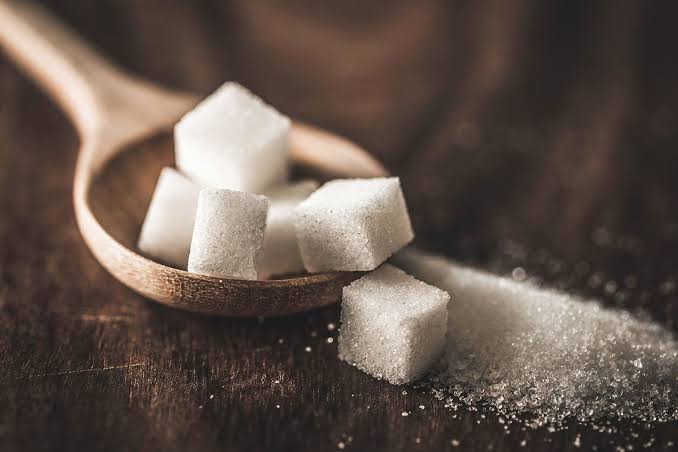
Sugar tastes delicious. It makes cookies sweet, soda fizzy, and chocolate irresistible. But is sugar actually bad for you? The answer is complicated. Your body needs some sugar to function. But most people eat far too much. Hidden sugar is everywhere — in bread, pasta sauce, yogurt, and even salad dressing. Understanding the difference between natural sugar and added sugar could change how you shop, cook, and feel every day.
📚 Vocabulary
Words from this article that appear in our vocabulary books.
| Word | Definition |
|---|---|
| About | a bit more or a bit less |
| Actually | 1) in fact used to emphasize the real or exact truth of a situation 2) (spoken) used to add new information to what you have just said, to give your opinion, or to start a new conversation |
| Added | extra- in addition to what is usual or expected |
| Adjust | modify, to change something slightly, especially to make it more correct, effective, or suitable |
| Adverse | displeasing; objectionable or bad # unfavorable |
| Amount | a quantity of sth; a sum of money |
| Assault | a violent attack |
| Average | normal or typical |
| Blood | the red liquid that is sent around the body by the heart |
| Can | used with see, smell or taste in the continuous tense |
| Change | smaller units of money given in exchange for larger units of the same amount |
| Choose | opt, select, adopt, set, specify, opposite of reject & decline |
| Chronic | confirmed: inveterate: habitual: persistent, |
| Clarify | to make more easily understood; to make clear # explain |
| Completely | totally |
| Complicated | complex -made things more difficult |
| Concern | interest, a matter of interest or importance to someone |
| Contain | include |
| Controversy | conflict: disagreement |
| Daily | something issued every day |
| Debate | a discussion in which reasons for and against something are brought out |
| Diabetes | a disease in which your body can't control the level of sugar in the blood |
| Disease | illness in people, animals, or plants |
| Dose | an amount of medicine that you take at any one time |
| Dressing | a covering that is put on a cut or an area of damaged skin to protect it |
| During | at a point of within a period of time |
| Eliminate | get rid of; remove; omit |
| Energy | the ability to be very active without getting tired |
| Environment | setting, surroundings |
| Equivalent | sth that has the same value, amount, meaning, or importance as sth else |
| Even | at the same level |
| Excessive | too much; too great; extreme |
| Expect | to think or believe something will happen, or someone will arrive |
| Feel | give a sensation of or like sth when touched |
| Function | operation: utility |
| Gain | obtain something |
| Gradual | happening slowly over a long period of time |
| Handle | a part of an object designed for holding, moving, or carrying the object easily |
| Healthy | good for health (SYN good for you) |
| Heart | an organ which moves blood in the body |
| Identify | recognize as being, or show to be, a certain person or thing; prove to be the same |
| Include | to have something as a part (SYN contain) |
| Indeed | used to emphasize an adjective |
| Industrial | related to factories and machinery |
| Innocent | you have done nothing wrong |
| Intermediate | in-between |
| Like | used to introduce an example (SYN such as) |
| Limit | the greatest amount, number, or level of something that is either possible or allowed |
| Notice | a written announcement / statement |
| Obesity | extreme fatness |
| Particularly | especially |
| Pleasure | a feeling of enjoyment |
| Poison | a substance that can make people or animals ill or kill them if they eat or drink it |
| Practical | convenient or effective # functional |
| Primary | dominant |
| Prioritize | put tasks, problems, etc. in order of importance and do the most important first |
| Quantity | amount |
| Reduction | a cut in the usual price of something (SYN discount) |
| Reputation | fame |
| Resistance | the action of trying to stop sth happening or stop sb doing sth |
| Risk | danger |
| Significant | meaningful: important |
| Solution | answer to a problem |
| Taste | have a particular flavour |
| Tooth | one of the hard white objects in the mouth that are used for biting and chewing |
| Toxic | poisonous |
| Weight | how heavy sth is (value/property) |
| Whole | entire |
| Within | inside |
Comments (0)
Comments are published after admin approval.
No approved comments yet. Be the first to comment.