
Black Gold That Runs the World
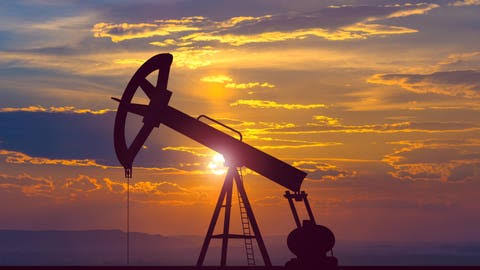
Oil is thick, black, and sticky. It does not look special. But it runs almost everything you do. The fuel in your family's car comes from oil. The plastic in your phone, the ink in your pen, the sneakers on your feet — all made from oil. Oil heats homes, powers factories, and moves ships across oceans. Without it, modern life would stop. But oil is also running out. And burning it is warming the planet. This is the story of the world's most important and dangerous liquid.
📚 Vocabulary
Words from this article that appear in our vocabulary books.
| Word | Definition |
|---|---|
| About | a bit more or a bit less |
| Agency | a business or government department that provides a particular service |
| Approximately | roughly-more or less than a number or amount |
| Astonishing | amazing,astoundingly |
| Atmosphere | the gases around the earth, planets, etc |
| Being | creature, existence |
| Budget | estimate of the amount of money that can be spent for different purposes in a given time |
| Can | used with see, smell or taste in the continuous tense |
| Capacity | amount of room or space inside; largest amount that can be held by a container |
| Central | essential, more important and having more influence than anything else |
| Century | 100 years |
| Change | smaller units of money given in exchange for larger units of the same amount |
| Climate | the normal weather conditions of a particular region |
| Complex | 1) system (n),a group of buildings, or a large building with many parts, used for a particular purpose,2) elaborate (adj) |
| Conflict | direct opposition; disagreement |
| Contain | include |
| Crude | unsophisticated |
| Current | present |
| Dark | without much light |
| Demand | need |
| Earth | our planet |
| Energy | the ability to be very active without getting tired |
| Equally | in a way that is fair and the same for everyone |
| Equivalent | sth that has the same value, amount, meaning, or importance as sth else |
| Essential | necessary; very important |
| Even | at the same level |
| Everyday | normal or usual |
| Exports | products sold abroad # foreign saled |
| Extraordinary | exceptional, phenomenal |
| Extreme | much hotter, colder, or more violent than usual |
| Fall | decrease; go lower (SYN drop) |
| Finance | money matters; to provide money for |
| Found | to establish: start up a philanthropic organization # establish |
| Gas | a substance like air, e.g. oxygen and hydrogen |
| Human | connected with people |
| Industrial | related to factories and machinery |
| Industry | the production of goods in factories |
| Intermediate | in-between |
| International | involving two or more countries |
| Like | used to introduce an example (SYN such as) |
| Liquid | in a non-solid form, like water |
| Look | turn your eyes to sth and pay attention to it; seem from what you can see |
| Manual | a book that tells you how to do or use sth such as a car or a computer |
| May | used to express possibility |
| Merely | no more than: only: simply, just, (used to emphasize how small or unimportant something or someone is) |
| Military | connected with soldiers, or the army, navy, and air force |
| Ocean | a very large area of sea |
| Per | for each |
| Primary | dominant |
| Process | purify, cater, perform a series of mechanical or chemical operations on (something) in order to change or preserve it |
| Produce | being responsible for business side of a film |
| Profound | far-reaching: deep |
| Quit | say officially that you want to leave your job (SYN resign |
| Related | when sth connected with sth |
| Remains | parts of objects and buildings that have been discovered recently |
| Residual | remaining |
| Rise | emerge |
| Roughly | almost: approximately |
| Say | the right to take part in deciding sth (give sb a say/have a say in sth) |
| Security | freedom from danger, care, or fear; feeling or condition of being safe |
| Sun | closest star to the Earth |
| Surface | the outer or top part or layer of something |
| Thick | (inf) stupid |
| Through | by |
| Tiny | very small |
| Top | the highest place or part |
| Turn | change to |
| Typical | usual; of a kind |
| Yet | however |
Comments (0)
Comments are published after admin approval.
No approved comments yet. Be the first to comment.