
How Nuclear Power Works
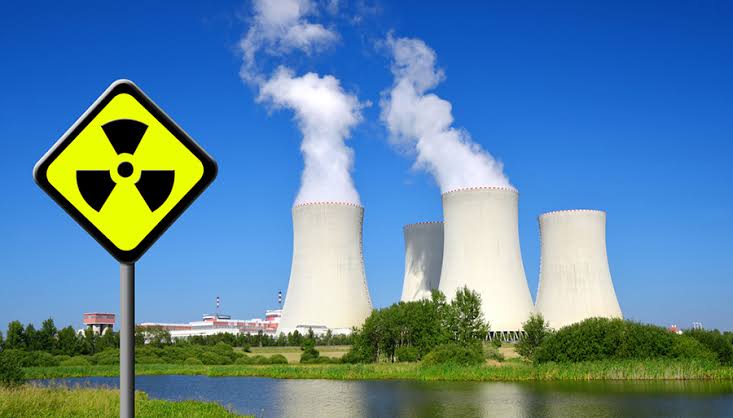
Nuclear power is one of the most powerful and most misunderstood energy sources on Earth. It does not burn anything. It does not produce smoke. Instead, it works by splitting tiny particles called atoms. This process releases an enormous amount of heat. That heat boils water. The steam spins a turbine. The turbine makes electricity. One handful of nuclear fuel can power a city for a year. But nuclear waste stays dangerous for thousands of years. This is the science of splitting the atom.
📚 Vocabulary
Words from this article that appear in our vocabulary books.
| Word | Definition |
|---|---|
| About | a bit more or a bit less |
| Absorb | take in or suck up (liquids); interest greatly |
| Accident | something bad that happens that is not expected or intended and that often damages something or injures someone |
| Additional | more than has been experienced or mentioned before. extra, further |
| Adjust | modify, to change something slightly, especially to make it more correct, effective, or suitable |
| Air | feeling |
| Amount | a quantity of sth; a sum of money |
| Approximately | roughly-more or less than a number or amount |
| Argue | angry discussion |
| Attractive | calling attention to; pleasing; creating interest; pretty # appealing |
| Burn | to be hurt, damaged, or destroyed by fire or extreme heat |
| Can | used with see, smell or taste in the continuous tense |
| Catastrophic | badly harmful, awful, terrible, dreadful, miserable, unfortunate |
| Change | smaller units of money given in exchange for larger units of the same amount |
| City | a large town |
| Clear | visible, apparent, evident, explicit, obvious, recognizable, opposite of vague & ambiguous & invisible |
| Climate | the normal weather conditions of a particular region |
| Commonly | 1)often 2)generally/normally |
| Comparable | equivalent, similar to something so that we can make a comparison |
| Consequence | 1) importance 2)result |
| Consume | eat up |
| Core | center, hub, nucleus |
| Create | invent, manufacture |
| Current | present |
| Damage | harm or injury caused when sth is broken |
| Debate | a discussion in which reasons for and against something are brought out |
| Decade | ten years |
| Deep | long way down |
| Demonstrate | take part in a public protest for or against sth |
| Dense | closely packed together; thick |
| Design | create, draw, plan |
| Due | expected to arrive or happen |
| During | at a point of within a period of time |
| Earth | our planet |
| Energy | the ability to be very active without getting tired |
| Enormous | large; huge |
| Equivalent | sth that has the same value, amount, meaning, or importance as sth else |
| Essential | necessary; very important |
| Expensive | costly; highly prices |
| Extraordinary | exceptional, phenomenal |
| Fan | sb who really likes and is enthusiastic about a person or an activity |
| Fear | a feeling that sth bad might happen |
| Fundamental | basic, essential, vital, crucial |
| Gas | a substance like air, e.g. oxygen and hydrogen |
| Generate | produce |
| Generation | all the people in a family born at about the same time |
| Half | either of the two equal or nearly equal parts that together make up a whole |
| However | yet, but |
| Human | connected with people |
| Increase | get larger in number or amount |
| Initially | originally, at first [adv] |
| Intermediate | in-between |
| Keep | continue or stay ina particular place or condition |
| Large | extensive, big |
| Length | the measurement of something from end to end or along its longest side |
| Lethal | deadly: fateful, fatal |
| Loss | have a negative balance after paying costs |
| Management | the control of a business or organization |
| May | used to express possibility |
| Melt | process of ice changing from a solid to a liquid due to high temperature |
| Operation | an occasion when a doctor cuts a body for medical reasons in order to repair, remove, or replace an unhealthy or damaged part |
| Option | choice, alternative |
| Ordinary | usual and typical |
| Per | for each |
| Permanent | 1)forever 2)lasting |
| Pollution | durty and dangerous gases, chemicals, etc. that harm the environment |
| Primarily | mainly |
| Primary | dominant |
| Process | purify, cater, perform a series of mechanical or chemical operations on (something) in order to change or preserve it |
| Produce | being responsible for business side of a film |
| Public | people |
| Rare | scarce: unusual, infrequent |
| Rate | classify, consider to be of a certain quality, standard, or rank. |
| Reaction | a reply; a change that occurs when substances are mixed # response |
| Reliable | when someone be trusted or believed |
| Remains | parts of objects and buildings that have been discovered recently |
| Safe | a person you can rely on |
| Science | a particular subject which is studied by scientific methods |
| Serious | important |
| Speed | increase the rate of v. |
| Split | divide |
| Steady | stable, constant, firm |
| Storage | a place to store things |
| Subsequent | later; following; coming after |
| Supporters | people who regulary watch teamplay SYN fan |
| Take | require |
| Through | by |
| Tiny | very small |
| Ton | a unit for measuring weight in Britain |
| Trigger | initiate: start |
| Typical | usual; of a kind |
| Unstable | not firmly fixed; easily moved or overthrown |
| While | although |
| Within | inside |
| Yet | however |
| Zero | 0 |
Comments (0)
Comments are published after admin approval.
No approved comments yet. Be the first to comment.