
The City That Fought for 300 Years
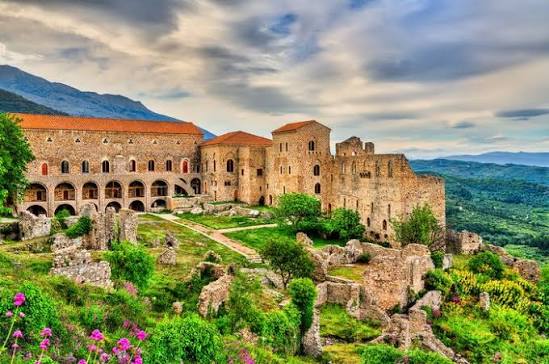
Most wars last a few years. But one ancient Greek city fought a war that lasted nearly 300 years. The city was Sparta. The enemy was Messenia. The conflict was called the Messenian Wars. Sparta enslaved an entire population and then faced constant rebellions. This long struggle shaped Sparta into the most extreme military society in history.
📚 Vocabulary
Words from this article that appear in our vocabulary books.
| Word | Definition |
|---|---|
| About | a bit more or a bit less |
| Age | a particular time in history. e.g. ice age |
| Ancient | antique: old- belonging to a long time in old history |
| Approximately | roughly-more or less than a number or amount |
| Army | a country's fighting force |
| Battle | struggle, fight, combat, fight, conflict, duel |
| Brutal | coarse and savage; like a brute; cruel |
| Century | 100 years |
| City | a large town |
| Combat | fighting between forces (armed/unarmed combat= fighting with/without guns, bombs, etc.) |
| Conflict | direct opposition; disagreement |
| Constant | stable, fixed, firm |
| Constantly | always, invariably |
| Constitution | component,constituent |
| Culture | activities involving art, literature, music, etc |
| Emphasis | — |
| Endure | last; keep on; undergo; bear; stand |
| Enemy | the people your army or country is fighting against |
| Entire | completely (SYN whole) |
| Extreme | much hotter, colder, or more violent than usual |
| Fear | a feeling that sth bad might happen |
| Fertile | bearing seeds or fruits; producing much of anything |
| Fight | when people try to hurt or kill each other |
| Immediately | with no delay (SYN straightaway) |
| Intermediate | in-between |
| Invasion | act of entering a country with an army to attack and take control of it |
| Isolated | separated, far away from other places, buildings, or people; remote |
| Land | area of earth |
| Loyalty | faithfulness to a person, goverment, idea, custom, or the like |
| Male | man or boy |
| Military | connected with soldiers, or the army, navy, and air force |
| Nearly | almost, closely, approximately |
| One | 1 |
| Origin | the cause of sth, or the place where it starts to exist |
| Permanent | 1)forever 2)lasting |
| Perpetual | constant, continual, habitual, eternal |
| Population | people of a city or country |
| Ready | receptive |
| Rebellion | revolt, riot |
| Region | is part of a country or the world |
| Rigid | not easy to bend; firm; inflexible # stiff |
| Seven | 7 |
| Shadow | an area of darknes due to sth blocking the light |
| Siege | a military operation in which an armed force surrounds a place and stops the supply of food, etc. |
| Soldier | a person who is in army and wears its uniform |
| Struggle | a period of action to achieve sth difficult SYN effort |
| Survive | live longer than; remain alive after |
| Ten | 10 |
| Three | 3 |
| Training | the activity of teaching people the skills they need for a job |
| Transformation | shuffle: change: rotation |
| War | armed fighting between two or more countries or groups |
| While | although |
Comments (0)
Comments are published after admin approval.
No approved comments yet. Be the first to comment.