
The Persian Night of Watermelon and Poetry

The Persian Night of Watermelon and Poetry banner
📖 Level 1 - Beginner:

Iran has a special winter night. It is called Yalda. Yalda is the longest night of the year. It happens in December. Families stay up very late. They eat watermelon and pomegranates. They eat nuts and sweets. They read old Persian poems. The poems are by Hafez. They believe the night is dark. But the morning will come. Light wins over darkness. Yalda has been celebrated for thousands of years. Children love this night.

📖 Level 2 – Intermediate:

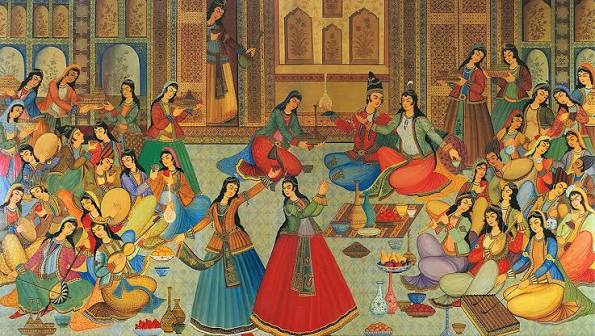
Yalda, also known as Shab-e Chelleh, is one of the oldest Persian festivals. It celebrates the winter solstice—the longest and darkest night of the year. Yalda means "birth" in Syriac. The festival marks the victory of light over darkness. After Yalda, the nights become shorter and the days longer. For over 2,000 years, Iranian families have stayed awake all night on Yalda. They gather in the home of the oldest family member. They eat special fruits: watermelon and pomegranate. These fruits represent the red color of dawn and the warmth of summer. People believe eating summer fruits on the coldest night protects them from winter illness. They also eat dried nuts, seeds, and pastries. The most important activity of Yalda is reading poetry. Families take turns opening a book of poems by Hafez, the famous 14th-century Persian poet. Each person makes a wish and then randomly opens the book. The poem on that page is believed to tell their fortune for the coming year. Children listen to stories from grandparents. Some families light a fire or candles. Yalda is not a religious holiday. It comes from the ancient Zoroastrian tradition of celebrating light. Today, Iranians around the world still celebrate Yalda. It is a night of warmth, family, and hope.

📖 Level 3 – Advanced:

In the depths of December, when the Northern Hemisphere tilts farthest from the sun, Iranians gather for a night that has outlasted empires. Shab-e Yalda, or the "Night of Birth," marks the winter solstice—the longest, darkest night of the year. The festival predates Islam by centuries, rooted in the Zoroastrian belief that light ultimately triumphs over darkness. Ancient Persians reasoned that after Yalda, the days would grow longer, symbolizing the rebirth of the sun. Today, over 2,000 years later, the tradition remains remarkably intact. Iranian families spend Yalda night together, typically at the home of grandparents or the eldest relative. The evening stretches past midnight, and many stay awake until dawn to witness the sun rise—proof that darkness never wins. The table, called the "Korsi" (a traditional low table with a heater underneath), is covered with a cloth and laden with specific foods. Watermelon and pomegranate are essential. Their red flesh mirrors the crimson of the rising sun, and eating them is believed to protect against winter ailments. Other staples include dried nuts, raisins, seeds, and fresh fruits. Some families serve a special rice dish called "shab-e chelleh polo." But food is only half the ritual. The heart of Yalda is poetry. Family members take turns opening a copy of the "Divan of Hafez," the collected poems of the 14th-century master Shams-ud-Din Mohammad Hafez-e Shirazi. This practice, called "fāl-e Hāfez" (divination by Hafez), involves making a wish, randomly opening the book, and reading the poem on the right-hand page. The verses are interpreted as guidance, warning, or blessing for the year ahead. Children listen to grandparents recite myths and folktales. Families sing, laugh, and share the warmth of the Korsi. In 2008, Iran's government officially recognized Yalda as a national holiday. The festival is also celebrated in Afghanistan, Tajikistan, Azerbaijan, and among the Iranian diaspora worldwide—from Los Angeles to Stockholm. UNESCO has acknowledged Yalda as part of Iran's intangible cultural heritage. For modern Iranians, Yalda is not merely a relic of Zoroastrian times. It is a quiet, persistent act of cultural continuity—a reminder that every long night, no matter how dark, ends in sunrise. And that, perhaps, is worth staying awake for.

📚 Vocabulary

Words from this article that appear in our vocabulary books.

Word Definition
Ancient antique: old- belonging to a long time in old history
Awake not sleeping
Celebrated famous, renowned
Century 100 years
Cloth a ​small ​piece of ​material, used in ​cleaning to ​remove ​dirt, ​dust, or ​liquid
Covered included, coated
Cultural something related to art, literature, music, etc
Dark without much light
Dish a container for serving food at the table (it is lager than a plate)
Essential necessary; very important
Festival a day or days when people celebrate something
Gather to collect # collect
Government the group of people in control of a country
Grow increase SYN go up, rise
Half either of the two ​equal or ​nearly ​equal ​parts that together make up a ​whole
Heart an organ which moves blood in the body
Heritage legacy: tradition
Include to have something as a part (SYN contain)
Intact untouched, complete
Intangible nonmaterial; immaterial, untouchable
Intermediate in-between
Laugh to ​smile while making ​sounds with ​your ​voice that show you ​think something is ​funny or you are ​happy
Listen pay attention to sth you hear, often for a long time
Matter issue, affair
Means ways # methods
Member a person who is in a group such as a family or a club
Merely no more than: only: simply, just, (used to emphasize how small or unimportant something or someone is)
National connected with all of a country
One 1
Part some but not all of a thing
Persistent long lasting
Poem piece of writing arronged in short lines which express thoughts and feelings through sound and rhythm
Poetry poems in general
Proof a ​fact or ​piece of ​information that ​shows that something ​exists or is ​true
Relative comparative.1.noun:relation. 2.adjective : having a particular quality when compared with something else
Relic remain; remnant; historical object, antique, artifact
Religious related to religion
Remains parts of objects and buildings that have been discovered recently
Remarkably surprisingly
Represent to speak, act, or be present officially for another person or people
Rise emerge
Ritual ceremonial
Serve do useful work. e.g. serve your country/ in the army
Share a part of sth that has been divided
Specific particular
Sun closest star to the Earth
Take require
Tradition beliefs, opinions, and customs handed down from one generation to another
Traditional sth that people have done for a long time
Ultimately finally, eventually
Warmth a pleasant heat
Warning information that sth bad my happen
Witness observe
Worldwide existing or happening in all parts of the world
Worth value of something in money equivalent

Comments (0)

Comments are published after admin approval.

No approved comments yet. Be the first to comment.

Stay updated

Get notified when we publish a new article.