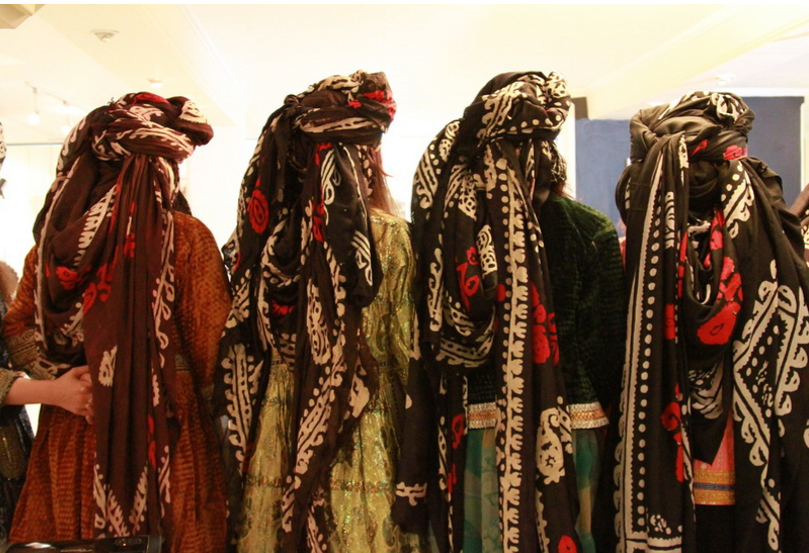
Golvani is a traditional headscarf. Women wear it in western Iran. It is very colorful. It has red, yellow, and orange colors. People wear it for celebrations. Men sometimes wear it too. They wrap it around their hats. Golvani is 3,000 years old. It is a symbol of joy and culture.
📖 Level 2 – Intermediate:
Golvani, also called Gelwni, is a traditional headscarf worn by the Lur, Lak, and Kurdish people in western Iran. The name means "flower headband" in Persian. This scarf has a very long history — about 3,000 years. It is believed to have been worn first by Kassite women, who were ancestors of the Lur people. Golvani has bright, warm colors such as red, yellow, and orange. Women wear it on top of their regular headscarf during happy occasions like weddings and festivals. During the Qajar period, men also began wearing Golvani. They wrapped it around their hats for decoration or during battles. Today, Golvani remains an important symbol of Iranian tribal identity and celebration.
📖 Level 3 – Advanced:
Golvani (or Gelwni) is a traditional Iranian headscarf with deep roots in the tribal cultures of the Lur, Lak, and Kurdish peoples of western Iran. The term derives from "gol" (flower) and "band" (wrap), reflecting its floral, decorative nature. Archaeological and historical evidence suggests its origin dates back approximately 3,000 years to the Kassites, an ancient people considered ancestors of the modern Lur population. Women traditionally wear Golvani atop their everyday headscarves during joyous ceremonies such as weddings, Norooz (Persian New Year), and other celebrations. The scarf is characterized by vibrant, warm hues — predominantly red, yellow, and orange — which symbolize happiness, vitality, and the warmth of community. During the Qajar era (18th–20th centuries), men also adopted the Golvani, wrapping it around their felt hats for decorative purposes or as a practical accessory in battle to identify tribe members. Unlike strictly religious head coverings, Golvani is purely a cultural and festive garment. Today, it is recognized as an intangible cultural heritage symbol of Iran's nomadic and tribal identity, still handwoven in villages and worn with pride at festivals both inside Iran and among the diaspora.
Newsletter
Get new articles by email
Level-appropriate English news when we publish. Free, no spam.
New stories
Free
Unsubscribe anytime
Comments (0)
Comments are published after admin approval.
No approved comments yet. Be the first to comment.

Comments (0)
Comments are published after admin approval.
No approved comments yet. Be the first to comment.