📖 Level 1 - Beginner:
Iranian people celebrate a special holiday. It is called Nowruz. It means "New Day." Nowruz happens on the first day of spring. Families set up a special table. They put seven things on the table. Each thing starts with the letter S in Persian. There is garlic, vinegar, apples, and other items. Each item means something good. The table stays for 13 days. People have celebrated Nowruz for over 3,000 years. It is the oldest holiday in the world.
📖 Level 2 – Intermediate:
Nowruz, which means "New Day" in Persian, is the most important holiday in Iranian culture. It has been celebrated for over 3,000 years, long before Islam came to Iran. Nowruz begins exactly at the moment of the vernal equinox—the first day of spring. Families prepare for weeks by cleaning their homes
completely. This is called "khaneh tekani," which means "shaking the house." They buy new clothes and bake special cookies.
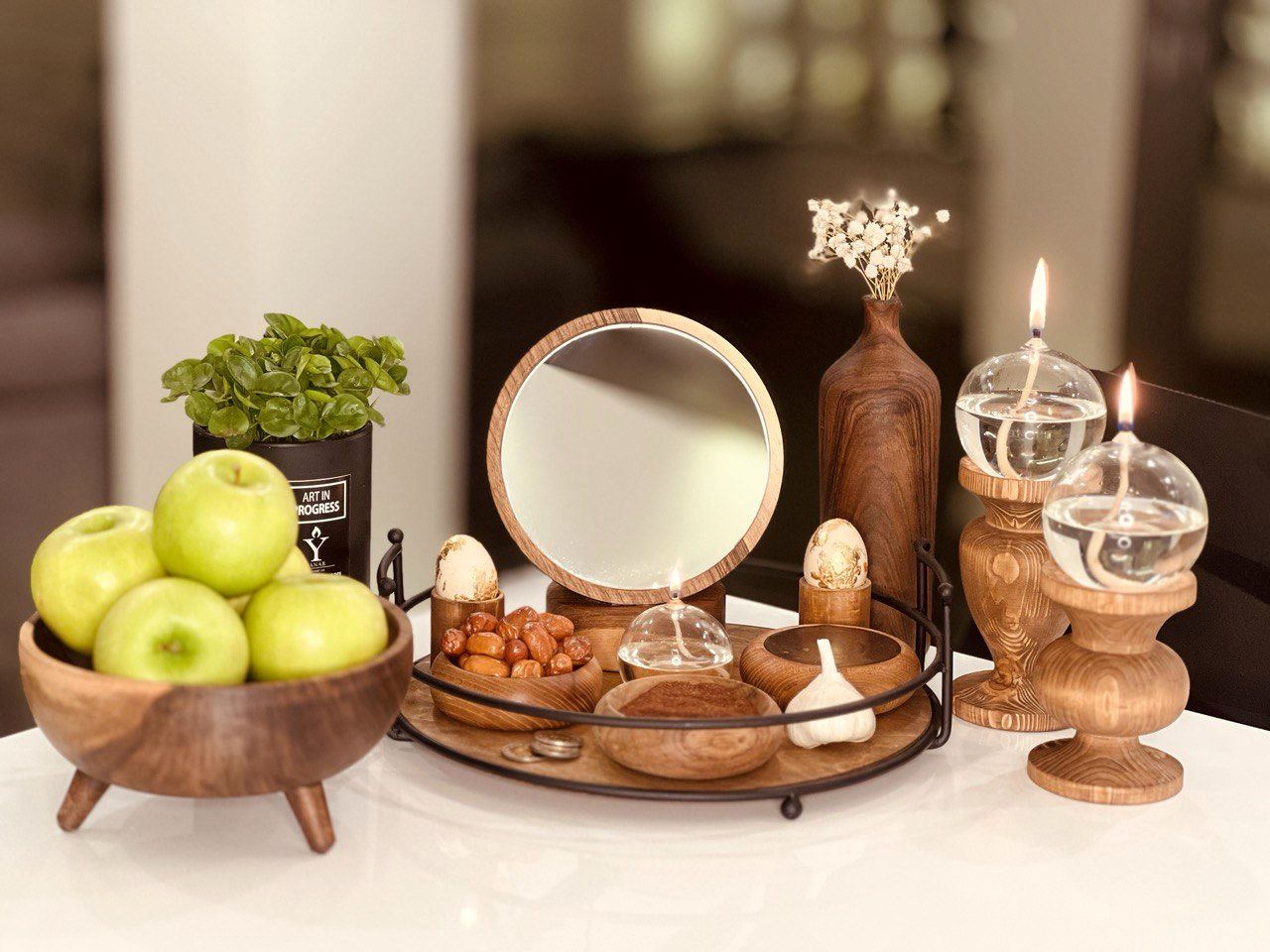
The center of Nowruz is a special table called the "Haft-Seen." "Haft-Seen" means "Seven S's." Families place seven items on the table that all start with the letter S in Persian. Each item has a special meaning:
· Sabzeh (wheat or lentil sprouts) = rebirth and growth
· Samanu (sweet wheat pudding) = power and strength
· Senjed (dried fruit) = love
· Serkeh (vinegar) = patience and age
· Seeb (apple) = beauty and health
· Seer (garlic) = medicine and good health
· Somaq (sumac spice) = the color of sunrise
Families also add other items to the table: a mirror, candles, painted eggs, goldfish in a bowl, and a book of poetry or a holy book. The Haft-Seen table stays in the home for 13 days. On the 13th day, families go outside for a picnic. They throw the sabzeh sprouts into running water. This means throwing away bad luck. Nowruz is not just an Iranian holiday. It is also celebrated in Afghanistan, Tajikistan, Azerbaijan, Turkey, and many other countries. In 2010, the United Nations officially recognized Nowruz as an international holiday.
📖 Level 3 – Advanced:
Before the Persian Empire, before the rise of Islam, before the birth of Christ—there was Nowruz. For more than three millennia, Iranians have welcomed the spring equinox with a set of rituals so
ancient that their origins are lost in Zoroastrian
tradition. Nowruz, meaning "New Day," falls precisely at the moment the sun crosses the celestial equator and day and night become equal. This year, as for the past 3,000 years, Iranian families will gather around a table that has remained remarkably unchanged across centuries of conquest, revolution, and exile: the Haft-Seen.
The name translates to "Seven S's," referring to seven symbolic items whose Persian names all begin with the letter "س" (sin). Each item represents a wish for the new year:
· Sabzeh (sprouted wheat or lentils): symbolizing rebirth, growth, and the greening of the earth
· Samanu (a sweet wheat pudding): representing strength, patience, and the reward of hard work
· Senjed (the dried fruit of the oleaster tree): embodying love and affection
· Serkeh (vinegar): reminding families of the wisdom that comes with age and the acceptance of life's bitterness
· Seeb (apple): a symbol of beauty, health, and the sweetness of life
· Seer (garlic): representing medicine, healing, and protection from evil
· Somaq (sumac spice): the crimson color of sunrise, symbolizing the triumph of light over darkness
Beyond the seven essentials, the Haft-Seen table typically includes a mirror (reflecting the past year), lit candles (light over darkness), painted eggs (fertility), a bowl of goldfish (life moving forward), and a book of poetry by Hafez or Ferdowsi's Shahnameh—or, for religious families, the Quran. The table is not merely decorative. It is a ritual space, a conversation starter, and a way of teaching children their cultural heritage.
For thirteen days, the Haft-Seen remains in the family home. Relatives visit one another, elders give money or gifts to younger family members, and everyone eats traditional dishes like sabzi polo (herbed rice) and mahi (fish). On the 13th day, called Sizdah Bedar, families leave their homes for an outdoor picnic. The sabzeh sprouts are cast into running water or carried away by the wind—a symbolic release of all the bad luck and illness that might have gathered in the home over the holiday.
In 2010, the United Nations General Assembly recognized Nowruz as an International Day of Peace, acknowledging its Zoroastrian origins and its celebration by over 300 million people across the Middle East, Central Asia, the Caucasus, and the Balkans. From the palaces of Persepolis to the living rooms of the Iranian diaspora in Los Angeles, London, and Sydney, the Haft-Seen endures. A table of seven S's, unchanged for 3,000 years. Every spring, the Persian New Day proves that some traditions are too beautiful to ever fade away.
Comments (0)
Comments are published after admin approval.
No approved comments yet. Be the first to comment.