
The Blind Footballer Who Scored Against All Odds
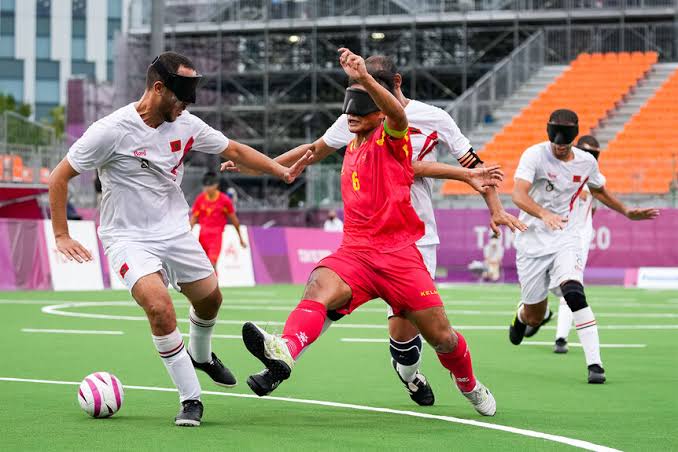
Most people assume that football — or soccer, as it is known in the United States — is a sport exclusively for those with full physical ability. The idea of a visually impaired person not only playing the game, but competing at an elite international level, seems almost impossible to imagine. Yet blind football is a thriving, passionate, and deeply technical sport played by thousands of athletes around the world, and its players are rewriting everything we thought we knew about human ability, courage, and the nature of sport itself.
Blind football, officially known as B1 football, is played by athletes who are completely blind or have minimal light perception. All outfield players wear blackout eyeshades to ensure fair competition, since some players may have slightly more residual vision than others. The goalkeeper, however, is fully sighted and acts as the eyes of the defensive line, shouting instructions and directing players from behind the goal. A sighted guide also stands behind the opposing goal to help attackers orient themselves during shooting opportunities. The ball itself contains ball bearings inside that rattle and shake with every movement, allowing players to track its location entirely through sound.
What makes this sport so breathtaking to watch is the extraordinary level of sensory awareness its players develop. Without vision, athletes must build an almost superhuman mental map of the pitch. They learn to read the sound of the ball with astonishing precision, judge distance through echoes, and process the voices of teammates, coaches, and guides simultaneously — all while running at full speed. The skill involved is not a lesser version of conventional football. It is a different discipline entirely, one that demands a unique and extraordinary set of abilities.
Brazil dominates the international blind football scene in much the same way they have historically influenced the sighted game. The Brazilian national team has won multiple World Championships and Paralympic gold medals, producing players of almost mythical technical quality. Among the most celebrated is Ricardinho, widely regarded as the greatest blind footballer in history. Blessed with dribbling ability, spatial awareness, and finishing precision that has left sighted audiences genuinely astonished, Ricardinho has spent years dismantling the assumption that blindness and athletic greatness cannot coexist. Watching him navigate defenders and strike the ball with pinpoint accuracy — guided only by sound and instinct — is one of sport's most humbling and inspiring spectacles.
Blind football made its Paralympic debut at the 2004 Athens Games and has grown steadily in popularity and global reach ever since. Countries across Europe, Asia, Africa, and the Americas now field competitive national teams, and grassroots programs are expanding access to the sport for visually impaired young people in communities worldwide.
The sport carries a message that extends far beyond the pitch. It challenges sighted people to question their assumptions about disability, limitation, and what the human body and mind are truly capable of achieving when given the opportunity. Blind football does not ask for sympathy or admiration. It demands respect — and it earns every bit of it.
Comments (0)
Comments are published after admin approval.
No approved comments yet. Be the first to comment.