
The Beauty of Islamic Architecture

The Beauty of Islamic Architecture banner
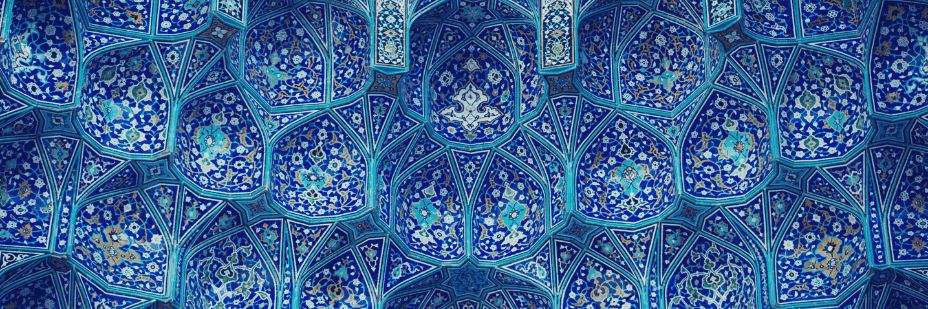
Islamic architecture is not defined by a single building type. It is a tradition spanning over 1,400 years and three continents. From the grand mosques of Istanbul to the intricate palaces of Spain, Islamic architecture uses geometry, light, and calligraphy to create spaces that feel both earthly and heavenly. There are no statues of prophets or gods. Instead, artists perfected repeating patterns, arches, and tilework. Understanding this architecture means understanding how beauty can be mathematical, spiritual, and functional all at once.

📖 Level 1 - Beginner:

Islamic architecture is a style of building. It comes from Muslim cultures. You can see it in mosques, palaces, and schools. Famous examples are the Taj Mahal in India and the Alhambra in Spain. Islamic buildings have domes and pointed arches. They have tall towers called minarets. Artists use geometric patterns. They do not draw pictures of God. Instead, they repeat shapes like stars and flowers. They also write beautiful calligraphy (fancy writing) from the Quran. Light is very important. Sunlight comes through colored glass. It makes colorful patterns on floors. Islamic architecture is very old, very beautiful, and full of math.

📖 Level 2 – Intermediate:

Islamic architecture is one of the world's great artistic traditions. It spans from Spain to India, from the 7th century to today. While mosques are the most famous examples, Islamic architecture also includes palaces, tombs, fortresses, schools (madrasas), and markets (souks). Key features include domes, pointed arches, and minarets — tall towers used to call people to prayer. Unlike Christian art, Islamic religious art generally avoids depicting God, prophets, or human figures inside mosques. Instead, artists developed three decorative styles: geometric patterns (repeating stars, polygons, and interlaced lines), arabesques (stylized flowers and vines), and calligraphy (beautiful writing of Quranic verses). The Dome of the Rock in Jerusalem (691 CE) is the oldest surviving Islamic monument. The Great Mosque of Córdoba in Spain (784–987 CE) features hundreds of striped arches. The Alhambra in Granada, Spain, is a palace of intricate stucco work and fountains. The Taj Mahal in India (1632–1653 CE) combines Persian, Indian, and Ottoman styles with its famous white marble dome. Light is a key element. Islamic architects used screens (mashrabiya) and colored glass to filter sunlight into soft, patterned interiors. Water — in fountains and reflecting pools — symbolizes life and purity. Islamic architecture is not just decoration. It reflects a worldview where geometry reveals divine order, calligraphy makes words sacred, and gardens represent paradise. To walk through an Islamic building is to experience a conversation between heaven and earth.

📖 Level 3 – Advanced:

Islamic architecture is not a monolithic style but a family of regional traditions unified by shared principles: aniconism (avoidance of figural representation in sacred spaces), emphasis on interior space over exterior mass, mastery of geometry as both decoration and structure, and integration of water and light as spiritual elements. The tradition emerged in 691 CE with the Dome of the Rock in Jerusalem — the first great Islamic monument. Its golden dome, octagonal plan, and intricate mosaic interior drew on Byzantine, Sassanian, and Umayyad precedents while establishing a distinctly Islamic vocabulary. From there, Islamic architecture developed three primary building types: the mosque (place of congregational prayer), the madrasa (religious school), and the mausoleum (tomb). Regional variations are striking. Persian (Iranian) architecture favored iwans (vaulted halls open on one side), massive pishtaq (entrance portals), and four-iwan mosques. The Shah Mosque in Isfahan (1611–1638) showcases seven-color tilework, muqarnas (honeycomb vaulting), and perfect geometric proportion. Moorish (Spanish) architecture developed the horseshoe arch, ribbed dome, and intricate stucco. The Great Mosque of Córdoba (784–987) contains 856 columns of jasper, onyx, marble, and granite supporting double-tiered arches — a forest of stone. The Alhambra (13th-14th century) is the pinnacle of Moorish palace architecture, with its muqarnas ceilings, arabesque stucco, and famous Court of the Lions — a fountain supported by 12 marble lions. Ottoman (Turkish) architecture synthesized Byzantine (Hagia Sophia) with Islamic elements. The architect Mimar Sinan (1489–1588) perfected the domed mosque with semi-domes cascading outward. His masterpiece, the Selimiye Mosque in Edirne (1575), has a dome 31 meters in diameter — wider than Hagia Sophia — supported by eight massive piers hidden within the walls. Mughal (Indian) architecture combined Persian, Indian, and Timurid styles. The Taj Mahal (1632–1653) is its zenith: white Makrana marble, a central bulbous dome, four minarets, inlaid pietra dura (stone flowers), and a charbagh (four-part garden) symbolizing the Quranic paradise. Decorative principles: geometry (repeating patterns based on 6, 8, or 12-pointed stars; infinite tessellation symbolizing divine infinity), arabesque (stylized floral and vegetal motifs avoiding naturalistic representation), and calligraphy (Quranic inscriptions in Kufic, Thuluth, or Naskhi scripts, often carved in stucco or marble). Light is not merely illumination but design material. Screens (mashrabiya, jali) and colored glass filter sunlight into patterned shadows and colored pools — the earthly experience of heavenly mystery. Islamic architecture influenced the West: Gothic pointed arches came from Islamic Spain; Venetian Gothic borrowed Islamic screens; 19th-century Orientalism revived interest. Contemporary architects like Zaha Hadid (Iraqi-British) continue the tradition of geometric innovation. Islamic architecture is not a historical relic. It is a living tradition — mathematical, spiritual, and deeply beautiful. To study it is to learn how faith, art, and science can coexist in stone.

📚 Vocabulary

Words from this article that appear in our vocabulary books.

Word Definition
Architect a person who makes plans for buildings and other structures; a maker; a creator
Architecture structure- the style and design of a building or bulidings
Based when sth is the centre for your work
Can used with see, smell or taste in the continuous tense
Central essential, more important and having more influence than anything else
Century 100 years
Contemporary modern
Conversation a talk between two or more people
Court a ​place where ​trials and other ​legal ​cases ​happen
Create invent, manufacture
Design create, draw, plan
Distinctly clearly
Draw produce picture with pencil or pen
Earth our planet
Element a part of the whole environment # component
Emphasis
Experience the things that you have done in your life
Faith a strong belief in sth (often a religion)
Feel give a sensation of or like sth when touched
Human connected with people
Include to have something as a part (SYN contain)
Innovation new, novelty
Integration the process of becoming a full member of a group or society
Interest extra money you pay when you borrow money
Intermediate in-between
Intricate carefully shaped; complex
Key significant: critical, of paramount or crucial importance
Like used to introduce an example (SYN such as)
Living not dead
Massive big and heavy; large and solid; bulky
Masterpiece a great work of art
Mastery control, lordship
Material cloth for making clothes, covering furniture, etc (SYN fabric)
Means ways # methods
Merely no more than: only: simply, just, (used to emphasize how small or unimportant something or someone is)
Mystery a story in which the events are only explained at the end
Part some but not all of a thing
Pinnacle high point, culmination
Pointed An ​object which has a ​thin, ​sharp end or ​becomes much ​narrower at one end
Primary dominant
Principles (USU. PL) strong beliefs that influence how you behave
Proportion a part or share of a the whole amount or number
Relic remain; remnant; historical object, antique, artifact
Religious related to religion
Represent to speak, act, or be present officially for another person or people
Sacred worthy of respect; holy
Science a particular subject which is studied by scientific methods
See know or notice sth using your eyes
Side an edge or border of sth
Space the area beyond the earth round the planets and stars
Stone the hard, ​solid ​substance ​found in the ​ground that is often used for ​building, or a ​piece of this
Striking dramatic
Style the way sth is written or spoken
Through by
Tradition beliefs, opinions, and customs handed down from one generation to another
While although
Within inside
Work get or have the result you want
Zenith peak

Comments (0)

Comments are published after admin approval.

No approved comments yet. Be the first to comment.

Stay updated

Get notified when we publish a new article.