
How Forensic Science Helps
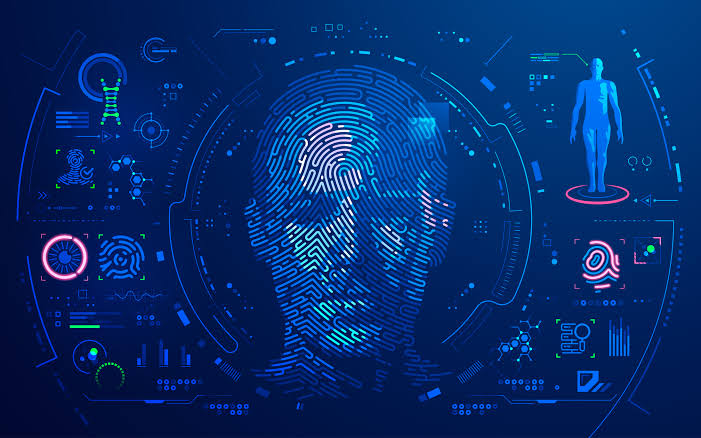
When a crime is committed, investigators cannot rely on confessions alone. They need evidence. Forensic science is the use of scientific methods to solve crimes. Fingerprints, DNA, blood spatter, and even insect activity on a body can tell a story. Forensic scientists work in labs and at crime scenes. They find clues that are invisible to the naked eye. Their work has caught murderers, freed innocent people, and changed the way justice works.
📚 Vocabulary
Words from this article that appear in our vocabulary books.
| Word | Definition |
|---|---|
| Accident | something bad that happens that is not expected or intended and that often damages something or injures someone |
| Age | a particular time in history. e.g. ice age |
| Ambiguous | more than one meaning: vague |
| Analysis | a careful study of sth in order to exlpain it |
| Analyze | to study something carefully; to separate into parts for study # examine |
| Based | when sth is the centre for your work |
| Basis | a particular way in which sth is organized or done. on a day-to-day basis, on a daily/weekly/regular basis |
| Blind | not able to see |
| Blood | the red liquid that is sent around the body by the heart |
| Blow | bad news (when sth unfortunate has happened) |
| Can | used with see, smell or taste in the continuous tense |
| Clue | hint, indication, sign, guide |
| Comparative | relative |
| Conclusive | final: ultimate;showing that something is definitely true |
| Confirmation | a statement or proof that something is true |
| Controversial | causing angry discussion and disagreement |
| Conviction | strong belief |
| Courtroom | a room where a law court meets |
| Crime | illegal activities (SYN offence) |
| Criminal | someone who commits a crime |
| Data | facts; information |
| Degree | extent, measure |
| Detect | find out; discover |
| Determine | figure out, specify, define;establish |
| Discipline | punish, penalize |
| Distinguish | notice from the difference.to recognize and understand the difference between two or more things or people |
| Effect | the result of a particular influence |
| Estimate | form a judgment or opinion about; guess |
| Even | at the same level |
| Evidence | that which makes clear the truth or falsehood of something |
| Fair | significan |
| Findings | PL information learned as the result of of research |
| Fingerprints | the pattern of curved lines on the end of a finger or thumb that is different in every person |
| Forgery | the crime of making an exact copy of documents or works of art in order to make money by selling them |
| Found | to establish: start up a philanthropic organization # establish |
| Friction | conflict, disagreement, tension |
| Gas | a substance like air, e.g. oxygen and hydrogen |
| Goal | a thing you want to be able to do in the future (SYN aim) |
| Guide | a person who shows the way; to direct; to manage |
| Guilty | responsible for breaking a law |
| Gun | a weapon that bullets or shells are fired from |
| Hair | the mass of thin thread-like structures on the head of a person |
| Homicide | a killing of one human being by another; murder |
| Honest | always telling the truth |
| However | yet, but |
| Human | connected with people |
| Identify | recognize as being, or show to be, a certain person or thing; prove to be the same |
| Include | to have something as a part (SYN contain) |
| Independent | be free from control of another country |
| Indispensable | essential: necessary: needed: required: significant: vital |
| Innocent | you have done nothing wrong |
| Insect | very small animal with six legs, a body divided into three parts and usually two pairs of wings |
| Instantaneous | immediate-happening immediately |
| Intermediate | in-between |
| Interpret | to understand the meaning of something # clarify |
| Interval | a period of time between events or two parts of sth, e.g. a play, subways |
| Investigation | a careful examination in order to determine facts # probe |
| Justice | just conduct; fair dealing |
| Knowledge | what you know and understand about sth |
| Lead | sth that you can go along to get swh |
| Legal | allowed by law |
| Lethal | deadly: fateful, fatal |
| Like | used to introduce an example (SYN such as) |
| Liquid | in a non-solid form, like water |
| Look | turn your eyes to sth and pay attention to it; seem from what you can see |
| Mark | a written or printed symbol |
| Match | look good with something else |
| Material | cloth for making clothes, covering furniture, etc (SYN fabric) |
| Ms | multiple sclerosis |
| Murder | killing someone deliberately |
| National | connected with all of a country |
| Objective | purpose, target, aim, goal |
| Paper | the written questions in an exam |
| Pattern | a regular, repeated arrangement or action # habit |
| Properly | correctly or well |
| Random | chance, arbitrary |
| Reveal | make known |
| Ridge | the top of a mountain range; a raised part of any surface # crest |
| Rigorous | demanding: harsh |
| Scene | a view you can see in a picture or from the place where you are |
| Science | a particular subject which is studied by scientific methods |
| Skin | covers the body |
| Specific | particular |
| Storage | a place to store things |
| Tolerance | willingness to accept behaviour and beliefs that are different from your own, although you might not agree with or approve of them |
| Tools | a piece of equipment that you use with your hands to make or repair something |
| Trial | an examination of evidence in court to decide if sb has done sth illegal |
| Unique | having no like or equal; being the only one of its kind |
| Vary | be different from each other |
| Victim | a person who has been robbed, injured, etc |
| Way | the route or direction that you need to take to get somewhere |
| Within | inside |
| Witness | observe |
| Work | get or have the result you want |
| Wound | an area of damage to part of your body |
Comments (0)
Comments are published after admin approval.
No approved comments yet. Be the first to comment.