
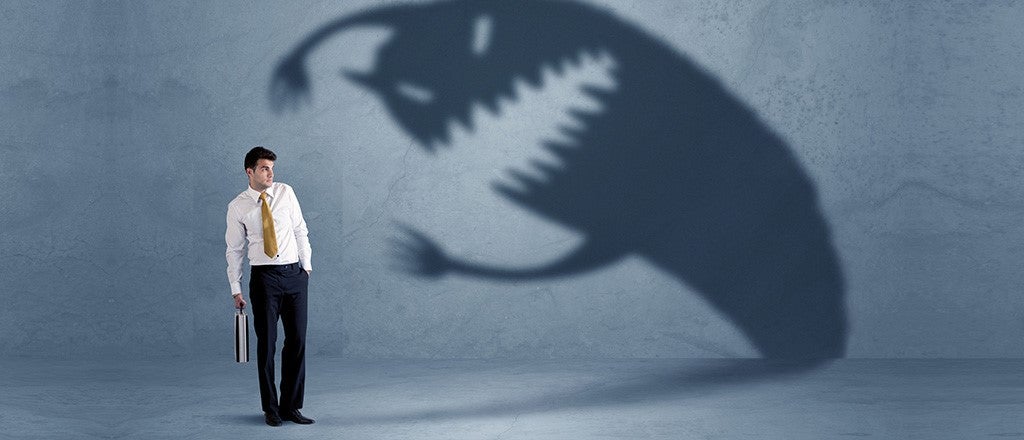
Your heart pounds. Your palms sweat. Your breath shortens. Your muscles tense, ready to move before your brain has decided where. This is fear. It is ancient, automatic, and deeply uncomfortable. And it may be the most important emotion you own.
Fear is not a weakness. It is not a flaw. Fear is a survival program written over millions of years. Understanding the science of fear does not eliminate it. But it changes the relationship. Fear becomes less of an enemy and more of a messenger.
The Anatomy of Fear: What Happens Inside You
Fear begins in a small, almond-shaped structure deep within the brain called the amygdala. Its job is simple: detect threats. The amygdala does not think. It does not reason. It reacts. In less than half a second, it sends an alarm through the entire nervous system.
This alarm activates the sympathetic nervous system—the body's emergency response. The adrenal glands release adrenaline and cortisol. The heart pumps faster to send blood to large muscles. Breathing quickens to take in more oxygen. Pupils dilate to take in more light. Digestion stops. The immune system temporarily suppresses. Every resource is diverted to one purpose: survival.
This is the fight-or-flight response. It is elegant. It is efficient. And it is designed for a world that no longer exists.
The Mismatch: Ancient Brain, Modern World
In prehistoric times, fear served a clear purpose. A rustle in the grass might be a predator. A sudden movement might be an attacker. The fear response saved lives. Run first, think later. Those who hesitated did not pass on their genes.
But today, the same response activates for very different threats. A critical email from a boss. A crowded room of strangers. A public speech. A difficult conversation. None of these require fighting or fleeing. None are solved by a racing heart or sweaty palms. And yet, the amygdala cannot tell the difference.
This mismatch creates what psychologists call the anxiety epidemic. Modern life is not more dangerous than ancient life. But it is more constantly demanding. The fear response, designed for rare and urgent threats, now triggers dozens of times a day for problems that cannot be outrun.
Fear Versus Anxiety: Not the Same Thing
People often use these words interchangeably. Science does not.
Fear has a clear cause. There is a snake on the path. A car is swerving toward you. A stranger is following you. Fear is specific. It is now. It is about survival.
Anxiety has no clear cause. It is a general sense of dread about something that might happen. Maybe. Sometime. Anxiety is diffuse. It is about the future. It is about possibilities rather than realities.
Fear helps you escape a tiger. Anxiety keeps you awake wondering if a tiger might appear tomorrow. Fear is useful. Anxiety, in excess, is exhausting. The two share the same biology but very different consequences.
What Fear Does to Decision-Making
When fear activates, the brain changes how it processes information. The prefrontal cortex—the region responsible for rational thought, long-term planning, and impulse control—becomes less active. The amygdala and other primitive regions take over.
This is why people make terrible decisions when they are afraid. They focus on immediate threats and ignore long-term consequences. They see fewer options than actually exist. They become more influenced by what others are doing. They choose certainty over possibility, even when the certainty is worse.
In financial markets, fear triggers sell-offs that drive prices down further. In relationships, fear triggers accusations that push loved ones away. In organizations, fear triggers cover-ups that turn small problems into disasters. Fear does not clarify. Fear narrows.
The best decisions are not made without fear. They are made when the decision-maker recognizes fear and refuses to let it drive.
The Paradox of Enjoyable Fear
Not all fear is unpleasant. Consider roller coasters. Horror movies. Haunted houses. Bungee jumping. In these situations, people pay money to be terrified. Why?
The answer lies in context. When your brain knows—truly knows—that you are safe, the fear response becomes exciting rather than overwhelming. The same adrenaline, the same racing heart, the same rapid breathing. But without the belief of genuine danger, fear transforms into thrill.
Psychologists call this benign masochism. The brain enjoys the intensity of fear when it is wrapped in safety. This is not a contradiction. It is evidence that fear itself is not the problem. The interpretation of fear is what matters.
How Fear Is Learned and Unlearned
Some fears are born. Others are made.
Humans are born with very few innate fears. Loud noises. Falling. Pain. Almost everything else is learned. A child who sees a parent react fearfully to a spider learns to fear spiders. A person who experiences a panic attack in an elevator learns to fear elevators. A society that tells stories about certain groups teaches fear of those groups.
The good news is that learned fears can be unlearned. The process is called extinction. It requires repeated exposure to the feared thing without the feared outcome. The spider never bites. The elevator never traps. The stranger never harms. Slowly, slowly, the brain rewires. The amygdala stops sounding the alarm.
This is the science behind exposure therapy, one of the most effective treatments for phobias and anxiety disorders. It is not easy. It requires courage and patience. But it works. Fear is powerful. Neuroplasticity is more powerful.
The Social Life of Fear
Fear is contagious. When one person shows fear—through facial expression, voice, or body language—others around them unconsciously mirror it. This is not weakness. It is survival. In a group, shared fear spreads faster than any individual can detect the actual threat.
Leaders understand this. A calm leader calms a room. A panicked leader creates panic. This is why, in emergencies, the first instruction is often to breathe. Regulate the body. Only then think. Only then act.
Social fear also creates belonging. Shared fear—of a storm, of an enemy, of an uncertain future—bonds people together. Some of the strongest human connections form in the aftermath of collective fear. We remember not the danger but who stood beside us during it.
A Practical Conclusion: Living with Fear
The goal is not to eliminate fear. That is impossible. The goal is to change the relationship with it.
Name it. Saying "I am afraid" reduces the amygdala's activity. Fear named is fear tamed. Not eliminated. Just quieter.
Breathe. Slow, deep breaths activate the parasympathetic nervous system—the body's brake pedal. Ten seconds of slow breathing changes the chemistry of fear.
Ask what the fear is telling you. Fear is a messenger. Sometimes the message is useful: prepare, be careful, slow down. Sometimes the message is noise: the ancient brain mistaking a presentation for a predator. Learn to tell the difference.
Act anyway. Courage is not the absence of fear. Courage is fear that has been acknowledged and set aside. The bravest people are not those who never tremble. They are those who tremble and move forward.
Fear kept your ancestors alive. It is not your enemy. It is your oldest companion. Learn its language. Respect its power. But do not let it choose your path.
The science of fear teaches one thing clearly: you are not broken for being afraid. You are human. And humans, even when afraid, have always found a way forward.
Comments (0)
Comments are published after admin approval.
No approved comments yet. Be the first to comment.