
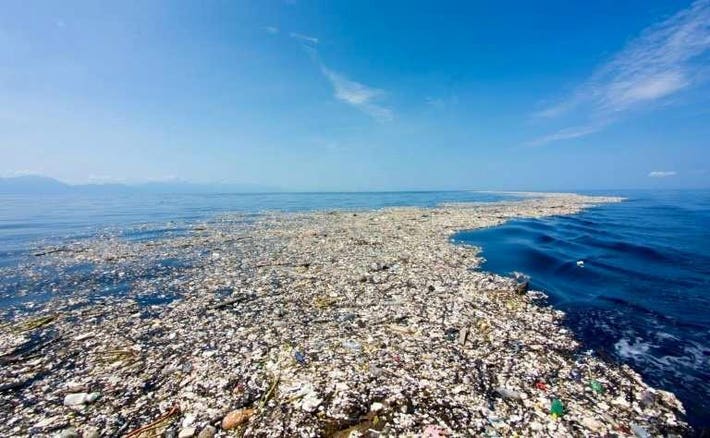
Somewhere between Hawaii and California, in a vast stretch of ocean most people will never see, something is floating. It is not an island. You could not walk on it. From a boat, you might sail right through it and notice almost nothing. But it is there. And it is growing.
They call it the Great Pacific Garbage Patch. The name suggests a solid mass, a floating landfill. The reality is stranger and, in some ways, more troubling. It is a soup. A diffuse, drifting collection of tiny plastic fragments, invisible from above, deadly from within.
This is not a story about a distant problem. It is a story about every piece of plastic you have ever thrown away.
What Actually Is It?
The Great Pacific Garbage Patch is not a single object. It is a region of the North Pacific Ocean where ocean currents—specifically the North Pacific Gyre—converge and slowly rotate, trapping debris that drifts into its center. Think of a slow-moving whirlpool, hundreds of miles wide, that catches everything that enters and holds it for decades.
Estimates suggest the patch contains approximately 1.8 trillion pieces of plastic, weighing an estimated 80,000 metric tons. That is roughly the weight of 500 jumbo jets. But these numbers, staggering as they are, fail to capture the true nature of the problem.
Less than one percent of this debris is visible from the surface. The rest has broken down into microplastics—tiny particles smaller than a grain of rice. These fragments mix with the water column, suspended from the surface down to depths of thirty meters or more. The ocean does not look polluted. It looks like ocean. That is what makes it so dangerous.
Where Does It Come From?
The plastic in the garbage patch comes from land. Approximately eighty percent originates from activities on shore. A plastic bottle dropped on a beach in Japan. A fishing net lost off the coast of Mexico. A straw thrown from a ship in international waters. A shopping bag blown from a landfill in California.
These items enter the ocean and begin a slow journey. Currents carry them. Sunlight breaks them down. Waves grind them smaller. But plastic does not disappear. It only fragments. A single plastic bag becomes thousands of microscopic pieces. Each piece remains plastic. Each piece remains toxic.
The remaining twenty percent comes from ocean-based sources. Discarded fishing gear—sometimes called "ghost nets"—makes up a significant portion. A single lost net can continue fishing for years, trapping marine life, breaking apart, and adding more plastic to the soup.
The Invisible Damage
The most visible victims of the garbage patch are marine animals. Sea turtles mistake floating plastic bags for jellyfish. Birds feed plastic fragments to their chicks, filling their stomachs with material that provides no nutrition. Fish ingest microplastics, blocking their digestive systems and leaching chemicals into their tissues.
But the damage goes deeper. Plastics act like sponges for toxic pollutants in the water—pesticides, industrial chemicals, heavy metals. When a fish eats a plastic particle, those toxins enter its body. When a larger fish eats that fish, the toxins concentrate. When a human eats that larger fish, the toxins reach the dinner plate.
Research has found microplastics in seafood, in tap water, in table salt, and in human stool samples. The plastic you throw away may return to you. Not as a bottle or a bag, but as something smaller and more intimate. Part of you.
There is also a quieter damage: the alteration of ocean ecosystems. Tiny marine organisms called zooplankton drift with the currents, forming the base of the ocean food web. In the garbage patch, plastic fragments outnumber zooplankton by a ratio of six to one. Filter feeders consume plastic instead of food. The foundation of the food chain begins to crumble.
Why Can't We Just Clean It Up?
When most people hear about the garbage patch, their first question is: why don't we send ships to scoop it all up? The answer reveals the scale of the challenge.
The patch is not a solid mass. It is a diffuse cloud spread over an area roughly twice the size of Texas. Scooping up plastic would also scoop up countless marine organisms—jellyfish, plankton, small fish, larvae. A cleanup that kills the very life it aims to protect is not a solution. It is a tradegy.
Several organizations are attempting cleanup. The most ambitious is The Ocean Cleanup, which has deployed floating barriers designed to concentrate plastic for removal. Early results are promising but modest. Even optimistic models suggest that cleanup technology can remove only a fraction of what already exists. The rest will remain in the ocean for centuries.
The hard truth is this: cleaning up the garbage patch is not the primary solution. The primary solution is stopping more plastic from entering the ocean in the first place. Cleanup is triage. Prevention is medicine.
The Human Connection
It is easy to feel distant from a garbage patch in the middle of the Pacific Ocean. Most people will never see it. It does not affect their daily lives in obvious ways. But distance is not the same as separation.
Every piece of plastic ever produced still exists somewhere. Some is in landfills. Some is recycled. Some is incinerated. And some is floating in the ocean. The plastic bottle you used for ten minutes will outlive you by hundreds of years. It will outlive your children. It will outlive your grandchildren. It will travel farther than you ever will.
This is not an accusation. It is a fact. Plastic is a remarkable material—light, durable, cheap, versatile. It has saved lives through sterile medical equipment and preserved food through secure packaging. The problem is not plastic. The problem is what we do with plastic after we are finished with it.
We have designed a material that lasts forever. And we have designed a system—single-use disposal—that treats it as if it disappears when we throw it away. The garbage patch is where those two designs collide.
What Can Be Done?
Solutions exist. They require collective action, but they begin with individual choices.
Reduce. Use fewer single-use plastics. Bring a reusable bag. Carry a reusable water bottle. Say no to plastic straws. Choose products with minimal packaging. These actions seem small. Multiplied by millions, they are not small.
Improve waste management. Many countries lack adequate systems for collecting and processing waste. Rivers carry plastic from inland cities to the sea. Investing in waste infrastructure—especially in developing nations—is one of the most effective ways to stop plastic at its source.
Redesign products. Industry can create packaging that is truly biodegradable or easier to recycle. Governments can mandate extended producer responsibility—making companies responsible for the entire life cycle of their products, not just their sale.
Support cleanup efforts. Organizations like The Ocean Cleanup and Ocean Conservancy are working to remove existing plastic and prevent future accumulation. They need funding, awareness, and political support.
Demand change. Vote for leaders who take ocean pollution seriously. Support businesses that reduce plastic use. Talk about the garbage patch. Silence is the ally of inaction.
A Practical Conclusion
The Great Pacific Garbage Patch is not a problem someone else will solve. There is no someone else. There is only us.
It is easy to feel hopeless. The scale is overwhelming. The damage is already done. But hopelessness is also a luxury. The creatures living in the patch do not have the option of despair. They simply live—or die—in the world we have made.
The garbage patch is a mirror. It reflects our convenience, our shortsightedness, our assumption that "away" is a real place. Away does not exist. There is only here. And here is a planet where every piece of plastic we have ever discarded is still somewhere.
The Great Pacific Garbage Patch is not the ocean's problem. It is ours. And like all problems we create, it can only be solved by the same hands that made it.
Comments (0)
Comments are published after admin approval.
No approved comments yet. Be the first to comment.