
The Truth About Gluten
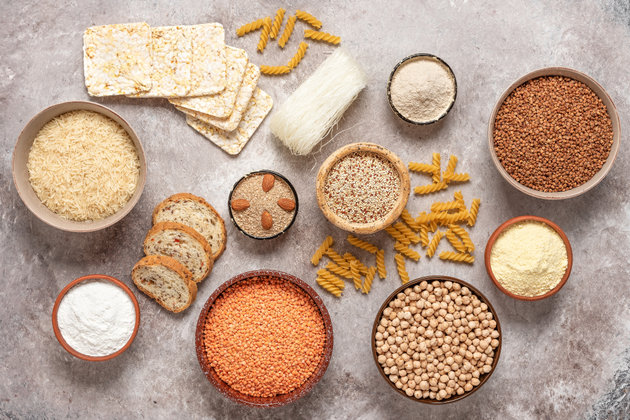
Gluten is a protein found in wheat, barley, and rye. For most people, it is completely harmless. But for those with celiac disease or gluten sensitivity, it causes real health problems. The gluten‑free trend has created confusion. This text separates science from marketing hype.
📚 Vocabulary
Words from this article that appear in our vocabulary books.
| Word | Definition |
|---|---|
| About | a bit more or a bit less |
| Actually | 1) in fact used to emphasize the real or exact truth of a situation 2) (spoken) used to add new information to what you have just said, to give your opinion, or to start a new conversation |
| Allergic | to have allergy to sth |
| Allergy | a medical condition that makes you ill when you thouch, eat, or breathe sth that doesn't normally make other people ill |
| Annually | yearly-once a year- ever year |
| Approximately | roughly-more or less than a number or amount |
| Arise | come about; emerge; appear;if a problem or difficult situation ~s, it begins to happen |
| Avoid | keep away from; keep out of the way |
| Benefits | advantages a company offers in addition to the salary, perks INF |
| Brain | the organ inside the head that controls thought, memory, feelings, and activity |
| Can | used with see, smell or taste in the continuous tense |
| Celebrity | 1- c a famous person. SYN personality, celeb INF. 2 u the sate of being famous. SYN fame |
| Century | 100 years |
| Completely | totally |
| Conditions | all the particular things that influence someone’s living or working environment |
| Contain | include |
| Context | the words before and after the new word or phrase that help you understand the meaning |
| Controversial | causing angry discussion and disagreement |
| Culprit | offender; person guilty of a fault or crime |
| Culture | activities involving art, literature, music, etc |
| Damage | harm or injury caused when sth is broken |
| Despite | in spite of |
| Diabetes | a disease in which your body can't control the level of sugar in the blood |
| Diarrhea | diarrohea (Brt.) passing waste from the body too often and in liquid form |
| Diet | the food person eats |
| Disease | illness in people, animals, or plants |
| Disorder | anarchy |
| Distinct | separate: clear and recognizable |
| Due | expected to arrive or happen |
| Entire | completely (SYN whole) |
| Even | at the same level |
| Expensive | costly; highly prices |
| Experience | the things that you have done in your life |
| Fear | a feeling that sth bad might happen |
| Feel | give a sensation of or like sth when touched |
| Fine | a sum of money you have to pay if you break a law |
| Found | to establish: start up a philanthropic organization # establish |
| Guide | a person who shows the way; to direct; to manage |
| Harmless | not causing damage, injury, or illness |
| Healthy | good for health (SYN good for you) |
| Heart | an organ which moves blood in the body |
| However | yet, but |
| Indicate | demonstrate, imply |
| Industry | the production of goods in factories |
| Intermediate | in-between |
| Lack | be entirely without something; have not enough |
| Largely | mostly or mainly |
| Like | used to introduce an example (SYN such as) |
| Majority | the larger number; greater part; more than half |
| May | used to express possibility |
| Minority | smaller number or part; less than half |
| Nearly | almost, closely, approximately |
| Negative | saying no; minus; showing the light and shadows reversed |
| Poison | a substance that can make people or animals ill or kill them if they eat or drink it |
| Popular | liked by most people |
| Population | people of a city or country |
| Reaction | a reply; a change that occurs when substances are mixed # response |
| Recent | done, made, or occurring not long ago |
| Related | when sth connected with sth |
| Require | to need sth or make sth neccessary |
| Rise | emerge |
| Risk | danger |
| Roughly | almost: approximately |
| Safe | a person you can rely on |
| Science | a particular subject which is studied by scientific methods |
| Storage | a place to store things |
| Test | a medical examination of part of your body |
| Text | the written part of the book, newspaper, etc |
| Threat | sign or cause of possible evil or harm |
| Toxic | poisonous |
| Treatment | the things a doctor or dentist does to make you better |
| Trend | movement: tendency |
| Vast | very great; enormous |
| Whole | entire |
Comments (0)
Comments are published after admin approval.
No approved comments yet. Be the first to comment.