
The History of Oil

The History of Oil banner
Oil has shaped modern history more than almost any other resource. Ancient people used oil from seeps for medicine and waterproofing. The Industrial Revolution turned oil into fuel for machines. The 20th century saw oil become a weapon of geopolitics. Understanding oil’s history helps explain wars, economies, and climate change today.

📖 Level 1 - Beginner:

Oil is a black liquid found underground. People used oil thousands of years ago. Ancient Egyptians put oil on boats. They used it as medicine too. In the 1800s, people learned to make kerosene from oil. Kerosene lit lamps in homes. Then cars and planes were invented. They needed gasoline. Gasoline comes from oil. Oil became very important. Countries fought wars over oil. Some countries became rich because of oil. Saudi Arabia and Kuwait built cities with oil money. But burning oil causes pollution. The Earth gets warmer. Today, people try to use less oil. They use solar and wind power. But oil is still everywhere. It makes plastic, roads, and clothes. The history of oil is the history of our modern world.

📖 Level 2 – Intermediate:

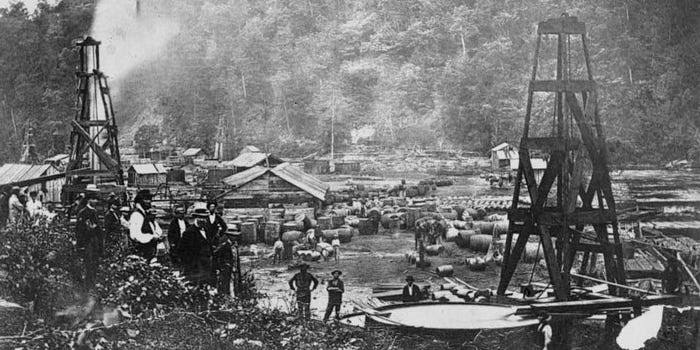
The history of oil stretches back thousands of years, but its biggest impact began in the 19th century. Ancient civilizations in Mesopotamia and Egypt collected oil that naturally leaked from the ground. They used it for waterproofing boats, caulking buildings, and as a simple medicine. However, oil became a global force after 1859. That year, Edwin Drake drilled the first commercial oil well in Pennsylvania, USA. Suddenly, oil could be extracted in large amounts. Kerosene, made from oil, replaced whale oil in lamps and saved whales from extinction. Then came the internal combustion engine. Cars, trucks, airplanes, and factories needed gasoline and diesel — both from oil. By the mid-1900s, oil was the world’s most valuable commodity. Countries in the Middle East, Venezuela, and Russia built enormous wealth from oil reserves. The Organization of Petroleum Exporting Countries (OPEC), formed in 1960, used oil as a political weapon. The 1973 oil crisis caused global panic and showed how dependent modern life had become. Today, oil remains essential for transportation, plastics, fertilizers, and even clothing. But burning oil releases carbon dioxide, driving climate change. The world now faces a difficult question: how to transition away from the fuel that built our civilization?

📖 Level 3 – Advanced:

Few resources have shaped human civilization as profoundly as crude oil. While bitumen from natural seeps was used in ancient Babylon for waterproofing and by the Egyptians in embalming practices, oil remained a niche substance until the mid‑19th century. The turning point came in 1859 when Edwin Drake, backed by the Seneca Oil Company, successfully drilled a 69‑foot well in Titusville, Pennsylvania. This marked the birth of the modern petroleum industry. Initially, the primary product was kerosene, which saved whales from near‑extinction by replacing whale oil in lamps. But the invention of the internal combustion engine — and later the mass production of automobiles by Henry Ford — transformed oil into the lifeblood of industrial society. Gasoline and diesel became indispensable. By the 20th century, oil was synonymous with power. The discovery of massive fields in the Middle East, particularly in Saudi Arabia (the Ghawar field, the largest conventional oil field in the world), reshaped global geopolitics. The formation of OPEC in 1960 gave oil‑exporting nations collective leverage, culminating in the 1973 oil embargo against Western supporters of Israel — a moment that triggered economic recession and highlighted the West’s vulnerability. Oil wealth enabled rapid modernization in previously underdeveloped regions but also fueled corruption, authoritarian regimes, and regional conflicts, such as the Iran‑Iraq War and the Gulf War. Today, petroleum remains deeply embedded in global supply chains, from plastics and pharmaceuticals to asphalt and synthetic fibers. However, anthropogenic climate change — driven primarily by carbon dioxide emissions from burning fossil fuels — has created an urgent imperative to transition to renewable energy. The history of oil thus presents a paradox: a substance that liberated humanity from animal and manual labor now threatens the planetary systems upon which we depend.

📚 Vocabulary

Words from this article that appear in our vocabulary books.

Word Definition
Ancient antique: old- belonging to a long time in old history
Century 100 years
Change smaller ​units of ​money given in exchange for ​larger ​units of the same ​amount
Climate the normal weather conditions of a particular region
Company organisation
Conventional customary: traditional
Crisis disturbance, tension
Crude unsophisticated
Depend rely on, belong
Discovery the process of finding information
Earth our planet
Energy the ability to be very active without getting tired
Engine car's motor
Enormous large; huge
Essential necessary; very important
Even at the same level
Found to establish: start up a philanthropic organization # establish
Ground reason, cause
However yet, but
Human connected with people
Indispensable essential: necessary: needed: required: significant: vital
Industrial related to factories and machinery
Industry the production of goods in factories
Initially originally, at first [adv]
Intermediate in-between
Invention something that has never been made before
Large extensive, big
Liquid in a non-solid form, like water
Manual a book that tells you how to do or use sth such as a car or a computer
Marked considerable: significant, clearly noticeable; evident
Massive big and heavy; large and solid; bulky
Middle centre
Panic unreasoning fear; fear spreading through a group of people so that they lose control of themselves
Paradox 1)contrary 2)contradictory
Particularly especially
Pollution durty and dangerous gases, chemicals, etc. that harm the environment
Previously before
Primarily mainly
Primary dominant
Product a thing that people make or grow in order to sell
Profoundly in a deep way; showing deep knowledge of a subject # significantly
Rapid very quick; swift
Remains parts of objects and buildings that have been discovered recently
Revolution dramatic change
Supply an amount of sth that you need
Supporters people who regulary watch teamplay SYN fan
Thus consequently: therefore
Urgent demanding immediate action or attention; important
War armed fighting between two or more countries or groups
Weapon an object such as a knife, gun, or bomb that is used for fighting
Whale a very ​large ​sea ​mammal that ​breathes ​air through a ​hole at the ​top of ​its ​head
While although

Comments (0)

Comments are published after admin approval.

No approved comments yet. Be the first to comment.

Stay updated

Get notified when we publish a new article.