
The Benefits of Plant-Based Diets
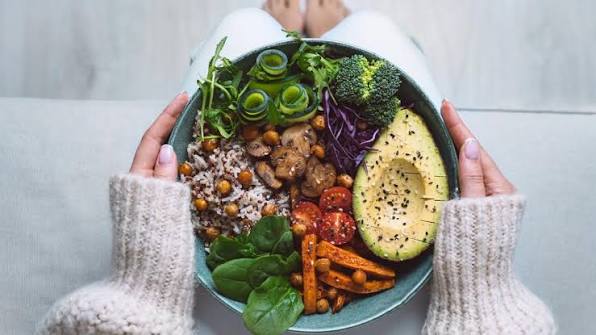
Plant-based diets focus on vegetables, fruits, grains, and beans. Research shows they can lower heart disease risk, improve digestion, and provide steady energy. By reducing processed meats and increasing fiber-rich plants, people often feel lighter and more active. This isn't about perfection — small changes make a big difference.
📚 Vocabulary
Words from this article that appear in our vocabulary books.
| Word | Definition |
|---|---|
| About | a bit more or a bit less |
| Abundance | great number: large amount, host of |
| Accessible | easy to approach; obtainable |
| Approach | come near or nearer to |
| Based | when sth is the centre for your work |
| Benefits | advantages a company offers in addition to the salary, perks INF |
| Blood | the red liquid that is sent around the body by the heart |
| Brain | the organ inside the head that controls thought, memory, feelings, and activity |
| Can | used with see, smell or taste in the continuous tense |
| Cancer | a very serious illness in which tumours often grow in the body |
| Change | smaller units of money given in exchange for larger units of the same amount |
| Consistent | regular: uniform, steady, constant |
| Consumed | used completely: used up |
| Contain | include |
| Damage | harm or injury caused when sth is broken |
| Diabetes | a disease in which your body can't control the level of sugar in the blood |
| Diet | the food person eats |
| Disease | illness in people, animals, or plants |
| Diversity | variety |
| Due | expected to arrive or happen |
| Energy | the ability to be very active without getting tired |
| Evidence | that which makes clear the truth or falsehood of something |
| Feel | give a sensation of or like sth when touched |
| Fight | when people try to hurt or kill each other |
| Focus | concentrate |
| Follow | track, pursue, chase |
| Furthermore | in addition: moreover |
| Healthy | good for health (SYN good for you) |
| Heart | an organ which moves blood in the body |
| Improve | become better (SYN get better; make progress) |
| Include | to have something as a part (SYN contain) |
| Intermediate | in-between |
| Keep | continue or stay ina particular place or condition |
| Largely | mostly or mainly |
| Lasting | forever; without end # enduring |
| Lead | sth that you can go along to get swh |
| Like | used to introduce an example (SYN such as) |
| May | used to express possibility |
| Mean | average, medium, mediocre |
| Means | ways # methods |
| Notably | especially1) used to say that a person or thing is a typical example or the most important example of something 2)formal in a way that is clearly different, important, or unusual |
| Occasionally | once in a while |
| Overnight | for one night |
| Provide | to supply; to state as a condition; to prepare for or against some situation |
| Require | to need sth or make sth neccessary |
| Risk | danger |
| Several | more than two, but not many |
| Soluble | sth that can be dissolved |
| Steady | stable, constant, firm |
| Stress | say sth with extra loudness (SYN emphasis) |
| Tend | care for : to be likely to happen |
| Through | by |
| Throughout | during the period |
| Ultimately | finally, eventually |
| Way | the route or direction that you need to take to get somewhere |
| Weight | how heavy sth is (value/property) |
| While | although |
| Whole | entire |
| Work | get or have the result you want |
Comments (0)
Comments are published after admin approval.
No approved comments yet. Be the first to comment.