
The Bridge That Has Stood for 1000 Years

The Bridge That Has Stood for 1000 Years banner
📖 Level 1 - Beginner:

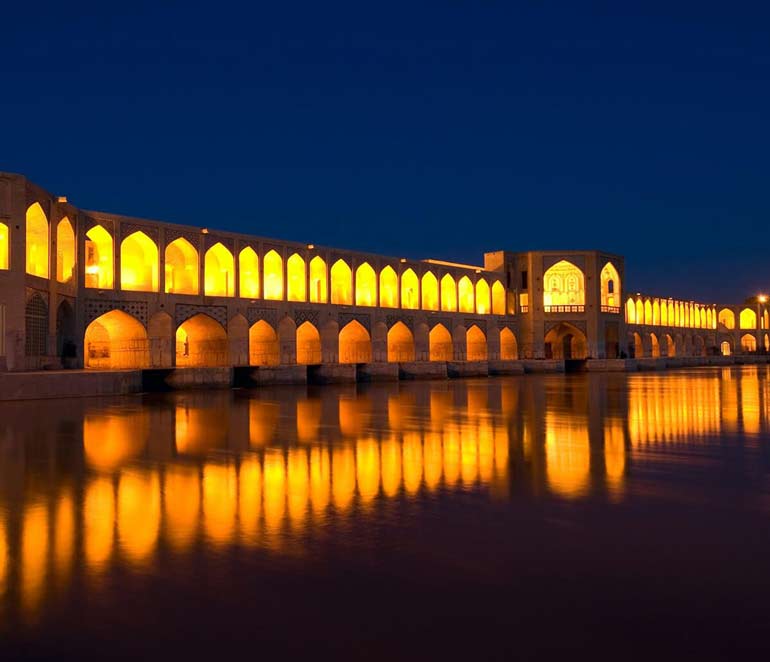
In Iran, there is a very old bridge. It is called Si-o-se-pol. It means "Bridge of 33 Arches." It was built 1000 years ago. The bridge is in Isfahan. It crosses a river. Many people walk on it every day. Soldiers, kings, and families have all walked there. Wars happened around it. But the bridge never broke. It is still standing today. People sit under its arches and sing. The bridge is older than many countries.

📖 Level 2 – Intermediate:

In the beautiful city of Isfahan, Iran, there stands a bridge that has witnessed nearly a thousand years of history. Its name is Si-o-se-pol, which means "Bridge of 33 Arches." The bridge was completed in 1602 during the reign of Shah Abbas I, the great king of the Safavid dynasty. It stretches 300 meters across the Zayandeh River. But the bridge is not just a way to cross water. It is a place where people gather. Under its 33 stone arches, travelers once rested. Tea sellers set up small shops. Poets recited verses. Musicians still play traditional songs there today. Over the centuries, the river has dried up many times. Armies have marched across the bridge. The Afghan invasion, the fall of the Safavids, and the modern Iran–Iraq war all happened while the bridge stood watching. Floods have tried to wash it away. Earthquakes have shaken its stones. But Si-o-se-pol has never collapsed. Engineers today study its design. They admire how the ancient builders used simple materials but perfect mathematics. The bridge has no steel. It has no modern cement. It has only stone, patience, and genius. Every evening, families walk across Si-o-se-pol. They do not just cross a river. They walk through living history.

📖 Level 3 – Advanced:

There are old bridges, and then there is Si-o-se-pol. Completed in 1602 under the patronage of Shah Abbas I, this Safavid-era masterpiece spans the Zayandeh River in Isfahan, Iran. Its name translates simply to "Bridge of 33 Arches," but the structure itself defies simplicity. Stretching nearly 300 meters and constructed entirely from locally quarried stone, the bridge serves a dual purpose: it carries pedestrians across the water while functioning as a dam, with sluice gates that once regulated irrigation for the city's famous gardens. Beneath its two levels of arched colonnades, travelers found shade, merchants sold goods, and royal caravans paused for rest. In its heyday, the bridge was a social hub, a tea house, and a promenade for the Safavid elite. Four centuries later, Si-o-se-pol still stands—a fact that becomes astonishing when one considers what it has survived. The Afghan siege of 1722, which ended the Safavid dynasty, saw countless battles along the riverbank. The bridge was bombed during World War II by occupying Allied forces who mistook it for a military target. The Iran–Iraq War (1980–1988) sent missiles whistling over its arches. More recently, the Zayandeh River has dried up completely multiple times due to drought and upstream damming, leaving the bridge stranded over bare earth—an eerie sight that has become a symbol of environmental crisis. Yet the stones hold. The arches do not crack. Floods, earthquakes, and neglect have all failed to bring Si-o-se-pol down. Structural engineers who have studied the bridge marvel at its foundation system: deep wooden piles driven into the riverbed, capped with stone and sealed with a mortar that includes egg whites and lime—a recipe lost to time. No steel. No reinforced concrete. Just geometry and patience. Today, Isfahan's residents still gather under the 33 arches every evening. Young men sing folk songs. Old women sell saffron tea. Lovers write their names on the ancient stones. They do not think of Shah Abbas or the Afghan invasion or the dried river. They simply sit where kings once sat, sheltered by a bridge that has refused to fall for four hundred years—and will likely outlive everyone reading these words.

📚 Vocabulary

Words from this article that appear in our vocabulary books.

Word Definition
Admire to respect somebody for what they are or for what they have done
Ancient antique: old- belonging to a long time in old history
Astonishing amazing,astoundingly
Broke having no money
City a large town
Completely totally
Countless innumerable
Crack a weakness in an idea, a system, or an organization
Crisis disturbance, tension
Dam block
Deep long way down
Design create, draw, plan
Drought long period of dry weather; lack of rain; lack of water; dryness
Dual double
Due expected to arrive or happen
During at a point of within a period of time
Earth our planet
Elite excellent person
Entirely wholly,completely and in every possible way
Era period
Fall decrease; go lower (SYN drop)
Found to establish: start up a philanthropic organization # establish
Four 4
Gather to collect # collect
Goods things that are made to be sold
Hold support-keep up
Hub center, focal point, core
Intermediate in-between
Invasion act of entering a country with an army to attack and take control of it
King a ​male ​ruler of a ​country, who ​holds this ​position because of his ​royal ​birth
Living not dead
Marvel something that surprises or impresses # wonder
Masterpiece a great work of art
Means ways # methods
Military connected with soldiers, or the army, navy, and air force
Nearly almost, closely, approximately
Neglect give too little care or attention to
One 1
Patience the ​ability to ​wait, or to ​continue doing something ​despite difficulties, or to ​suffer without ​complaining or ​becoming ​annoyed
Promenade n. paved area for public walking
Recipe a set of instructions for cooking sth
Royal relating to a king or queen
Shade slight ​darkness ​caused by something ​blocking the ​direct ​light from the ​sun
Sheltered protected from harmful elements; isolated from reality # protected
Siege a military operation in which an armed force surrounds a place and stops the supply of food, etc.
Sight ability to see things
Stone the hard, ​solid ​substance ​found in the ​ground that is often used for ​building, or a ​piece of this
Through by
Traditional sth that people have done for a long time
Two 2
War armed fighting between two or more countries or groups
Way the route or direction that you need to take to get somewhere
While although
Yet however

Comments (0)

Comments are published after admin approval.

No approved comments yet. Be the first to comment.

Stay updated

Get notified when we publish a new article.