
The Man Who Survived Both Atomic Bombs

The Man Who Survived Both Atomic Bombs banner
๐Ÿ“– Level 1 - Beginner:

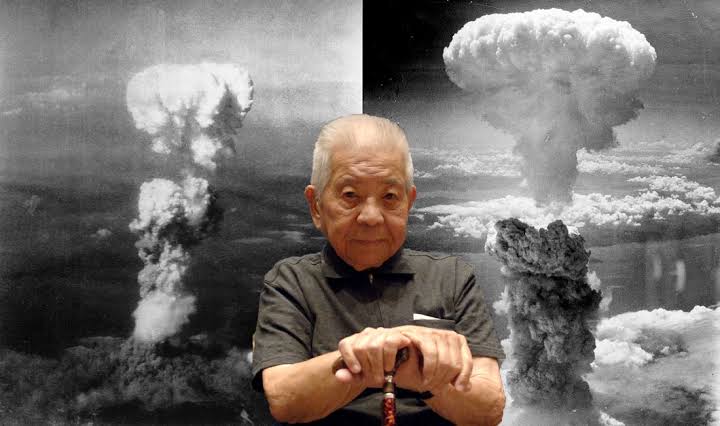
A man named Tsutomu Yamaguchi lived in Japan. In 1945, he was in Hiroshima for work. A bomb exploded. He was badly hurt. He survived. He went home to Nagasaki. Three days later, another bomb exploded. He was near the explosion again. He survived again. He lived to be 93 years old. He told people about his experience. He asked for peace. No one else survived both bombs.

๐Ÿ“– Level 2 โ€“ Intermediate:

Tsutomu Yamaguchi was a Japanese engineer. In August 1945, he was on a business trip in Hiroshima. On August 6, the United States dropped an atomic bomb on the city. Yamaguchi was only three kilometers from the explosion. He suffered serious burns and temporary blindness. He somehow survived. He spent the night in a shelter. The next day, he returned to his hometown โ€” Nagasaki. On August 9, a second atomic bomb fell on Nagasaki. Yamaguchi was again near the explosion. He survived a second time. He later estimated that he was about three kilometers from both blasts. Yamaguchi spent weeks in a hospital recovering. He suffered from radiation sickness for the rest of his life. For decades, he did not speak about his experience. But later in life, he wrote a book and gave speeches. He met with the makers of a film about nuclear weapons. In 2009, the Japanese government officially recognized him as a "nuclear double survivor." He died in 2010 at age 93. He remains the only person officially recognized to have survived both atomic bombings. His message was simple: war is terrible, and nuclear weapons must never be used again.

๐Ÿ“– Level 3 โ€“ Advanced:

On August 6, 1945, Tsutomu Yamaguchi, a 29-year-old engineer working for Mitsubishi, was concluding a three-month business trip in Hiroshima. At 8:15 AM, as he stepped off a tram, the American B-29 Enola Gay dropped "Little Boy," the first atomic bomb used in warfare. Yamaguchi was approximately three kilometers from ground zero. The blast ruptured his eardrums, temporarily blinded him, and seared the left side of his torso. He spent a harrowing night in an air-raid shelter before crawling to a train station the next day. Severely burned and bandaged, he traveled back to his hometown of Nagasaki, arriving on August 8. Despite his injuries, he reported to work on August 9 to assure his supervisors he was alive. At 11:02 AM, as he described the Hiroshima explosion to a skeptical manager, a second atomic bomb, "Fat Man," detonated over Nagasaki. Yamaguchi was again approximately three kilometers from the epicenter. The blast threw him across the room, but he survived โ€” again. Nagasaki's destruction killed his manager and many colleagues. Yamaguchi recovered after weeks in the hospital but suffered lifelong radiation effects, including recurring fevers, skin lesions, and the loss of his left eardrum. For decades, he remained silent, ashamed of his keloid scars. But in his final years, he wrote a memoir, gave lectures, and even met with the directors of the 2007 documentary Twice Survived. In 2009, the Japanese government officially designated him a nijuu hibakusha (double atomic bomb survivor). He died in 2010 at age 93. He was the only person ever certified by Japan as having survived both atomic bombings. His life stands as an improbable, horrifying, and ultimately hopeful testimony โ€” a living reminder that human beings can endure unimaginable destruction, and that the only way to honor such survival is to ensure nuclear weapons are never used again.

๐Ÿ“š Vocabulary

Words from this article that appear in our vocabulary books.

Word Definition
About a bit more or a bit less
Age a particular time in history. e.g. ice age
Air feeling
Alive being live
Approximately roughly-more or less than a number or amount
Blast an explosion,( bomb blast)
Bomb a container packed with materials that can burst out with force
Can used with see, smell or taste in the continuous tense
City a large town
Despite in spite of
Destruction the act of breaking something
Endure last; keep on; undergo; bear; stand
Ensure guarantee
Even at the same level
Experience the things that you have done in your life
Explosion the fact of something exploding
Film dark plastic-like material that can record images as photographs or as a moving picture
Final coming last; deciding
Government the group of people in control of a country
Ground reason, cause
Hospital a โ€‹place where โ€‹people who are โ€‹ill or โ€‹injured are โ€‹treated and taken โ€‹care of by โ€‹doctors and โ€‹nurses
Human connected with people
Improbable unlikely, not probable
Intermediate in-between
Living not dead
Loss have a negative balance after paying costs
Manager the person in control of a football team
Off less than usual
One 1
Peace is a time when there is no war
Remains parts of objects and buildings that have been discovered recently
Serious important
Shelter stay somewhere that protects you from danger or bad weather
Side an edge or border of sth
Silent without any sound
Skeptical doubting: suspected: doubtful
Skin covers the body
Temporarily for a short time only
Three 3
Trip a journey to a place and back again
Ultimately finally, eventually
War armed fighting between two or more countries or groups
Way the route or direction that you need to take to get somewhere
Work get or have the result you want
Zero 0

Comments (0)

Comments are published after admin approval.

No approved comments yet. Be the first to comment.

Stay updated

Get notified when we publish a new article.