
The Dancing Plague That Made People Dance Until They Died

The Dancing Plague That Made People Dance Until They Died banner
📖 Level 1 - Beginner:

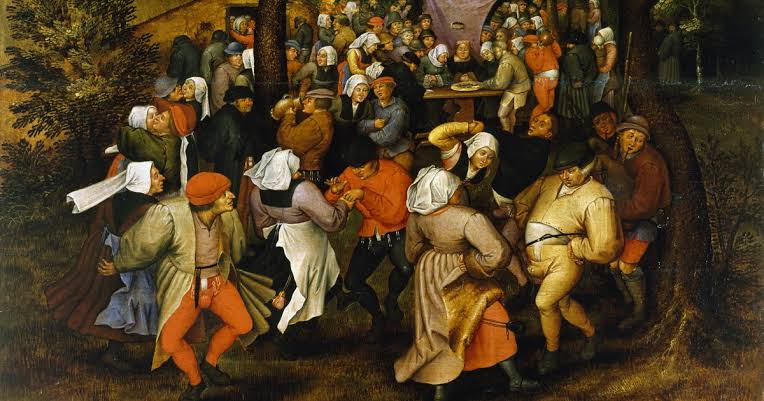
In 1518, a strange thing happened in France. One woman started dancing in the street. She could not stop. More people joined her. Soon hundreds of people were dancing. They danced for days. They danced for weeks. They danced until their feet bled. Some people died from exhaustion. Doctors did not know why. No music was playing. This event is called the Dancing Plague. No one has ever explained it.

📖 Level 2 – Intermediate:

In July 1518, in the city of Strasbourg, France (then part of the Holy Roman Empire), a woman named Frau Troffea began dancing in the street. She danced for days without stopping. Within a week, 34 people had joined her. Within a month, the number grew to about 400 dancers. They danced uncontrollably, day and night. Some dancers collapsed from exhaustion. Some had heart attacks. Some died. The city's doctors were confused. They declared it a "natural disease" caused by hot blood. Instead of stopping the dancers, authorities encouraged more dancing. They built a stage and hired musicians. They believed the dancers needed to dance the sickness out of their bodies. It did not work. The dancing continued for weeks. By the time the plague ended in September, dozens of people had died. Historians still debate the cause. Some say it was mass hysteria caused by stress, hunger, and disease. Others suggest ergot poisoning, a mold that grows on rye bread and causes hallucinations. Whatever the reason, the Dancing Plague of 1518 remains one of history's strangest medical mysteries.

📖 Level 3 – Advanced:

In the sweltering summer of 1518, the city of Strasbourg witnessed an affliction so bizarre that it has fascinated physicians and historians for centuries. It began with one woman, Frau Troffea, who stepped out of her house and began to dance in the street. Not gracefully, but frantically, jerkily, as if possessed. She danced for four to six days without rest. Within a week, three dozen others had joined her. Within a month, the mania had gripped nearly 400 people. They danced in the streets, in their homes, in the city square. They danced until their feet were raw and bleeding. They danced until they collapsed from exhaustion, dehydration, or heart failure. Some died — estimates range from 15 to over 50 fatalities. The city council, desperate and confused, consulted physicians. The doctors, adhering to the humoral theory of medicine, declared that the affliction was a "natural disease" caused by overheated blood. Their prescription? More dancing. They ordered that a stage be built, musicians hired, and professional dancers brought in to "shake out" the plague. It was a disastrous miscalculation. The dancing only intensified. By September, the mania finally subsided as mysteriously as it had begun. Modern theories attempt to explain the event. The leading hypothesis is mass psychogenic illness (mass hysteria), triggered by extreme stress — Strasbourg at the time was suffering from famine, typhus, syphilis, and a deep belief in supernatural curses. Another theory suggests ergot poisoning from contaminated rye bread, which can cause convulsions, hallucinations, and a sensation of needing to move. No definitive cause has been proven. The Dancing Plague of 1518 stands as a haunting reminder of the fragility of the human mind — and a historical anomaly that may never be fully solved.

📚 Vocabulary

Words from this article that appear in our vocabulary books.

Word Definition
About a bit more or a bit less
Anomaly irregularity-~ (in something) a thing, situation, etc. that is different from what is normal or expected
Attempt the act of trying to do something difficult
Blood the ​red ​liquid that is ​sent around the ​body by the ​heart
Can used with see, smell or taste in the continuous tense
City a large town
Contaminated to make something impure by adding something dirty or a poisonous substance # polluted
Continued constant, continual;continuing to happen or exist without stopping
Council the organization that provides local government in a city or area
Debate a discussion in which reasons for and against something are brought out
Deep long way down
Desperate extremely anxious
Disease illness in people, animals, or plants
Dozen twelve or a group of twelve
Event happening; important happening; result or outcome; one item in a program of sports
Exhaustion
Extreme much hotter, colder, or more violent than usual
Famine starvation; great shortage
Four 4
Heart an organ which moves blood in the body
Human connected with people
Intermediate in-between
May used to express possibility
Mind the ​part of a ​person that makes it ​possible for him or her to ​think
Nearly almost, closely, approximately
One 1
Part some but not all of a thing
Plague 1) to cause pain, suffering, or trouble to someone, especially for a long period of time.2)a disease that causes death and spreads quickly to a large number of people
Professional a person who plays a sport for money as their job
Range vary : to include a variety of different things or people in addition to those mentioned
Remains parts of objects and buildings that have been discovered recently
Say the right to take part in deciding sth (give sb a say/have a say in sth)
Shake to ​move ​backwards and ​forwards or up and down in ​quick, ​short ​movements
Six 6
Soon shortly, quickly
Square a ​flat ​shape with four ​sides of ​equal ​length and four ​angles of 90°
Stage a period that forms part of an activity
Stress say sth with extra loudness (SYN emphasis)
Theory explanation based on thought, observation, or reasoning
Three 3
Whatever in any case
Within inside
Work get or have the result you want

Comments (0)

Comments are published after admin approval.

No approved comments yet. Be the first to comment.

Stay updated

Get notified when we publish a new article.