
The Secret Behind a Cat's Flip
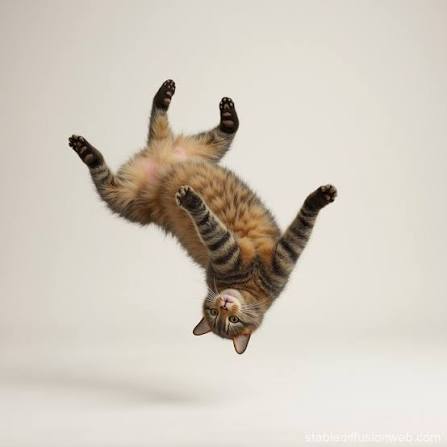
Cats have an amazing ability. When they fall, they almost always land on their feet. This is not magic or luck. It is a natural reflex called the "cat righting reflex." Kittens learn this skill when they are only a few weeks old. Scientists have studied this flipping motion to understand how cats twist their bodies in mid-air without any help.
📚 Vocabulary
Words from this article that appear in our vocabulary books.
| Word | Definition |
|---|---|
| About | a bit more or a bit less |
| Absorb | take in or suck up (liquids); interest greatly |
| Age | a particular time in history. e.g. ice age |
| Air | feeling |
| Amazing | remarkable |
| Bend | lean over at the waist (also bend your knee/elbow) |
| Can | used with see, smell or taste in the continuous tense |
| Close | careful, watchful |
| Counter | oppose, speak or act in opposition to |
| Despite | in spite of |
| Develop | grow or increase |
| Engineering | the activity of designing roads, railways, bridges, etc |
| Enough | as good, well, old, long, etc. as is necessary |
| Entire | completely (SYN whole) |
| Extraordinary | exceptional, phenomenal |
| Extreme | much hotter, colder, or more violent than usual |
| Fall | decrease; go lower (SYN drop) |
| Fine | a sum of money you have to pay if you break a law |
| Flexible | easily bent; willing to yield |
| Follow | track, pursue, chase |
| Four | 4 |
| Ground | reason, cause |
| Half | either of the two equal or nearly equal parts that together make up a whole |
| However | yet, but |
| Incredible | very unusual or much better than usual SYN extraordinary |
| Injury | an area of damage done to sb's body, especilaly in an accident |
| Intermediate | in-between |
| Keep | continue or stay ina particular place or condition |
| Land | area of earth |
| Like | used to introduce an example (SYN such as) |
| Manifest | reveal, to display or show (a quality or feeling) by one's acts or appearance; demonstrate |
| May | used to express possibility |
| Mean | average, medium, mediocre |
| Middle | centre |
| Momentum | — |
| Motion | the state of changing one's position; to direct by moving # movement |
| Nature | character, disposition, temperament |
| One | 1 |
| Orientation | 1)perspective 2) introduction |
| Rapid | very quick; swift |
| Relative | comparative.1.noun:relation. 2.adjective : having a particular quality when compared with something else |
| Remarkable | 1)notable 2)incredible |
| Rise | emerge |
| Risk | danger |
| Roughly | almost: approximately |
| Safe | a person you can rely on |
| Sequence | series |
| Serious | important |
| Seven | 7 |
| Severe | harsh |
| Sharp | very large and sudden |
| Shield | protect |
| Simultaneously | at the same time |
| Spin | a way of giving information to make it appear better, or less bad |
| Three | 3 |
| Turn | change to |
| Way | the route or direction that you need to take to get somewhere |
| While | although |
Comments (0)
Comments are published after admin approval.
No approved comments yet. Be the first to comment.