
Zaha Hadid: Building the Impossible

Zaha Hadid: Building the Impossible banner
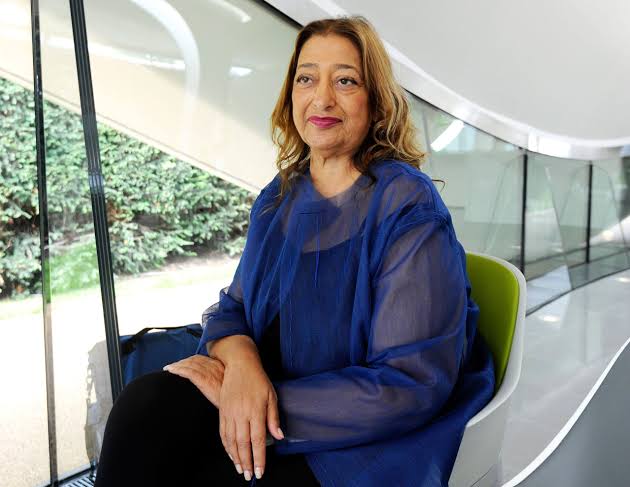
Zaha Hadid was an Iraqi-British architect who designed futuristic, flowing buildings that once seemed impossible to construct. Facing criticism as a woman in a male-dominated field, she persisted. In 2004, she became the first woman to win the Pritzker Prize, architecture’s highest honor. Her works, like the London Aquatics Centre, changed how we think about space and shape.

📖 Level 1 - Beginner:

Zaha Hadid made buildings. She was from Iraq. Later she lived in Britain. Her buildings looked like space ships. They had curves and sharp points. People said they were impossible to build. Zaha did not stop. She worked very hard. She was a woman in a man’s job. Many people doubted her. But she won big prizes. In 2004, she won the Pritzker Prize. That is the biggest prize for buildings. No woman had won it before. She designed the London Aquatics Centre for the Olympics. Swimmers loved it. She designed a fire station in Germany. She designed a museum in Rome. Her buildings are in many countries. Zaha died in 2016. But her buildings still stand. They look like the future. She showed that impossible things can be built. Girls who want to be architects look up to her. She proved that dreams with curves can come true.

📖 Level 2 – Intermediate:

Zaha Hadid (1950–2016) was a revolutionary architect. Born in Baghdad, Iraq, she studied mathematics before moving to London to study architecture. Her designs rejected straight lines and right angles. Instead, she used curves, sharp diagonals, and floating shapes inspired by nature and Russian art. Critics called her work “unbuildable.” For years, not a single design of hers was constructed. But Hadid persisted. Her breakthrough came in 1993 with the Vitra Fire Station in Germany — a jagged, concrete structure that looked like a frozen explosion. In 2004, she became the first woman ever to receive the Pritzker Architecture Prize. She designed the London Aquatics Centre for the 2012 Olympics, with its sweeping roof like a wave. Other famous works include the Guangzhou Opera House in China and the Heydar Aliyev Center in Azerbaijan, which appears to melt into the ground. Hadid faced double challenges: being Arab and a woman in a Western, male-dominated field. Yet she became one of the most influential architects of her time. She once said, “I don’t believe in luck. I believe in hard work.” Her legacy proves that imagination, backed by persistence, can reshape the world.

📖 Level 3 – Advanced:

Zaha Hadid, often called the “Queen of the Curve,” shattered conventions in architecture and gender expectations. Born in Baghdad in 1950, she studied mathematics at the American University of Beirut before enrolling at London’s Architectural Association, a hotbed of avant-garde design. Inspired by Russian Suprematism (especially Malevich’s floating shapes), she developed a distinctive style: fragmented geometry, dynamic diagonals, and flowing volumes that seemed to defy gravity. For over a decade, her radical drawings — including a winning design for Hong Kong’s Peak Club — remained purely theoretical. Critics dismissed them as unbuildable paintings. Undeterred, she taught and experimented until her first realized building, the Vitra Fire Station in Germany (1993), proved her vision could stand. In 2004, she became the first woman and first Muslim recipient of the Pritzker Prize, architecture’s highest honor. Her subsequent works include the London Aquatics Centre (a dramatic roof inspired by water motion), the Guangzhou Opera House (two boulders carved by a river), and the Heydar Aliyev Center in Baku (a continuous, foldable surface that erases any distinction between wall, roof, and floor). Hadid’s firm, Zaha Hadid Architects, also explored furniture, shoes, and digital design. She faced persistent sexism and xenophobia but remained defiant, once stating: “If you want an easy life, don’t be an architect.” After her sudden death in 2016, her firm continues under her name. Her legacy is not just buildings but a permission — to imagine the impossible and then build it.

📚 Vocabulary

Words from this article that appear in our vocabulary books.

Word Definition
About a bit more or a bit less
Architect a person who makes plans for buildings and other structures; a maker; a creator
Architecture structure- the style and design of a building or bulidings
Being creature, existence
Breakthrough revolution, success, advance, development, innovation, progress;an important new discovery in something you are studying
Can used with see, smell or taste in the continuous tense
Centre in the middle of something
Club an organization of people with a common purpose or interest, who meet regularly and take part in shared activities
Continuous uninterrupted: ongoing
Decade ten years
Defiant openly resisting; challenging
Defy to show little fear or regard for rules or established norms; to challange # resist
Design create, draw, plan
Distinction difference: excellence: honor
Distinctive characteristic, distinguishing
Dramatic sudden an surprising
Explosion the fact of something exploding
Ground reason, cause
Include to have something as a part (SYN contain)
Intermediate in-between
Jagged with sharp points sticking out; unevenly cut or torn
Like used to introduce an example (SYN such as)
Look turn your eyes to sth and pay attention to it; seem from what you can see
Male man or boy
Melt process of ice changing from a solid to a liquid due to high temperature
Motion the state of changing one's position; to direct by moving # movement
Nature character, disposition, temperament
Peak 1)top 2)highest point 3)maximum 4)time of the greatest activity 5)summit/climax
Persistent long lasting
Radical going to the root; fundamental; extreme; person with extreme opinions
Roof the ​covering that ​forms the ​top of a ​building
Shape the ​particular ​physical ​form or ​appearance of something
Sharp very large and sudden
Space the area beyond the earth round the planets and stars
Straight continuing in one ​direction without ​bending or ​curving
Style the way sth is written or spoken
Subsequent later; following; coming after
Sudden happening very quickly
Surface the ​outer or ​top ​part or ​layer of something
Vision power of seeing; sense of sight
Wall a ​vertical ​structure, often made of ​stone or ​brick, that ​divides or ​surrounds something
Wave a raised line of water that moves across the surface
Win do the best in a competition
Work get or have the result you want
Xenophobia
Yet however

Comments (0)

Comments are published after admin approval.

No approved comments yet. Be the first to comment.

Stay updated

Get notified when we publish a new article.