
Why Some People Love Change and Others Fear It
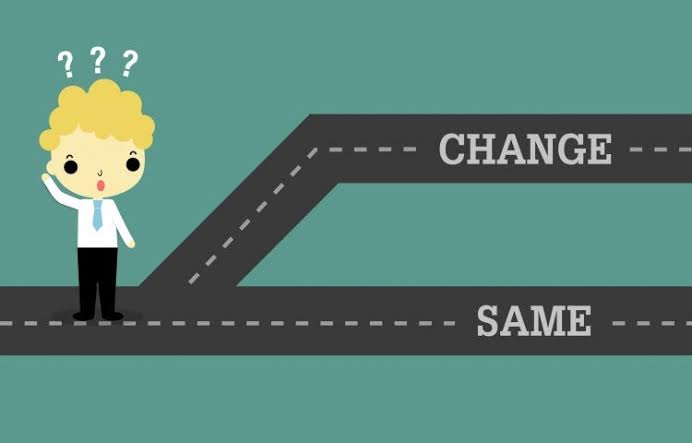
Every workplace, family, and country has two kinds of people: those who jump at new things and those who hold onto the old. Why? Psychologists say our attitude toward change is shaped by childhood, culture, and even our genes. Some see change as opportunity. Others see it as threat. Neither is wrong. The secret is understanding why we react the way we do — and learning to respect the other side.
📚 Vocabulary
Words from this article that appear in our vocabulary books.
| Word | Definition |
|---|---|
| About | a bit more or a bit less |
| Adjust | modify, to change something slightly, especially to make it more correct, effective, or suitable |
| Anxious | worried and afraid |
| Arbitrary | — |
| Arise | come about; emerge; appear;if a problem or difficult situation ~s, it begins to happen |
| Attachment | preference for, dependency, interest, a feeling that you like or love someone or something and that you would be unhappy without them |
| Attitude | the way you think, feel and behave |
| Cautious | very careful; never taking chances |
| Change | smaller units of money given in exchange for larger units of the same amount |
| Chaotic | disorganized-a ~ situation is one in which everything is happening in a confused way |
| Complain | make a statement that you are not satisfied with something |
| Create | invent, manufacture |
| Creative | inventive, innovative |
| Cultural | something related to art, literature, music, etc |
| Culture | activities involving art, literature, music, etc |
| Curious | odd or strange; eager to learn # peculiar |
| Develop | grow or increase |
| Dimension | aspect: size |
| Disrespectful | discourteous, impolite, uncivil |
| Distinguish | notice from the difference.to recognize and understand the difference between two or more things or people |
| Diverse | distinct: various-very different from each other |
| During | at a point of within a period of time |
| Embrace | hug one another; a hug |
| Encourage | give courage to; increase the confidence of |
| End | purpose |
| Even | at the same level |
| Excel | be better than; do better than |
| Exhibit | display; show |
| Exist | to be real |
| Experience | the things that you have done in your life |
| Fall | decrease; go lower (SYN drop) |
| Fear | a feeling that sth bad might happen |
| Feel | give a sensation of or like sth when touched |
| Fight | when people try to hurt or kill each other |
| Fixed | firm, constant, stable, steady |
| Flexibility | the property to be changed easily |
| Follow | track, pursue, chase |
| Generate | produce |
| Group | a number of people who play music together (SYN band) |
| Harm | physical or other injury or damage |
| Hold | support-keep up |
| Huge | large, enormous, colossal, massive |
| Human | connected with people |
| Inheritance | money or objects that someone gives you when they die |
| Innovation | new, novelty |
| Intermediate | in-between |
| Keep | continue or stay ina particular place or condition |
| Like | used to introduce an example (SYN such as) |
| Loss | have a negative balance after paying costs |
| Matter | issue, affair |
| May | used to express possibility |
| Necessary | required |
| Opportunity | a time when it's possible to do sth that you want to do |
| Orientation | 1)perspective 2) introduction |
| Personality | character, trait |
| Position | job |
| Potential | possibility as opposed to actuality; capability of coming into being or action |
| Predictable | when it's possible to say how sth will change in the future |
| Resistance | the action of trying to stop sth happening or stop sb doing sth |
| Reveal | make known |
| Role | function |
| Say | the right to take part in deciding sth (give sb a say/have a say in sth) |
| See | know or notice sth using your eyes |
| Several | more than two, but not many |
| Shape | the particular physical form or appearance of something |
| Side | an edge or border of sth |
| Spectrum | range |
| Stability | without much change |
| Stable | keep the same value SYN remain unchanged, stay the same |
| Stressful | making you worry a lot |
| Stubbornness | a determination not to change your opinion or attitude |
| Successful | has gone well |
| Superior | excellent quality; above all the rest # exceptional |
| Sympathetic | having or showing kind feelings toward others; approving; enjoying the same things and getting along well together |
| Tend | care for : to be likely to happen |
| Therefore | consequently: in that purpose conj) hence |
| Threat | sign or cause of possible evil or harm |
| Tolerance | willingness to accept behaviour and beliefs that are different from your own, although you might not agree with or approve of them |
| Tolerate | endure |
| Tradition | beliefs, opinions, and customs handed down from one generation to another |
| Uniform | without variation |
| Unpredictable | is impossible to say how it will change in the future |
| Value | think that sb/sth is important |
| Vary | be different from each other |
| Way | the route or direction that you need to take to get somewhere |
| While | although |
| Worth | value of something in money equivalent |
| Wrong | cousing problems or difficulties |
Comments (0)
Comments are published after admin approval.
No approved comments yet. Be the first to comment.