📖 Level 1 - Beginner:
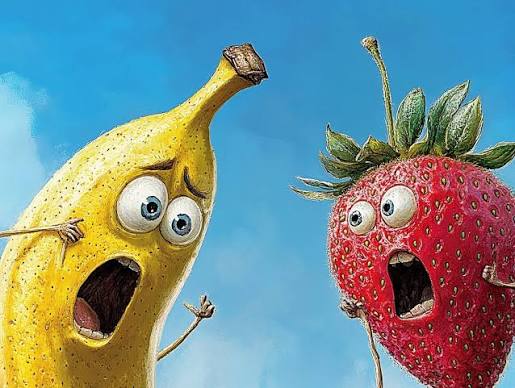
A banana is a berry. A strawberry is not a berry. This sounds strange. But it is true. Scientists use special rules. A berry comes from one flower. It has three layers. It has seeds inside. Bananas have seeds inside. You just cannot see them. Strawberries have seeds on the outside. That is different. So strawberries are not berries. Raspberries are not berries either. Neither are blackberries. Bananas, pumpkins, and watermelons are real berries. Nature is tricky.
📖 Level 2 – Intermediate:
Here is a fact that confuses most people: bananas are berries, but strawberries are not. How can this be? The answer lies in botany, the scientific study of plants. Botanists define a berry as a fruit that comes from a single flower with one ovary. The fruit must have three distinct layers: the outer skin (exocarp), the fleshy middle (mesocarp), and the inner part containing seeds (endocarp). Most importantly, the seeds must be inside the fruit, not on the outside. Bananas fit this definition perfectly. The tiny black dots inside a banana are its seeds. So bananas are true berries. Pumpkins, watermelons, tomatoes, and avocados are also berries. Strawberries,
however, develop from a flower with multiple ovaries. The red fleshy part is not the fruit. The tiny brown specks on the outside are the actual fruits, each containing one seed. So strawberries are not berries. They are "aggregate fruits." Raspberries and blackberries are also aggregate fruits. The confusion comes from everyday language. In the kitchen, we call small, sweet fruits "berries." But in science, the rules are different. Next time you eat a banana, remember: you are eating a berry. And a strawberry? It is just pretending.
📖 Level 3 – Advanced:
In the culinary world, a berry is any small, sweet, edible fruit. By that standard, strawberries, raspberries, and blueberries all qualify. But botany, the science of plants, operates under a far stricter set of rules. The botanical definition of a true berry (or "bacca") is precise: a fleshy fruit produced from a single flower containing a single ovary, with three distinct layers (exocarp, mesocarp, endocarp), and with seeds embedded inside the fruit's flesh. By this definition, bananas are unquestionably berries. The soft, sweet flesh surrounding the tiny, inconspicuous seeds meets every criterion. What else qualifies as a berry? Surprisingly, watermelons, pumpkins, cucumbers, tomatoes, eggplants, avocados, and grapes. All are botanical berries. Strawberries, on the other hand, fail spectacularly. A strawberry comes from a single flower with multiple ovaries. The red, juicy "fruit" we eat is
actually a swollen receptacle — the part of the stem that holds the ovaries. The tiny, speck-like achenes on the strawberry's surface are the true fruits, each containing a single seed. For this reason, botanists classify strawberries as "aggregate accessory fruits." Raspberries and blackberries are similarly excluded, though they are "aggregate fruits" (clusters of tiny drupes). Blueberries? They are true berries. So the next time someone says "strawberry is a berry," you can correct them with scientific confidence. The fruit that looks most like a berry (red, seedy, juicy) is not a berry. The long, yellow, peelable fruit you would never call a berry — is one. Botany has a sense of humor, even if bananas do not.

Comments (0)
Comments are published after admin approval.
No approved comments yet. Be the first to comment.