
The Man Who Lived Only in the Present Moment

The Man Who Lived Only in the Present Moment banner
📖 Level 1 - Beginner:

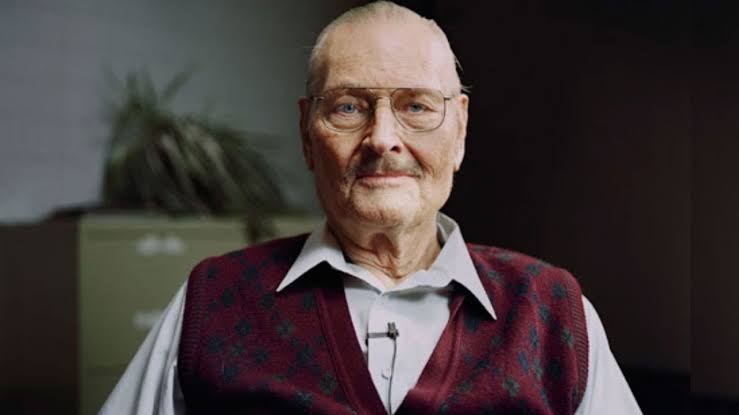
A man named Henry had a very bad memory. He could not remember new things. Every 20 seconds, he forgot everything. He forgot what he just ate. He forgot who he just met. He did not know his own age. But he remembered his childhood. He remembered his family from long ago. Scientists studied him for 50 years. He helped them understand how memory works. He was always living in the present moment.

📖 Level 2 – Intermediate:

Henry Molaison, known to scientists as "H.M.," was one of the most important patients in the history of neuroscience. In 1953, at age 27, he had brain surgery to stop his severe epilepsy. Doctors removed a small part of his brain called the hippocampus. The surgery stopped his seizures. But it also destroyed his ability to form new memories. From that day forward, Henry could remember almost nothing for more than 20 to 30 seconds. He could not learn new faces, new words, or new routes. He read the same magazine over and over. He ate the same meal multiple times. Every time he saw his doctor, he believed they were meeting for the first time. However, he could remember events from his childhood perfectly. He could also learn new physical skills, like drawing a star while looking in a mirror, even though he had no memory of practicing. Scientists studied Henry for over 50 years. He died in 2008 at age 82. His brain was preserved and is still being studied. Henry taught us that the hippocampus is essential for making new long-term memories. He lived entirely in the present moment — a condition both tragic and endlessly fascinating.

📖 Level 3 – Advanced:

In the annals of neuroscience, few individuals have contributed more to our understanding of memory than Henry Gustav Molaison, known simply as "H.M." In 1953, at the age of 27, Molaison underwent an experimental lobotomy to treat debilitating epilepsy. Surgeon William Beecher Scoville removed large portions of Molaison's medial temporal lobes bilaterally, including most of his hippocampus, amygdala, and surrounding cortical areas. The surgery succeeded in reducing his seizures. But it came at an unimaginable cost: Molaison became profoundly amnesic. He could no longer transfer new information from short-term to long-term memory — a condition known as anterograde amnesia. His working memory lasted roughly 20 seconds. After that, new experiences evaporated. He could hold a conversation, but moments later, he would not remember having spoken. He met the same researchers thousands of times, each encounter feeling fresh to him. He read the same magazines without recall. He could not learn new vocabulary or recognize faces he had seen minutes earlier. Remarkably, his procedural memory remained intact. He could learn to trace a star while viewing his hand in a mirror — a difficult motor task — and improve over days of practice, yet never remember having performed the task before. This dissociation between declarative memory (knowing "what") and procedural memory (knowing "how") revolutionized our understanding of memory systems in the brain. The hippocampus, researchers concluded, is the gateway for forming explicit long-term memories; when it is gone, one is condemned to a perpetual present. Molaison participated in hundreds of studies over five decades, becoming the most studied patient in medical history. He died in 2008. His brain was scanned, sliced into 2,401 individual sections, and digitized — a virtual atlas available to scientists worldwide. Henry Molaison could not remember a single fact about his own heroic contribution to science. But because of him, we will never forget how memory makes us who we are.

📚 Vocabulary

Words from this article that appear in our vocabulary books.

Word Definition
About a bit more or a bit less
Age a particular time in history. e.g. ice age
Available obtainable, attainable, opposite of unavailable
Being creature, existence
Brain the ​organ inside the ​head that ​controls ​thought, ​memory, ​feelings, and ​activity
Conversation a talk between two or more people
Debilitating weakening # weakening
Drawing picture made with pencil or pen
Encounter meet
Entirely wholly,completely and in every possible way
Essential necessary; very important
Even at the same level
Explicit obvious, clear
Fascinating extremely attractive
Five 5
Hold support-keep up
However yet, but
Improve become better (SYN get better; make progress)
Individual one person who is seen separately from others or a group
Intact untouched, complete
Intermediate in-between
Large extensive, big
Like used to introduce an example (SYN such as)
Living not dead
Mirror reflect, show a reflection of
One 1
Part some but not all of a thing
Patient able to stay calm and wait for sth/sb
Perpetual constant, continual, habitual, eternal
Present a thing that you give to sb, e.g. for their birthday SYN gift
Profoundly in a deep way; showing deep knowledge of a subject # significantly
Remarkably surprisingly
Roughly almost: approximately
Science a particular subject which is studied by scientific methods
Severe harsh
Star a very large ball of burning gas in space
Surgeon a doctor who does medical operations
Surgery the ​treatment of ​injuries or ​diseases in ​people or ​animals by ​cutting ​open the ​body and ​removing or ​repairing the ​damaged ​part
Surrounding that is near or around sth
Task work
Transfer move
Virtual (in computing) created by computers or appearing on computers or the internet. a virtual community/ reality/ office
While although
Worldwide existing or happening in all parts of the world
Yet however

Comments (0)

Comments are published after admin approval.

No approved comments yet. Be the first to comment.

Stay updated

Get notified when we publish a new article.