
The Accidental Invention That Walked Down Stairs

The Accidental Invention That Walked Down Stairs banner
📖 Level 1 - Beginner:

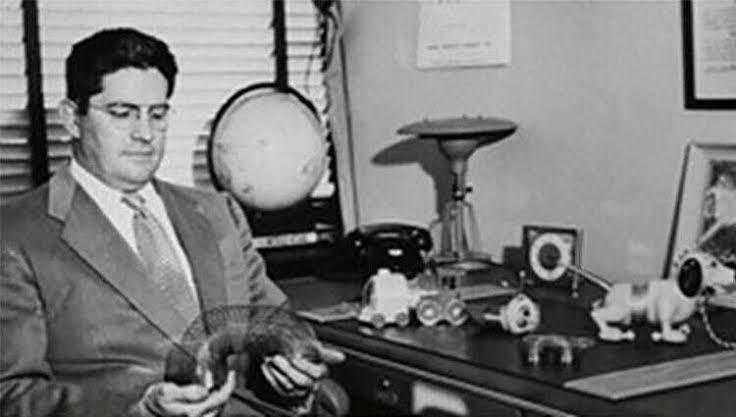
A man named Richard James was an engineer. In 1943, he was trying to make a spring. The spring fell off a shelf. It walked down some books. Then it landed on the floor. It did not fall. It walked. Richard showed his wife. She named it the Slinky. They sold 400 Slinkies in 90 minutes. Today, over 300 million Slinkies have been sold. All because a spring fell by accident.

📖 Level 2 – Intermediate:

The Slinky, one of the most beloved toys in history, was invented completely by accident. In 1943, a naval engineer named Richard James was working on a project for the US Navy. He was trying to create a spring that could keep sensitive ship instruments steady on rough seas. One day, a spring fell off his workbench. Instead of falling flat, the spring "walked" down a stack of books, then onto the floor, and then continued walking. Richard was amazed. He went home and told his wife, Betty, "I think I can make a toy out of this." Betty searched a dictionary for the perfect name and found "Slinky," which means smooth and sinuous. The couple borrowed $500 to manufacture the first Slinkies. In 1945, they demonstrated the toy at Gimbels department store in Philadelphia. They sold 400 Slinkies in just 90 minutes. Today, over 300 million Slinkies have been sold worldwide. The original Slinky was made from 80 feet of wire. It has no batteries, no gears, no electronics. It just walks down stairs — alone or in pairs — thanks to the physics of waves traveling through a spring. Richard James later left the company, but Betty ran it successfully for decades. All because a spring fell off a shelf.

📖 Level 3 – Advanced:

In the annals of accidental inventions, few stories are as charming — or as perfectly simple — as that of the Slinky. The year was 1943, and Richard James, a young naval engineer stationed at the William Cramp & Sons shipyards in Philadelphia, was wrestling with a technical problem. He needed to design a spring that would keep sensitive instruments stable on Navy ships battling rough Atlantic swells. While experimenting with tension springs, he knocked one off his workbench. Instead of clattering to a stop, the spring performed a slow, graceful, undulating "walk" across a stack of books, down to the floor, and then across the workshop. James was transfixed. He rushed home to his wife, Betty, and announced, "I think I can make a toy out of this." Betty, a former schoolteacher, searched the dictionary for a fitting name, landing on "Slinky" — derived from the Old English word "slincan," meaning to creep or move smoothly. The couple borrowed $500 and contracted a local machine shop to produce the first Slinkys from 80 feet of Swedish steel wire. In November 1945, they set up a ramp at Gimbels department store in Philadelphia. Betty managed the cash box. Richard demonstrated. Within 90 minutes, all 400 Slinkys were sold. The physics behind the Slinky's walk is a classic demonstration of transverse and longitudinal waves: as one end of the coil expands, the other contracts, transferring energy along the spring and creating a self-propagating motion. Despite its simplicity, the Slinky has been used in physics classrooms for decades to model wave behavior. It has also been deployed as a mobile radio antenna by US troops in Vietnam. By 1960, the Slinky had become a household name, with over 100 million sold. Today, the count exceeds 300 million. The Slinky was inducted into the National Toy Hall of Fame in 2000. And it all began with a forgotten spring, a startled engineer, and the quiet magic of a toy that walks down stairs — alone or in pairs — and makes everyone smile.

📚 Vocabulary

Words from this article that appear in our vocabulary books.

Word Definition
Accident something ​bad that ​happens that is not ​expected or ​intended and that often ​damages something or ​injures someone
Accidental unexpected
Amazed very surprised (SYN astonished)
Can used with see, smell or taste in the continuous tense
Classic typical, having all the features that are typical or expected of a particular thing or situation
Company organisation
Completely totally
Continued constant, continual;continuing to happen or exist without stopping
Couple associate, combine
Create invent, manufacture
Creep move slowly and quietly so you;re not seen or heard, tiptoe
Demonstration an occasion when a group of people march or stand together to show that they disagree with or support something or someone
Department a section of a business, university, etc
Design create, draw, plan
Despite in spite of
End purpose
Energy the ability to be very active without getting tired
Fall decrease; go lower (SYN drop)
Former having a particular position in the past
Found to establish: start up a philanthropic organization # establish
Hall a room or small passage just inside the entrance to a house
Intermediate in-between
Invention something that has never been made before
Keep continue or stay ina particular place or condition
Local located in the area where you live
Manufacture to produce goods in factories
Means ways # methods
Motion the state of changing one's position; to direct by moving # movement
National connected with all of a country
Off less than usual
One 1
Original existing from the time when sth was first made or done
Produce being responsible for business side of a film
Rough (of a surface) doesn't feel smooth
Sensitive receiving impressions readily; easily affected or influenced; easily hurt or offended
Ship a ​large ​boat for ​travelling on ​water, ​especially ​across the ​sea
Smooth with a completely flat surface
Stable keep the same value SYN remain unchanged, stay the same
Steady stable, constant, firm
Tension pressure
Through by
Wave a raised line of water that moves across the surface
While although
Wife the woman that you are ​married to
Within inside
Worldwide existing or happening in all parts of the world
Wrestling ​a sport in which two people fight and try to throw each other to the ground

Comments (0)

Comments are published after admin approval.

No approved comments yet. Be the first to comment.

Stay updated

Get notified when we publish a new article.