
The Renaissance Man Who Drew Tomorrow
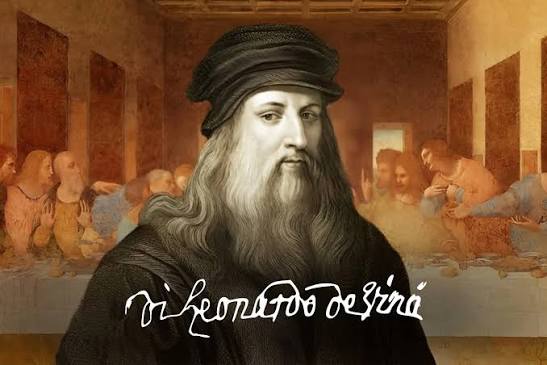
Leonardo da Vinci (1452–1519) was more than a painter. He was an inventor, scientist, engineer, and musician. He designed flying machines, studied human anatomy, and created masterpieces like the Mona Lisa and The Last Supper. His notebooks are filled with ideas centuries ahead of his time. Leonardo represents the spirit of the Italian Renaissance: curiosity without limits.
📚 Vocabulary
Words from this article that appear in our vocabulary books.
| Word | Definition |
|---|---|
| About | a bit more or a bit less |
| Ambiguous | more than one meaning: vague |
| Authority | the right to command or enforce obedience; power delegated to another |
| Avoid | keep away from; keep out of the way |
| Can | used with see, smell or taste in the continuous tense |
| Celebrated | famous, renowned |
| Choose | opt, select, adopt, set, specify, opposite of reject & decline |
| Curious | odd or strange; eager to learn # peculiar |
| Cut | an injury made when the skin is cut with something sharp |
| Despite | in spite of |
| Dissolve | mix a solid with a liquid until it becomes part of it |
| Drama | exciting things that happen; an exciting event |
| Drawing | picture made with pencil or pen |
| Engineering | the activity of designing roads, railways, bridges, etc |
| Even | at the same level |
| Expression | a word or group of words used in a particular situation or a particular people |
| Final | coming last; deciding |
| Fly | a small insect with two wings |
| Formal | used in situations that are serious or that involve people we don't know well |
| Freedom | the right or ability to say or do what you want |
| Friction | conflict, disagreement, tension |
| Guest | person you have invited to a social occasion, such as a party or a meal |
| Heart | an organ which moves blood in the body |
| Human | connected with people |
| Ideal | perfect; the best possible |
| Ingenious | having great mental ability; clever |
| Intermediate | in-between |
| Keep | continue or stay ina particular place or condition |
| King | a male ruler of a country, who holds this position because of his royal birth |
| Like | used to introduce an example (SYN such as) |
| Massive | big and heavy; large and solid; bulky |
| Mind | the part of a person that makes it possible for him or her to think |
| Mirror | reflect, show a reflection of |
| Musician | a person who plays a musical instrument |
| Mysterious | not easily understood or figured out # baffling |
| Nature | character, disposition, temperament |
| Obscure | 1) to make something difficult to know or understand 2) conceal, to prevent something from being seen or heard clearly |
| Painter | someone who makes paints |
| Painting | process of creation of pictures with brush and paints |
| Polymath | — |
| Position | job |
| Preoccupied | took up all attention |
| Radical | going to the root; fundamental; extreme; person with extreme opinions |
| Recording | a process of putting music or sth similar in a digital form or a tape |
| Reportedly | to know by report; unconfirmed; supposedly # rumored |
| Reputation | fame |
| Reveal | make known |
| Rudimentary | primitive: basic |
| Science | a particular subject which is studied by scientific methods |
| Scientist | a person who studies the physical world |
| Source | place from which something comes or is obtained |
| Suit | when sth looks good on you |
| Technique | method |
| Ultimate | in the end |
| Unprecedented | novel: unique: initial: new: unexampled |
| Vehicle | means: method: way; formal something you use to express and spread your ideas, opinions etc SYN medium |
| Way | the route or direction that you need to take to get somewhere |
| Wing | the flat part of the body that a bird, insect, or bat uses for flying |
| Work | get or have the result you want |
| Yet | however |
Comments (0)
Comments are published after admin approval.
No approved comments yet. Be the first to comment.