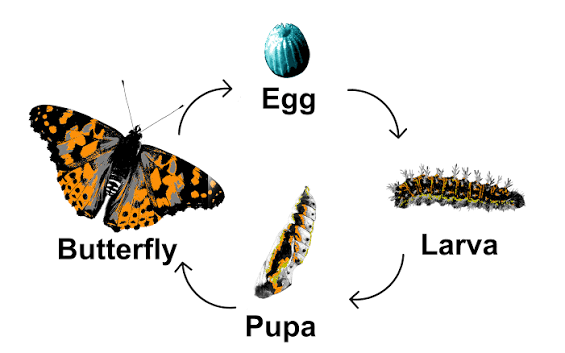
A butterfly goes through four stages of life: egg, caterpillar (larva), pupa (chrysalis), and adult. This process is called complete metamorphosis. Inside the chrysalis, the caterpillar completely breaks down and rebuilds into a butterfly. It is one of nature's most amazing transformations, showing how change can create something beautiful.
📖 Level 1 - Beginner:
A butterfly starts as a tiny egg. The egg is very small. It sticks to a leaf. After a few days, a caterpillar comes out. The caterpillar is very hungry. It eats leaves all day. It grows bigger and bigger. The caterpillar makes a hard shell. This shell is called a chrysalis. Inside the chrysalis, something magic happens. The caterpillar turns into liquid. Then it becomes a butterfly. This takes many days. Finally, the butterfly comes out. Its wings are wet and soft. It waits for its wings to dry. Then it flies away. The butterfly looks for flowers. It drinks sweet nectar. Soon it will lay eggs. Then the magic starts again. This whole process is called metamorphosis. It means a big change. Next time you see a butterfly, remember its secret magic show.
📖 Level 2 – Intermediate:
The life cycle of a butterfly is one of nature’s most fascinating transformations. It has four stages: egg, larva (caterpillar), pupa (chrysalis), and adult. First, a female butterfly lays tiny eggs on a leaf. Each egg has a protective shell. After about four to ten days, a caterpillar hatches. The caterpillar’s first meal is often its own eggshell. Then it eats leaves constantly. It grows very fast and sheds its skin several times. When fully grown, the caterpillar finds a safe place. It attaches itself to a twig and forms a chrysalis. Inside the chrysalis, the caterpillar dissolves into a liquid. Special cells called imaginal discs grow into wings, legs, and eyes. After one to two weeks, the adult butterfly emerges. Its wings are crumpled and wet. It pumps blood into the wings to expand them. Once dry, it flies off to find food and a mate. The whole cycle takes about one month. This incredible change is called complete metamorphosis. It reminds us that big changes can lead to beautiful results.
📖 Level 3 – Advanced:
The butterfly’s life cycle exemplifies complete metamorphosis, a four‑stage biological process: egg, larva, pupa, and adult. It begins when a female butterfly deposits fertilized eggs on a host plant. These eggs, no larger than a pinhead, contain embryos that develop within days. Upon hatching, the larva — better known as a caterpillar — emerges. Its sole purpose is consumption. The caterpillar eats voraciously, growing thousands of times its original size. It molts (sheds its skin) multiple times to accommodate growth. Once fully grown, the caterpillar enters the pupal stage. It forms a chrysalis, a hard outer casing. Inside, something remarkable occurs: the caterpillar releases enzymes that break down its body into a protein‑rich liquid. Imaginal discs, clusters of dormant cells, then activate and differentiate into the adult structures — wings, antennae, compound eyes, and reproductive organs. This reorganization, taking one to three weeks depending on species, is controlled by hormones. Finally, the adult butterfly emerges. It must immediately pump hemolymph (insect blood) into its crumpled wings and allow them to harden before flight. As an adult, the butterfly focuses on
reproduction and pollination, living anywhere from one week to several months. This
transformation, while common among holometabolous insects (beetles, bees, flies), remains a
breathtaking example of nature’s capacity for radical change.

Comments (0)
Comments are published after admin approval.
No approved comments yet. Be the first to comment.