
The History of the World Cup

The History of the World Cup banner
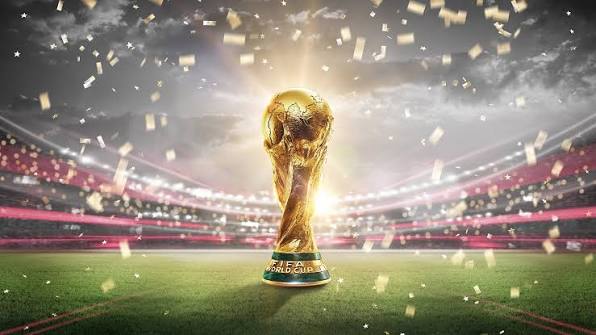
The FIFA World Cup began in 1930 with just 13 teams invited to Uruguay. The host nation won the first final. Over 90 years, the tournament grew into the world’s biggest sporting event. It has seen legendary players, shocking upsets, and a golden trophy that every nation dreams of lifting.

📖 Level 1 - Beginner:

The World Cup is a big soccer tournament. It happens every four years. The first World Cup was in 1930. Only 13 teams played. Uruguay was the host. They won the trophy. There was no qualification then. Teams just got invitations. In 1942 and 1946, there was no World Cup. World War Two stopped it. The trophy was called the Jules Rimet Cup. Brazil won it three times. They kept the real trophy forever. But it was stolen in 1983. It never came back. Today, 32 teams play in the World Cup. Billions of people watch on TV. Players like Pelé, Maradona, and Messi became famous. Winning the World Cup is the biggest dream in soccer. The new gold trophy is safe. Every country wants to hold it high. The next World Cup will have 48 teams. The world will stop to watch again.

📖 Level 2 – Intermediate:

The FIFA World Cup is soccer’s greatest prize, but its first edition in 1930 was almost canceled. Only 13 nations agreed to travel to Uruguay, partly because many European teams thought the journey was too long and expensive. Uruguay, the host and two‑time Olympic champion, won the final against Argentina 4‑2. The trophy was named after Jules Rimet, the Frenchman who pushed for the tournament’s creation. The World Cup grew slowly. It did not happen in 1942 or 1946 because of World War II. By 1950, more teams joined. Brazil, Italy, and Germany became champions. Pelé helped Brazil win three times (1958, 1962, 1970). As a reward, Brazil kept the original Jules Rimet trophy forever. Sadly, it was stolen in Rio de Janeiro in 1983 and never recovered — likely melted down for gold. The current trophy, introduced in 1974, is solid 18‑carat gold. It shows two athletes holding up the Earth. Today, 32 nations qualify after years of matches. Over three billion people watched the 2022 final between Argentina and France. The 2026 World Cup will expand to 48 teams, co‑hosted by the USA, Canada, and Mexico. From a shaky start in Uruguay to a global festival, the World Cup has become the most watched sporting event on the planet.

📖 Level 3 – Advanced:

The FIFA World Cup’s origin story defies its current scale. In 1930, with the Great Depression looming, only 13 nations accepted Uruguay’s invitation to the inaugural tournament. Most European teams declined due to the three‑week boat voyage across the Atlantic. Undeterred, Uruguay — celebrating its centenary of independence — built a 100,000‑capacity stadium and beat neighbors Argentina 4‑2 in the final. The victory cemented soccer’s status as a source of national pride. The golden trophy, later named after FIFA president Jules Rimet, was awarded to winners until 1970. World War II forced the cancellation of the 1942 and 1946 tournaments, but the event resumed in 1950, with Uruguay stunning host Brazil in the famous Maracanã final. The tournament’s golden era arrived with Pelé, who led Brazil to three victories in four World Cups (1958, 1962, 1970). As promised, Brazil kept the original Jules Rimet trophy permanently. However, in 1983, the 3.8‑kilogram statuette was stolen from a Brazilian confederation headquarters. It was never recovered; investigators believe it was melted into gold bars. The modern trophy, introduced for the 1974 tournament, stands 36 centimeters tall, weighs 6.1 kilograms of solid 18‑carat gold, and features two athletes holding the globe aloft. Winning nations receive a gold‑plated replica to keep. The tournament format expanded from 13 to 16 teams (1934‑1978), then 24 (1982‑1994), and 32 (1998‑2022). The 2026 edition will feature 48 teams, co‑hosted across three North American nations. Beyond the spectacle, the World Cup has mirrored geopolitics — from Italy’s controversial 1934 victory under Mussolini to Argentina’s 1978 win under a military junta. Yet its enduring power lies in shared moments: Maradona’s “Hand of God,” Zidane’s headbutt, Messi’s long‑awaited coronation. No trophy unites — and divides — the world quite like this one.

📚 Vocabulary

Words from this article that appear in our vocabulary books.

Word Definition
Boat a small vehicle to travel on water
Capacity amount of room or space inside; largest amount that can be held by a container
Champion 1)promote, to publicly fight for and defend an aim or principle, such as the rights of a group of people 2) someone who publicly fights for and defends an aim or principle, such as the rights of a group of people
Controversial causing angry discussion and disagreement
Current present
Depression a feeling of being very unhappy
Dream a ​series of ​events or ​images that ​happen in ​your ​mind when you are ​sleeping
Due expected to arrive or happen
Earth our planet
Enduring lasting: withstanding, durable
Era period
Event happening; important happening; result or outcome; one item in a program of sports
Expand increase in size; enlarge; swell
Expensive costly; highly prices
Feature an important part of sth, and often a part that you notice
Festival a day or days when people celebrate something
Final coming last; deciding
Format (in computing)the way data is organized in a computer file or program
Hold support-keep up
However yet, but
Independence freedom from control by another country
Intermediate in-between
Keep continue or stay ina particular place or condition
Like used to introduce an example (SYN such as)
Military connected with soldiers, or the army, navy, and air force
National connected with all of a country
Origin the cause of sth, or the place where it starts to exist
Original existing from the time when sth was first made or done
Partly in some degree
President the leader of a country with no king or queen
Qualify become fit; show that you are able
Replica copy
Reward sth you get because you have done sth helpful, worked hard, etc
Safe a person you can rely on
Scale magnitude
Solid in hard form
Source place from which something comes or is obtained
Stadium a large structure where people sit and watch sport
Stunning astounding
War armed fighting between two or more countries or groups
Win do the best in a competition
Yet however

Comments (0)

Comments are published after admin approval.

No approved comments yet. Be the first to comment.

Stay updated

Get notified when we publish a new article.