
How to Overcome Anxiety?
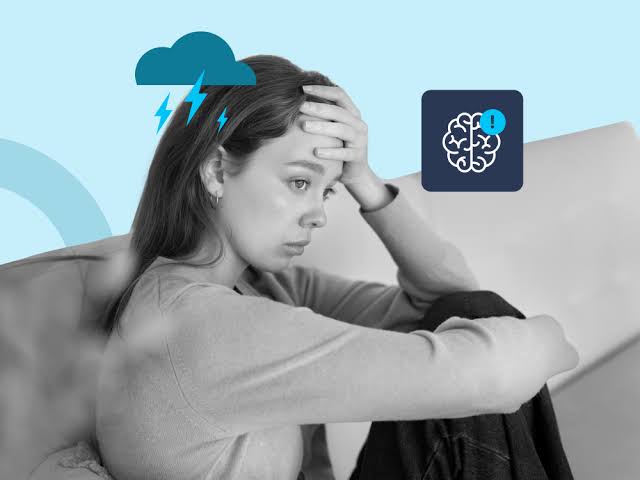
Anxiety is a normal stress response, but it can feel overwhelming. Simple, proven techniques can help: deep breathing, grounding exercises, and changing negative thoughts. Overcoming anxiety does not mean eliminating fear completely — it means learning to manage it so you can live fully. Small, consistent steps create real change.
📚 Vocabulary
Words from this article that appear in our vocabulary books.
| Word | Definition |
|---|---|
| About | a bit more or a bit less |
| Alarm | sound: warning |
| Anxiety | worry, the state of feeling nervous or worried that something bad is going to happen |
| Anxious | worried and afraid |
| Arms | FML weapons, especially those used by the armed forces |
| Automatic | able to work by itself without direct human control |
| Balanced | a state where everything is of the same site or weight; an element on one side that counters an equal element on the other # equalized |
| Based | when sth is the centre for your work |
| Benefit | a thing that has a good or helpful result |
| Blood | the red liquid that is sent around the body by the heart |
| Brain | the organ inside the head that controls thought, memory, feelings, and activity |
| Branch | division |
| Breathe | the process of moving air into and out of the lungs |
| Can | used with see, smell or taste in the continuous tense |
| Catastrophic | badly harmful, awful, terrible, dreadful, miserable, unfortunate |
| Certain | specified, determined, definite, opposite of undefined & nameless & general |
| Challenge | call to a fight |
| Change | smaller units of money given in exchange for larger units of the same amount |
| Completely | totally |
| Consider | think about in order to decide |
| Consistent | regular: uniform, steady, constant |
| Create | invent, manufacture |
| Daily | something issued every day |
| Deep | long way down |
| During | at a point of within a period of time |
| Even | at the same level |
| Evidence | that which makes clear the truth or falsehood of something |
| Exercise | use, employ, practice, formal to use a power, right, or quality that you have |
| Fail | be unable to continue SYN go out of business |
| Fall | decrease; go lower (SYN drop) |
| Fear | a feeling that sth bad might happen |
| Feel | give a sensation of or like sth when touched |
| Fight | when people try to hurt or kill each other |
| Generate | produce |
| Goal | a thing you want to be able to do in the future (SYN aim) |
| Gradual | happening slowly over a long period of time |
| Handle | a part of an object designed for holding, moving, or carrying the object easily |
| Heart | an organ which moves blood in the body |
| Hold | support-keep up |
| Identify | recognize as being, or show to be, a certain person or thing; prove to be the same |
| Include | to have something as a part (SYN contain) |
| Intermediate | in-between |
| Limit | the greatest amount, number, or level of something that is either possible or allowed |
| Listen | pay attention to sth you hear, often for a long time |
| Live | seen or heard as it is happening |
| Look | turn your eyes to sth and pay attention to it; seem from what you can see |
| Manage | be able, administer |
| May | used to express possibility |
| Mean | average, medium, mediocre |
| Means | ways # methods |
| Member | a person who is in a group such as a family or a club |
| Might | used to express the possibility that something will happen or be done, or that something is true although not very likely |
| Mind | the part of a person that makes it possible for him or her to think |
| Moderate | temperate, mediocre, mild |
| Negative | saying no; minus; showing the light and shadows reversed |
| Occur | happen, especially in a way that has not been planned |
| Overcome | to defeat: fight with success; to take control of an individual # conquer |
| Overwhelming | powerful, very great in amount |
| Patience | the ability to wait, or to continue doing something despite difficulties, or to suffer without complaining or becoming annoyed |
| Persistent | long lasting |
| Prepared | ready to deal with a situation |
| Present | a thing that you give to sb, e.g. for their birthday SYN gift |
| Rarely | seldom; not often |
| Rate | classify, consider to be of a certain quality, standard, or rank. |
| Science | a particular subject which is studied by scientific methods |
| See | know or notice sth using your eyes |
| Severe | harsh |
| Significant | meaningful: important |
| Sleep | the resting state in which the body is not active and the mind is unconscious |
| Straight | continuing in one direction without bending or curving |
| Stress | say sth with extra loudness (SYN emphasis) |
| Sympathetic | having or showing kind feelings toward others; approving; enjoying the same things and getting along well together |
| Taste | have a particular flavour |
| Technique | method |
| Ten | 10 |
| Therapy | treatment of a physical or mental problem or illness |
| Threat | sign or cause of possible evil or harm |
| Through | by |
| Tools | a piece of equipment that you use with your hands to make or repair something |
| Training | the activity of teaching people the skills they need for a job |
| Ultimately | finally, eventually |
| Via | by means of: by the way of |
| Wave | a raised line of water that moves across the surface |
| Way | the route or direction that you need to take to get somewhere |
| While | although |
Comments (0)
Comments are published after admin approval.
No approved comments yet. Be the first to comment.