
The History of Newspapers

The History of Newspapers banner
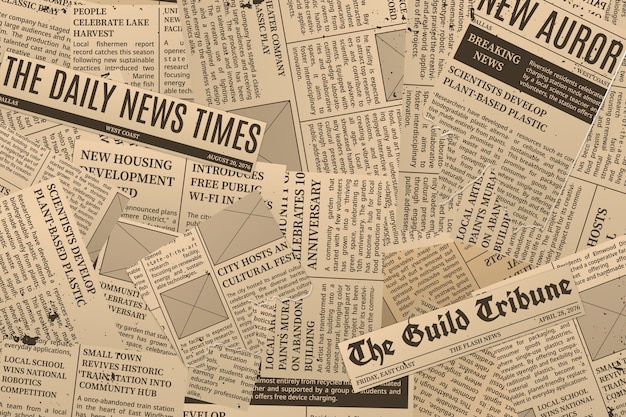
Newspapers began in ancient Rome with handwritten news sheets. The printing press (1440) made mass distribution possible. The first true newspapers appeared in 17th-century Europe. Over centuries, newspapers shaped public opinion, exposed corruption, and connected the world. Today, digital media challenges print, but the core mission — informing citizens — remains unchanged.

📖 Level 1 - Beginner:

Newspapers have a long history. Long ago, Romans wrote news on stone or metal. They called them Acta Diurna. Only rich people read them. Then came the printing press in 1440. A man named Gutenberg invented it. Now people could print many copies fast. The first real newspapers appeared in Europe around 1600. They were small and expensive. Only a few people bought them. In the 1800s, newspapers became cheap. More people learned to read. Newspapers reported wars, crimes, and politics. They helped spread big ideas. Sometimes they told lies too. But good newspapers told the truth. They helped stop bad things. In the 1900s, TVs and radios appeared. Newspapers still survived. Now we have the internet. Many newspapers are online. Some printed papers stopped. But the idea is the same. Tell people what is happening. Help them make good choices. Newspapers have changed a lot. But ink and paper started it all.

📖 Level 2 – Intermediate:

The history of newspapers spans over 400 years. Their earliest ancestor was the Roman Acta Diurna (Daily Acts), posted in public squares around 59 BCE. China had handwritten news sheets called tipao during the Tang Dynasty. However, the modern newspaper emerged after Johannes Gutenberg’s printing press (c. 1440). The first true newspapers appeared in Strasbourg (1605), Frankfurt (1615), and London (1621). These were weekly publications for merchants. Daily newspapers began in Leipzig in 1660. The 18th and 19th centuries saw massive growth. The steam press (1814) printed thousands of copies per hour. The telegraph (1840s) let reporters send news instantly. Penny press papers in New York (1830s) became cheap and popular, reaching working-class readers. Investigative journalism flourished — exposing slums, child labor, and political corruption. The 20th century brought radio and TV, but newspapers adapted. However, the 21st century’s internet and social media disrupted the industry. Advertising revenue fell. Many papers closed or moved online. Yet newspapers remain vital for in-depth reporting. From stone tablets to smartphones, the goal has always been the same: inform the public so they can govern themselves.

📖 Level 3 – Advanced:

The newspaper as we know it evolved gradually over centuries. Its precursor, the Roman Acta Diurna (c. 59 BCE), were handwritten bulletins posted in the Forum, recording political events, trials, and marriages. China’s tipao (also handwritten) circulated among officials during the Han Dynasty. The pivotal innovation was Gutenberg’s movable type press (c. 1440), which enabled mass printing. The first weekly news publications — the Relation (Strasbourg, 1605) and the Courante (Amsterdam, 1618) — catered to merchant networks. London’s Oxford Gazette (1665), later the London Gazette, is the oldest surviving English newspaper. The 18th century saw the rise of partisan papers, while the 19th century brought the Penny Press (New York Sun, 1833), making newspapers affordable to the working class. The invention of the telegraph revolutionized speed. Yellow journalism (Hearst vs. Pulitzer) sensationalized news but also exposed injustice. The 20th century added investigative reporting — Woodward and Bernstein’s Watergate coverage (1972) exemplified journalism’s watchdog role. However, the internet era fractured the advertising-based business model. Craigslist decimated classified revenue. Facebook and Google captured ad dollars. Print circulation has declined sharply, with hundreds of local papers shuttering since 2004. Yet digital subscriptions and nonprofit models (ProPublica, The Conversation) offer hope. From clay tablets to TikTok headlines, the core mission endures: to supply citizens with the information necessary to make free decisions. The medium changes; the need does not.

📚 Vocabulary

Words from this article that appear in our vocabulary books.

Word Definition
Added extra- in addition to what is usual or expected
Affordable able to be done, usually referring to something you can do without damage or loss # economical
Ancestor forefather/progenitor
Ancient antique: old- belonging to a long time in old history
Based when sth is the centre for your work
Can used with see, smell or taste in the continuous tense
Century 100 years
Conversation a talk between two or more people
Core center, hub, nucleus
Coverage the reporting of news in the press
Daily something issued every day
Depth distance down
During at a point of within a period of time
Era period
Expensive costly; highly prices
Goal a thing you want to be able to do in the future (SYN aim)
Govern control: regulate
Gradually when something changes slowly over a long period of time
Growth an increase in size or number
However yet, but
Industry the production of goods in factories
Innovation new, novelty
Instantly happening immediately; in a short period of time # immediately
Intermediate in-between
Invention something that has never been made before
Journalism the profession of collecting and writing about news in newspapers, on TV, etc
Let allow to do sth
Local located in the area where you live
Massive big and heavy; large and solid; bulky
Necessary required
Paper the written questions in an exam
Partisan
Per for each
Popular liked by most people
Possible able to be done, or happen; able to be true; able to be done or choose properly
Press newspapers and the quernalists who work for them
Print a photographic copy of a picture
Public people
Recording a process of putting music or sth similar in a digital form or a tape
Relation be in the same family as sb (SYN be related to sb)
Remains parts of objects and buildings that have been discovered recently
Revenue income
Rise emerge
Role function
Sharply showing sensitivity or quick thinking; showing a quick change in direction # quickly
Speed increase the rate of v.
Spread distribute
Stone the hard, ​solid ​substance ​found in the ​ground that is often used for ​building, or a ​piece of this
Sun closest star to the Earth
Supply an amount of sth that you need
Vital having to do with life; necessary to life; causing death; failure or ruin; lively
While although
Yet however

Comments (0)

Comments are published after admin approval.

No approved comments yet. Be the first to comment.

Stay updated

Get notified when we publish a new article.