
The Effects of Divorce on Children
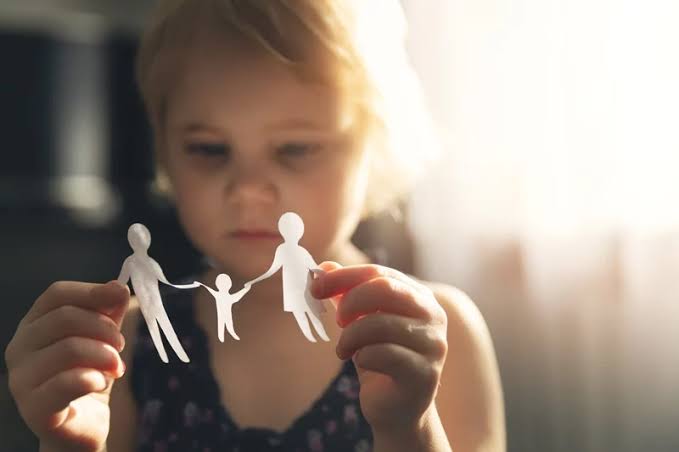
Divorce can be hard for children, causing feelings of sadness, anger, or confusion. Short-term effects may include sleep changes, school struggles, or acting out. Long-term outcomes vary widely — many children adapt well, especially when parents provide stability, honest communication, and avoid conflict. The quality of parenting matters more than the family structure itself.
📚 Vocabulary
Words from this article that appear in our vocabulary books.
| Word | Definition |
|---|---|
| About | a bit more or a bit less |
| Academic | relating to schools, colleges, and universities, or connected with studying and thinking, not with practical skills |
| Age | a particular time in history. e.g. ice age |
| Anxiety | worry, the state of feeling nervous or worried that something bad is going to happen |
| Appropriate | fit; set apart for some special use |
| Approximately | roughly-more or less than a number or amount |
| Avoid | keep away from; keep out of the way |
| Benefit | a thing that has a good or helpful result |
| Can | used with see, smell or taste in the continuous tense |
| Capital | the money you need to start a business |
| Close | careful, watchful |
| Conditions | all the particular things that influence someone’s living or working environment |
| Conflict | direct opposition; disagreement |
| Consistent | regular: uniform, steady, constant |
| Continued | constant, continual;continuing to happen or exist without stopping |
| Critical | crucial: essential |
| Damage | harm or injury caused when sth is broken |
| Demonstrate | take part in a public protest for or against sth |
| Diminish | make or become smaller in size, amount or importance |
| Discipline | punish, penalize |
| Distress | great pain or sorrow; misfortune; dangerous or difficult situation; to cause pain or make unhappy |
| During | at a point of within a period of time |
| Emotional | having strong feelings, and often showing them |
| Emphasize | pronounce sth with extra loudness |
| Environment | setting, surroundings |
| Event | happening; important happening; result or outcome; one item in a program of sports |
| Experience | the things that you have done in your life |
| Fall | decrease; go lower (SYN drop) |
| Feel | give a sensation of or like sth when touched |
| Fight | when people try to hurt or kill each other |
| Freedom | the right or ability to say or do what you want |
| Function | operation: utility |
| Gap | opening, slot, hole |
| Grow | increase SYN go up, rise |
| Harm | physical or other injury or damage |
| Heterogeneous | varied, diverse, not homogeneous |
| Honest | always telling the truth |
| However | yet, but |
| Include | to have something as a part (SYN contain) |
| Income | the money you earn from work, plus any other money you receive |
| Initial | first, in the beginning |
| Intermediate | in-between |
| Keep | continue or stay ina particular place or condition |
| Key | significant: critical, of paramount or crucial importance |
| Lasting | forever; without end # enduring |
| Let | allow to do sth |
| Like | used to introduce an example (SYN such as) |
| Listen | pay attention to sth you hear, often for a long time |
| Live | seen or heard as it is happening |
| Living | not dead |
| Loss | have a negative balance after paying costs |
| Maintain | keep; keep up; carry on; uphold; support; declare to be true |
| Majority | the larger number; greater part; more than half |
| May | used to express possibility |
| Might | used to express the possibility that something will happen or be done, or that something is true although not very likely |
| Negative | saying no; minus; showing the light and shadows reversed |
| Parent | a mother or father of a person |
| Patience | the ability to wait, or to continue doing something despite difficulties, or to suffer without complaining or becoming annoyed |
| Per | for each |
| Persistent | long lasting |
| Process | purify, cater, perform a series of mechanical or chemical operations on (something) in order to change or preserve it |
| Provide | to supply; to state as a condition; to prepare for or against some situation |
| Quality | goodness of sth |
| Resident | inhabitant |
| Resilience | the capacity to recover quickly from difficulties; toughness. also flexibility, elasticity |
| Reveal | make known |
| Significant | meaningful: important |
| Sleep | the resting state in which the body is not active and the mind is unconscious |
| Stability | without much change |
| Therapy | treatment of a physical or mental problem or illness |
| Tragedy | a very sad or terrible happening; a sad play |
| Trouble | a situation that causes a problem |
| Vary | be different from each other |
| Withdraw | to remove, take out or take back # extract |
| Within | inside |
Comments (0)
Comments are published after admin approval.
No approved comments yet. Be the first to comment.