An Italian artist made an invisible sculpture. It was made of nothing. He called it "I Am." He sold it for $18,000. The buyer got a certificate. There was no statue to take home. The buyer could not see it. No one could see it. The artist said art is not about seeing. Art is about thinking. Some people laughed. Some people paid money. The artist became famous. He sold more invisible art. Business does not always make sense.
📖 Level 2 – Intermediate:
In 2015, an Italian artist named Salvatore Garau created a sculpture that did not physically exist. He called the piece "Io Sono" which means "I Am." The sculpture was invisible. It had no weight, no size, no material. Garau declared that the sculpture existed in a vacuum of pure imagination. Then he put it up for auction. An Italian auction house called Art-Rite listed the invisible sculpture with an opening bid of €6,000. A buyer purchased it for €15,000 (about $18,000). The buyer received a certificate of authenticity. But no physical object was delivered. Garau explained that the sculpture was not nothing. It was energy, imagination, and vacuum. He said, "The vacuum is space full of energy." The sale made international news. Some people called it a brilliant commentary on the art market. Others called it a joke. Regardless, Garau later sold other invisible sculptures for thousands of dollars more. The lesson? In business, value is not always about what you can see or touch. Sometimes, the story and the idea are the product.
📖 Level 3 – Advanced:
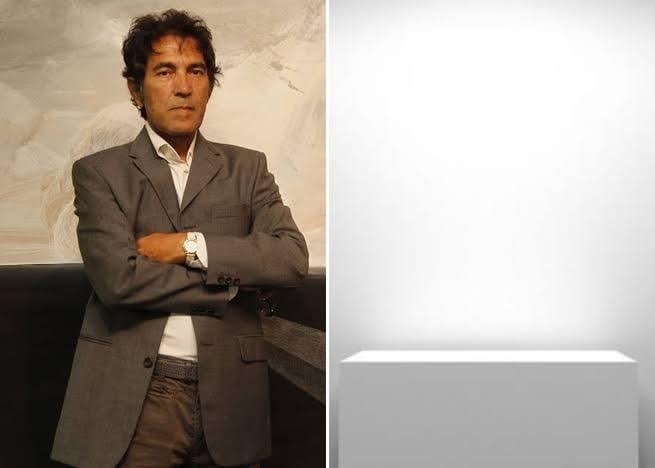
In May 2021, the art world witnessed a transaction that seemed to parody itself. Italian artist Salvatore Garau listed an artwork titled "Io Sono" (I Am) for auction through the Milan-based house Art-Rite. The piece was, by the artist's own description, "immaterial" — an invisible sculpture that exists only in the mind of the beholder. Garau claimed the work occupied a vacuum of pure imaginative space, requiring no physical gallery, no pedestal, and no material whatsoever. The auction listing included a photograph of a blank white square on a tiled floor. Bidding opened at €6,000. A private collector, identity undisclosed, purchased the work for €15,000 (approximately $18,000). The buyer received a signed certificate of authenticity printed on a sheet of paper — the only tangible object in the transaction. Garau explained his philosophy: "The vacuum is nothing more than a space full of energy. Even if I exhibit 'Io Sono' in a space with nothing, that vacuum is not empty. It is full of energy and potential." The sale ignited a firestorm of debate. Critics dismissed it as a cynical exploitation of art-world credulity. Supporters hailed it as a brilliant deconstruction of value creation. Regardless of one's position, the economic reality was undeniable: Garau had manufactured value from nothing. He subsequently sold additional invisible sculptures for even higher prices, including "Buddha in Contemplation" for €27,000. The episode became a case study in behavioral economics and brand storytelling. It demonstrated that in certain markets — particularly luxury goods, art, and collectibles — a compelling narrative can generate real financial value from purely abstract assets. The invisible sculpture was not a joke. It was a lesson. And 18,000 real dollars proved it.
Newsletter
Get new articles by email
Level-appropriate English news when we publish. Free, no spam.
New stories
Free
Unsubscribe anytime
Comments (0)
Comments are published after admin approval.
No approved comments yet. Be the first to comment.

Comments (0)
Comments are published after admin approval.
No approved comments yet. Be the first to comment.