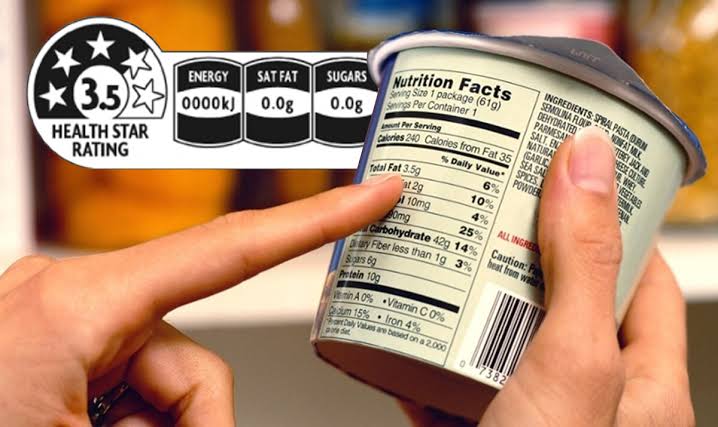
Food labels contain hidden truths about what you eat. The ingredients list shows items in descending order by weight. The nutrition facts panel reveals serving size, calories, fats, sugars, and sodium. Marketing terms like “natural” or “multigrain” can be misleading. Learning to read labels helps you avoid hidden sugars, unhealthy fats, and oversized portions.
📖 Level 1 - Beginner:
Food labels tell you what is inside the box. Look at serving size first. That is how much one person eats. All numbers are for one serving. Check calories. That is energy. Too many calories make you gain weight. Look at sugar. Some foods hide a lot of sugar. Even bread can have sugar. Check fat. Some fat is okay. Too much bad fat hurts your heart. Look at the ingredients list. The first ingredient is the biggest amount. If sugar is first, the food is mostly sugar. Do not believe big words on the front. “Natural” does not always mean healthy. “Multigrain” is not always whole grain. Practice reading labels at home. Compare two yogurts. Choose the one with less sugar. Your body will thank you.
📖 Level 2 – Intermediate:
Reading food labels is a skill that protects your health. Start with serving size and servings per container. Many packages contain two or more servings, but people eat the whole thing. Multiply calories by servings to know what you really consume. Next, check nutrients to limit: saturated fat, sodium, and added sugars. A food is considered high in sugar if it has over 22g per 100g. Low sodium means under 120mg per serving. Then look for nutrients to get enough of: fiber, vitamin D, calcium, and iron. The percent daily value (%DV) helps — 5% or less is low, 20% or more is high. Now read the ingredients list. Ingredients are listed by weight from most to least. If sugar (or its aliases like corn syrup, dextrose, honey) appears in the top three, the product is sugar‑heavy. Watch for tricky marketing. “Made with whole grains” might still be mostly white flour. “Natural” has no legal definition for most foods. “Light” can mean less fat, less salt, or lighter color. Use labels to compare similar products. Choose bread with more fiber and less sugar. Choose cereal with whole grain as the first ingredient. Your grocery cart becomes your doctor’s ally.
📖 Level 3 – Advanced:
Mastering food labels requires understanding both regulatory standards and nutritional science. Begin with serving size — standardized in grams or milliliters under FDA and EFSA guidelines. Note that serving sizes often underrepresent what consumers actually eat (portion distortion). Calculate total caloric intake by multiplying servings consumed. Next, evaluate the nutrient profile: limit saturated fat (aim for
Newsletter
Get new articles by email
Level-appropriate English news when we publish. Free, no spam.
New stories
Free
Unsubscribe anytime
Comments (0)
Comments are published after admin approval.
No approved comments yet. Be the first to comment.

Comments (0)
Comments are published after admin approval.
No approved comments yet. Be the first to comment.