
From Sputnik to Mars Rovers

From Sputnik to Mars Rovers banner
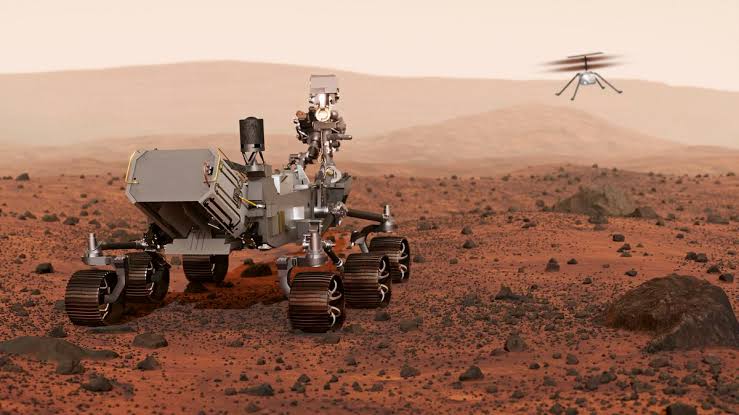
Space exploration began in earnest in 1957 when the Soviet Union launched Sputnik 1, the first human-made satellite. This sparked the Space Race between the US and USSR. Key milestones include Yuri Gagarin’s first human orbit (1961), the Apollo 11 moon landing (1969), space shuttles, the International Space Station, and Mars rovers. Today, private companies join governments in reaching farther into the cosmos.

📖 Level 1 - Beginner:

Space exploration started in 1957. A country called the Soviet Union sent a small satellite into space. Its name was Sputnik 1. It was the first human-made object in space. It beeped as it circled Earth. This started a race between the Soviet Union and the United States. In 1961, a Russian man named Yuri Gagarin became the first person in space. He orbited Earth for 108 minutes. In 1969, American astronauts landed on the moon. Neil Armstrong took one small step. People around the world watched on TV. After the moon, countries built space shuttles. These were reusable spaceships. Nations also built the International Space Station. Astronauts live and work there. Today, robots explore Mars. Rovers drive on the red planet. Private companies like SpaceX send rockets too. Space exploration is not over. We want to go to Mars. We want to find other life. The journey continues.

📖 Level 2 – Intermediate:

The modern era of space exploration began on October 4, 1957, when the Soviet Union launched Sputnik 1. This basketball-sized satellite orbited Earth every 98 minutes, sending simple radio beeps. Americans were shocked and fearful. The Space Race had begun. In 1961, Soviet cosmonaut Yuri Gagarin became the first human in space, completing one orbit. The US responded with Project Mercury and later Apollo. On July 20, 1969, Apollo 11’s Neil Armstrong and Buzz Aldrin landed on the moon. Armstrong’s words, “One small step for man, one giant leap for mankind,” marked humanity’s greatest off-world achievement. After the moon, focus shifted to reusable spacecraft. The Space Shuttle program (1981–2011) launched satellites, repaired the Hubble Telescope, and helped build the International Space Station (ISS). The ISS has hosted astronauts from 19 countries since 2000. Meanwhile, robotic explorers went farther. Mars rovers like Spirit, Opportunity, Curiosity, and Perseverance found evidence of ancient water. Voyager probes left our solar system. Today, private companies like SpaceX and Blue Origin develop cheaper rockets. NASA plans to return humans to the moon with Artemis and eventually reach Mars. From a beeping sphere to Martian helicopters, space exploration keeps pushing limits.

📖 Level 3 – Advanced:

The history of space exploration is a narrative of political rivalry, technological leaps, and human curiosity. It officially launched on October 4, 1957, when the Soviet Union placed Sputnik 1 into low Earth orbit. Weighing just 83 kilograms, its radio pulses signaled the dawn of the Space Age — and panicked the United States into forming NASA in 1958. The Space Race intensified: Yuri Gagarin’s Vostok 1 mission (April 12, 1961) made him the first human in space. President Kennedy responded by committing to a moon landing before the decade ended. Apollo 11 delivered on that promise on July 20, 1969. Neil Armstrong and Buzz Aldrin spent 21 hours on the lunar surface while Michael Collins orbited above. After six successful landings, the Apollo program ended. The next era emphasized reusability and cooperation. The Space Shuttle (first flight 1981) launched 135 missions but suffered two fatal accidents. The International Space Station, a partnership of 15 nations, has been continuously occupied since 2000, enabling microgravity research. Unmanned probes have been equally transformative. Voyager 1 and 2, launched in 1977, now travel interstellar space. Mars rovers (Sojourner, Spirit, Opportunity, Curiosity, Perseverance) have revealed ancient lake beds and collected samples for future return. The 21st century added private actors: SpaceX achieved reusable rockets and now ferries astronauts to the ISS. The next chapters include the Artemis program (returning humans to the moon, including the first woman), the James Webb Space Telescope’s deep universe images, and eventual crewed missions to Mars. From Cold War competition to global collaboration, space exploration reflects our species’ relentless desire to look beyond the horizon.

📚 Vocabulary

Words from this article that appear in our vocabulary books.

Word Definition
Achievement sth you have done successfully that was difficult
Added extra- in addition to what is usual or expected
Age a particular time in history. e.g. ice age
Ancient antique: old- belonging to a long time in old history
Buzz continuous low sound. as bees
Century 100 years
Collaboration joint effect, cooperation, teamwork, alliance, association
Competition a situation when two or more people are trying to win
Decade ten years
Deep long way down
Desire a strong wish (have no desire to do sth)
Develop grow or increase
Drive incentive
Earnest
Earth our planet
Equally in a way that is fair and the same for everyone
Era period
Eventual later: final, ultimate, end
Eventually finally: later: ultimately: in the end
Evidence that which makes clear the truth or falsehood of something
Exploration the activity of searching and finding out about sth
Explore go over carefully; look into closely; examine
Focus concentrate
Found to establish: start up a philanthropic organization # establish
Giant huge,extremely big, and much bigger than other things of the same type
Horizon where the ​sky ​seems to ​touch the ​land or ​sea
Human connected with people
Include to have something as a part (SYN contain)
Intermediate in-between
International involving two or more countries
Key significant: critical, of paramount or crucial importance
Lake a ​large ​area of ​water ​surrounded by ​land and not ​connected to the ​sea except by ​rivers or ​streams
Like used to introduce an example (SYN such as)
Live seen or heard as it is happening
Look turn your eyes to sth and pay attention to it; seem from what you can see
Marked considerable: significant, clearly noticeable; evident
Moon the satellite of the Earth
Object something tangible
Off less than usual
Opportunity a time when it's possible to do sth that you want to do
Origin the cause of sth, or the place where it starts to exist
President the leader of a country with no king or queen
Race a competition to see who is fastest or best, or who wins
Relentless never seem to stop or get any easier
Satellite an object that moves round a bigger object in space; a piece of electronic equipment that is sent into space and moves around
Space the area beyond the earth round the planets and stars
Sphere area
Successful has gone well
Surface the ​outer or ​top ​part or ​layer of something
Union an organization of people in the same kind of work who try to get better pay and working conditions for their members (SYN trade union)
Universe the whole of space and everything in it, including the planets and stars
War armed fighting between two or more countries or groups
While although
Work get or have the result you want

Comments (0)

Comments are published after admin approval.

No approved comments yet. Be the first to comment.

Stay updated

Get notified when we publish a new article.