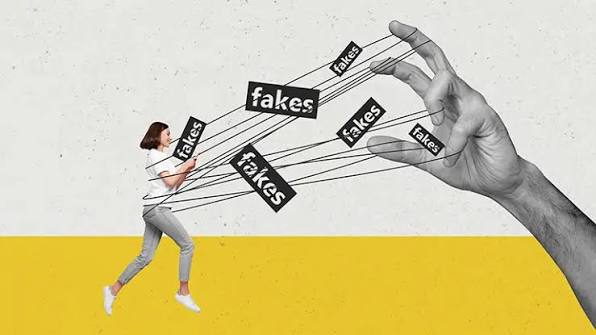
Fake news is false information designed to look like real journalism. It spreads faster than truth on social media because it triggers strong emotions like fear or anger. Fake news can change elections, harm public health, and destroy reputations. Learning to check sources and think critically is the best defense.
📖 Level 1 - Beginner:
Fake news is information that is not true. It looks like real news. But it is a lie. People make it to get attention or money. Fake news spreads very fast on the internet. It uses big emotions. It makes you scared or angry. That is why you click on it. Real news is boring sometimes. Fake news is exciting. But it can hurt people. Fake news changed elections. Some people did not vote because of lies. Fake news also hurt health. During the pandemic, fake news told people to drink poison. Some people died. Fake news can ruin a person’s job. A lie can spread around the world in one hour. How do you protect yourself? Read carefully. Check who wrote the story. Look at other websites. If it seems too crazy, it might be fake. Ask a parent or teacher. Do not share a story unless you know it is true. You can stop fake news. Think before you click. Your brain is powerful. Use it.
📖 Level 2 – Intermediate:
Fake news refers to deliberately false or misleading information presented as legitimate news. Its impact on society has grown dramatically with social media platforms like Facebook, Twitter, and TikTok. Why does fake news spread so quickly? Studies show that false stories are 70% more likely to be shared than true ones. Fake news triggers strong emotions — outrage, fear, or excitement — which makes people click and share without checking facts. The consequences are serious. Fake news has influenced election outcomes in the US, Brazil, and the Philippines. It has fueled violence, such as mob killings based on false child kidnapping rumors in India. During the COVID-19 pandemic, fake news about cures and vaccines led to hospitalizations and deaths. Even after corrections, false beliefs often stick in people’s minds. This is called the “continued influence effect.” So what can you do? First, read past the headline. Many fake news stories have misleading titles. Second, check the source. Is it a real news organization or a fake site? Third, use fact-checking websites like Snopes or Reuters. Fourth, be careful with photos. They can be edited or taken from old events. Finally, pause before sharing. If a story makes you very angry or very happy, check it first. Fighting fake news is everyone’s responsibility.
📖 Level 3 – Advanced:
Fake news — intentionally fabricated information mimicking legitimate journalism — has become a defining challenge of the digital age. Its impact extends beyond individual confusion to systemic societal harm. Research from MIT found that falsehoods on Twitter spread significantly farther, faster, and more broadly than the truth, primarily because novelty and emotional arousal (especially moral outrage) drive retweets. Algorithms amplify this effect by prioritizing engaging content over accurate content. The consequences are documented worldwide. In the 2016 US presidential election, viral fake news stories generated more total engagement than top real news stories. In Myanmar, Facebook-fueled disinformation against the Rohingya minority contributed to ethnic violence. Public health has suffered severely: a 2020 study linked belief in COVID-19 misinformation to lower willingness to vaccinate and higher acceptance of unproven treatments like hydroxychloroquine. Fake news also erodes trust in legitimate media and democratic institutions — a phenomenon called “truth decay.” Counteracting fake news requires multi‑pronged strategies. Individual media literacy is crucial: lateral reading (opening new tabs to verify sources), reverse image searching, and identifying logical fallacies. Technological interventions include algorithm adjustments and warning labels, though studies show labels have mixed effects. Legal approaches (e.g., Germany’s Network Enforcement Act) face free speech concerns. The most effective long‑term solution may be “prebunking” — teaching people to recognize manipulation techniques before they encounter fake news. In an information ecosystem where lies fly and truth limps, critical thinking is no longer optional. It is survival.
Newsletter
Get new articles by email
Level-appropriate English news when we publish. Free, no spam.
New stories
Free
Unsubscribe anytime
Comments (0)
Comments are published after admin approval.
No approved comments yet. Be the first to comment.

Comments (0)
Comments are published after admin approval.
No approved comments yet. Be the first to comment.