
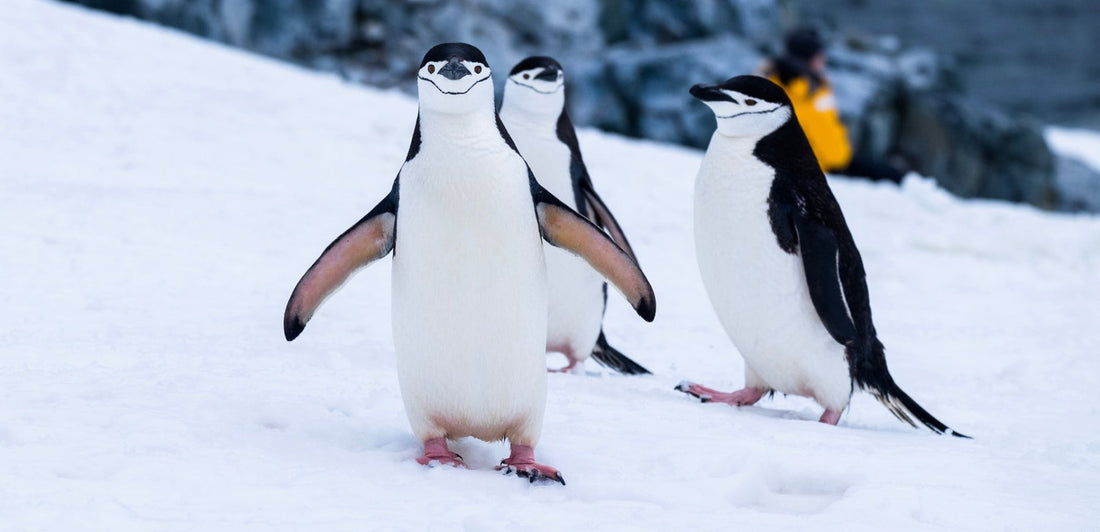
Penguins live in very cold places but stay warm using special bodies. They have thick feathers and a layer of fat called blubber. Their blood also moves in a smart way to keep their feet warm. Together, these things help them survive in the ice.
Level 1 - Beginner:
Why Penguins Don't Get Cold Penguins live in the coldest places on Earth. How do they stay warm? First, they have special feathers. These feathers are very thick and close together. They keep the cold air and water out. Second, penguins have blubber. Blubber is a thick layer of fat under their skin. It works like a warm blanket inside their bodies. Penguins also have a clever way to keep their feet warm. The blood in their legs moves in a special way. Warm blood from the heart goes down to the cold feet. Then, the blood warms up before it goes back to the heart. This stops the penguin from losing too much heat. Finally, penguins huddle together. They stand in a big group to share body heat. By staying close to their friends, they stay warm during winter storms. These amazing tools help penguins live and be happy in the snow and ice.
Level 2 - Intermediate:
Why Penguins Don't Get Cold Penguins survive in freezing environments thanks to several biological adaptations. First, they possess densely packed feathers that create a waterproof barrier. This layer prevents icy water from touching their skin, keeping them dry and warm. Beneath the skin, they have a thick layer of fat known as blubber, which acts as insulation against the extreme cold. Another fascinating feature is their circulatory system. Penguins use a process called counter-current heat exchange in their legs. Warm blood flowing from the core warms the cold blood returning from the feet. This ensures that their internal body temperature remains stable even when standing on ice. Behavior also plays a huge role in their survival. During harsh winter storms, penguins huddle together in massive groups. By packing closely, they share body warmth and protect each other from the wind. Through a combination of physical traits and social behavior, penguins can thrive in some of the most inhospitable regions of the planet.
Level 3 - Advanced:
Why Penguins Don't Get Cold Penguins have evolved sophisticated physiological and behavioral mechanisms to withstand the brutal conditions of the Antarctic. Their primary defense is a specialized plumage of densely overlapping feathers that provides an impermeable shield against freezing winds and seawater. This waterproofing is essential for maintaining core body heat while diving in frigid oceans. Complementing this is a substantial layer of subcutaneous fat, or blubber, which serves as critical thermal insulation. Beyond their exterior, penguins utilize a complex circulatory adaptation known as counter-current heat exchange. In this system, arteries carrying warm blood to the extremities transfer heat to the adjacent veins returning cold blood to the heart. This mechanism minimizes heat loss through the feet, preventing frostbite despite constant contact with ice. Furthermore, their survival is bolstered by social cooperation. To combat plummeting temperatures, penguins engage in huddling behavior. By forming tight clusters, they significantly reduce the surface area exposed to the elements and share metabolic heat. This collective strategy is vital for survival during the harshest winters. Through these combined biological innovations and social instincts, penguins are perfectly equipped to flourish in one of the most extreme climates on Earth.
Comments (0)
Comments are published after admin approval.
No approved comments yet. Be the first to comment.