
The Underground Empire of Ants

The Underground Empire of Ants banner
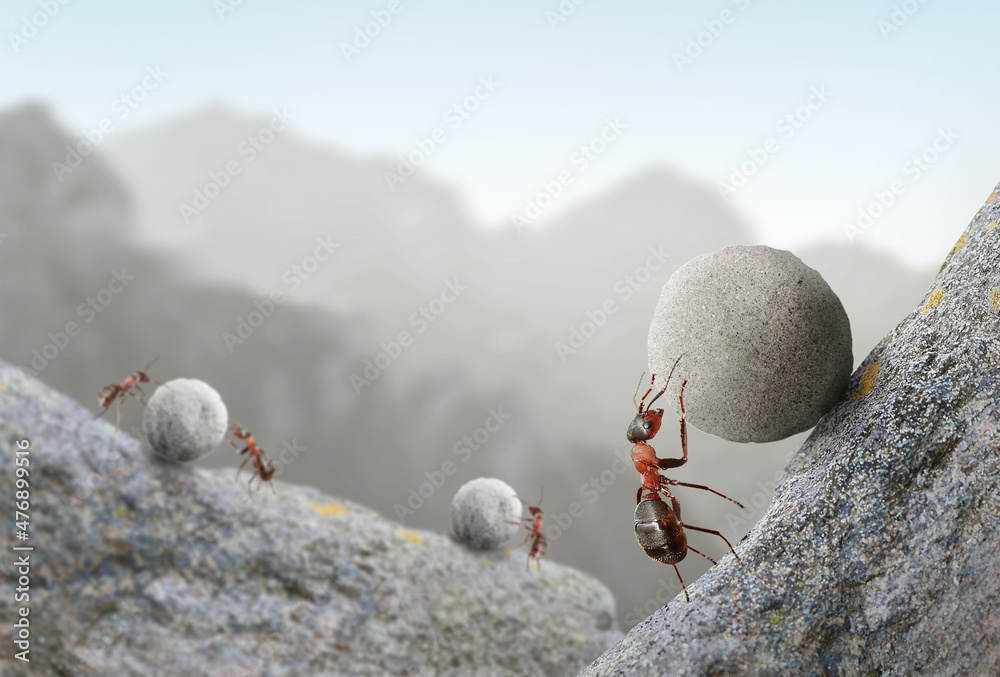
Ants are social insects that live in highly organized colonies, sometimes containing millions of individuals. They communicate using chemicals called pheromones, work together to build nests, find food, and defend their queen. Some species farm fungi, raise aphids, or wage war. Their secret lives reveal intelligence without a single leader — the colony acts as a “superorganism.”

📖 Level 1 - Beginner:

Ants live in big families called colonies. A colony has one queen. The queen lays all the eggs. Worker ants are female. They find food and build tunnels. Male ants have one job. They mate with the queen. Then they die. Ants cannot talk with words. They use chemicals called pheromones. They leave a smell trail to food. Other ants follow the smell. Ants are very strong. They can carry 50 times their own weight. Some ants farm. They grow fungus in their nests. They eat the fungus. Other ants raise aphids. Aphids make sweet liquid. Ants drink it like milk. Ants also fight wars. Big armies attack other colonies. They steal eggs and make slaves. Underground, ant nests are like cities. There are rooms for food, babies, and the queen. Tunnels connect everything. Ants work together perfectly. No one gives orders. But the colony survives. That is the secret life of ants.

📖 Level 2 – Intermediate:

Ants are among the most successful insects on Earth, with over 12,000 known species. Their secret lies in social organization. An ant colony functions as a “superorganism” — individuals act like cells in a body, unable to survive alone. Each colony has one or more queens who lay eggs, sterile female workers who perform all tasks (foraging, nest maintenance, brood care), and males whose only purpose is to mate. Communication happens through pheromones, chemical signals that ants produce and detect with their antennae. A scout ant finding food leaves a trail of pheromones on the ground. Other ants follow this trail, reinforcing it with more pheromones. When the food runs out, the trail fades. Alarm pheromones signal danger, causing ants to attack or flee. Some ant species practice agriculture. Leafcutter ants cut fresh leaves, carry them underground, and chew them into a paste that grows fungus. The ants eat only this fungus. Other ants, called herders, protect aphids and “milk” them for honeydew. Ants also build complex underground nests with ventilation shafts, food storage chambers, and nurseries. They work without a central commander. Each ant follows simple rules and responds to local chemical cues. The result is collective intelligence. Ants have walked the Earth for over 100 million years. Their secret is teamwork.

📖 Level 3 – Advanced:

The secret life of ants reveals one of evolution’s most extraordinary achievements: eusociality, the highest form of social organization. Ant colonies are sometimes described as superorganisms because individual ants cannot reproduce independently or survive for long without the group. The colony’s reproductive center is the queen (or multiple queens in polygynous species), which can lay millions of eggs over a lifespan exceeding 20 years in some species. Workers — all sterile females — perform age‑based polyethism: young workers tend the brood and queen, middle‑aged workers maintain the nest, and older workers forage and defend. Male ants (drones) exist only to mate during nuptial flights, dying shortly afterward. Communication relies almost entirely on pheromones — volatile or non‑volatile chemical compounds detected by antennal receptors. Trail pheromones, produced in the hindgut, guide foragers to resources. Alarm pheromones trigger aggression or evacuation. Queen pheromones signal her presence and suppress worker reproduction. Cuticular hydrocarbons act as colony‑specific “ID cards,” enabling ants to recognize nestmates and attack intruders. Beyond communication, ants display remarkable ecological adaptations. Attine ants (leafcutters) practice advanced agriculture: they cultivate Leucoagaricus fungus, feeding it leaf pulp and receiving enzymes and nutrients in return — a 50‑million‑year‑old mutualism. Formica rufa builds massive mound nests with internal heating. Army ants (Eciton burchellii) conduct swarm raids, forming living bridges with their bodies. Slave‑making ants (Polyergus) raid neighboring colonies, stealing pupae that become workers. The colony operates without centralized control; individual ants follow simple behavioral rules and local pheromone gradients, yet the emergent system solves complex problems — finding optimal paths, allocating workers, and maintaining homeostasis. Studying ant colonies has inspired algorithms in robotics, telecommunications, and optimization theory (ant colony optimization). Their underground empires are not just fascinating — they are masterclasses in decentralized intelligence.

📚 Vocabulary

Words from this article that appear in our vocabulary books.

Word Definition
Age a particular time in history. e.g. ice age
Aggression spoken or ​physical ​behaviour that is ​threatening or ​involves ​harm to someone or something
Alarm sound: warning
Army a country's fighting force
Based when sth is the centre for your work
Can used with see, smell or taste in the continuous tense
Central essential, more important and having more influence than anything else
Chew use your teeth to break up food in your mouth
Complex 1) system (n),a group of buildings, or a large building with many parts, used for a particular purpose,2) elaborate (adj)
Cultivate to plant and raise a crop; to encourage growth of a relationship or friendship # grow
Cut an ​injury made when the ​skin is cut with something ​sharp
Detect find out; discover
Detected identified, specified
Die stop living
Display to show; reveal # exhibit
During at a point of within a period of time
Earth our planet
Emergent developingin, the early stages of existence or development
Entirely wholly,completely and in every possible way
Evacuation process of moving people away from dangerous place
Exist to be real
Extraordinary exceptional, phenomenal
Fascinating extremely attractive
Female woman or girl
Fight when people try to hurt or kill each other
Finding discovery
Flee run away; go quickly
Follow track, pursue, chase
Forage search for food: feed
Ground reason, cause
Group a number of people who play music together (SYN band)
Grow increase SYN go up, rise
Guide a person who shows the way; to direct; to manage
Individual one person who is seen separately from others or a group
Intermediate in-between
Leader a person who is in charge or contor of sth
Leaf one of the ​flat, usually ​green ​parts of a ​plant that are ​joined at one end to the ​stem or ​branch
Leaves PLURAL of leaf
Lifespan the time that sth is likely to live
Like used to introduce an example (SYN such as)
Liquid in a non-solid form, like water
Live seen or heard as it is happening
Living not dead
Local located in the area where you live
Maintain keep; keep up; carry on; uphold; support; declare to be true
Male man or boy
Massive big and heavy; large and solid; bulky
Middle centre
Optimal 1)most advantageous 2)ideal , best or most favorable; optimum
Perform the act of doing sth
Produce being responsible for business side of a film
Remarkable 1)notable 2)incredible
Reproduction a thing made as a copy of an earlier object or style
Reveal make known
Specific particular
Storage a place to store things
Successful has gone well
Suppress v) to end by force; to prevent something from being expressed or known
Survive live longer than; remain alive after
Swarm group of insects flying or moving about together; crowd of great number; to fly or move about in great numbers
Tend care for : to be likely to happen
Theory explanation based on thought, observation, or reasoning
Through by
Trigger initiate: start
Volatile likely to change suddenly
War armed fighting between two or more countries or groups
Weight how heavy sth is (value/property)
Work get or have the result you want
Yet however

Comments (0)

Comments are published after admin approval.

No approved comments yet. Be the first to comment.

Stay updated

Get notified when we publish a new article.