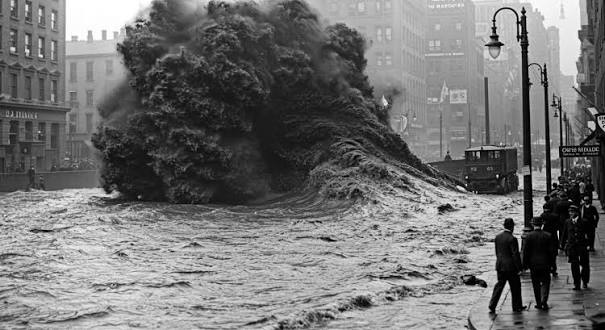
In January 1919, a bizarre disaster struck Boston, Massachusetts. A giant tank filled with molasses burst open. A wave of sticky, sweet liquid rushed through the streets at high speed. The flood destroyed buildings, overturned vehicles, and tragically killed 21 people. It took weeks to clean up, and locals say the area still smells like molasses on hot summer days.
📖 Level 1 - Beginner:
A big tank of molasses broke in Boston. Molasses is a thick, sweet liquid. The tank was very tall. It held millions of liters. The molasses rushed out like a wave. It moved fast through the streets. The wave knocked down buildings. It crushed cars and wagons. People could not run away. Twenty-one people died. Many others were hurt. Horses also died. The molasses was very sticky. Cleaning took many weeks. Workers used salt water and sand. They washed the streets many times. For years, people smelled molasses on hot days.
📖 Level 2 – Intermediate:
On January 15, 1919, a strange and terrible disaster happened in Boston’s North End. A huge steel tank filled with over 8.7 million liters of molasses burst open without warning. Molasses is a thick, sticky sweetener used to make rum and candy. The tank was 15 meters tall and 27 meters wide. When it broke, a wave of molasses nearly 5 meters high rushed through the streets at about 56 kilometers per hour. The sticky flood destroyed homes, knocked down elevated train tracks, and crushed a fire station. Twenty-one people lost their lives, and about 150 were injured. Many horses also died. The molasses was so thick that rescue workers struggled to move. Cleanup crews used salt water from fireboats to dissolve the molasses. They also spread sand over the streets. The harbor stayed brown for months. Even today, some people claim they can smell molasses in the neighborhood on warm days. Investigators later found that the tank had been poorly built and leaked often.
📖 Level 3 – Advanced:
Few historical disasters sound as surreal as the Great Molasses Flood of 1919. On January 15 in Boston’s North End, a poorly constructed storage tank belonging to the Purity Distilling Company suddenly ruptured. The tank contained approximately 8.7 million liters (2.3 million gallons) of molasses, a byproduct of sugar refining used primarily for industrial alcohol production. Within seconds, a towering wave of viscous, sweet liquid surged through the streets at an estimated 56 kilometers per hour (35 miles per hour), reaching heights of nearly 5 meters (15 feet). The sheer force of the molasses—denser than water and moving with immense momentum—wrecked buildings, buckled steel girders of the elevated railway, and crushed vehicles. Twenty-one people perished, including children and a firefighter; over 150 sustained injuries. The cleanup effort proved monumental: salt water pumped from naval vessels was used to dilute the molasses, followed by thousands of tons of sand. The harbor remained discolored for months, and residents reported the lingering smell of molasses on humid days for decades afterward. A lengthy legal investigation found that the tank had been negligently constructed, with insufficient wall thickness and faulty rivets. The disaster led to stricter building codes and engineering standards across the United States. It remains a bizarre but sobering reminder that even sweet things can turn deadly.
Newsletter
Get new articles by email
Level-appropriate English news when we publish. Free, no spam.
New stories
Free
Unsubscribe anytime
Comments (0)
Comments are published after admin approval.
No approved comments yet. Be the first to comment.

Comments (0)
Comments are published after admin approval.
No approved comments yet. Be the first to comment.