You unlock your phone with your face. You open your laptop with your fingerprint. You might even board a plane using iris recognition. This is biometrics — using unique physical traits to prove who you are. It is fast and convenient. You never forget your face or misplace your finger. But once your fingerprint is stolen, you cannot change it like a password. Biometrics offers incredible security, but it also raises serious questions about privacy and safety.
📖 Level 1 - Beginner:
Biometrics uses your body as a password. Your fingerprint, your face, your eye. These are unique to you. No one else has them. Phones and computers use biometrics. You look at your phone. It opens. You touch the screen. It unlocks. This is fast and easy. You cannot forget your face. But there is a problem. If someone steals your password, you change it. If someone steals your fingerprint, you cannot change it. You only have ten fingers. Companies collect your biometric data. Where does it go? Who sees it? These are important questions. Biometrics is powerful but also risky.
📖 Level 2 – Intermediate:
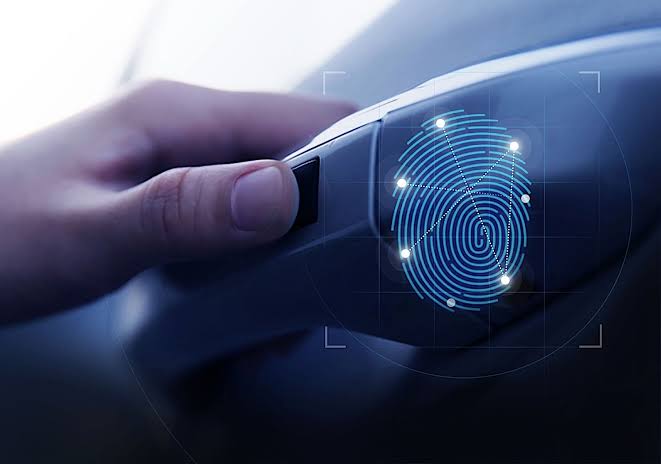
Biometrics refers to automated methods of recognizing individuals based on physical or behavioral characteristics. Common biometric modalities include fingerprints (unique ridge patterns), facial recognition (measuring distances between eyes, nose, and mouth), iris scanning (patterns in the colored part of the eye), voice recognition (vocal tract and speaking patterns), and even gait (how you walk). Biometrics offer significant advantages over traditional passwords. You cannot forget them, lose them, or easily share them. Authentication takes less than a second. Major companies like Apple (Face ID, Touch ID), Samsung, and Microsoft have integrated biometrics into billions of devices. Airports use facial recognition for faster boarding. Banks are testing voice authentication for phone banking. However, biometrics also present unique risks. Passwords can be changed. Biometrics cannot. If your fingerprint database is hacked, you cannot issue a new fingerprint. You have only ten. Biometric data is also "sensitive personal information" under laws like GDPR (Europe) and CCPA (California). Unlike a password, you leave your face and fingerprints everywhere — on coffee cups, door handles, smartphone screens. A
sophisticated attacker could lift a latent fingerprint and create a fake (a "spoof"). Researchers have fooled some facial recognition with high-quality photos or masks. Multi-factor authentication (MFA) — combining biometrics with a password or a physical token — is more secure than either alone. Privacy concerns are equally serious. Governments and companies can collect biometric data without meaningful consent. In some Chinese cities, facial recognition is used for public surveillance, payment, and social credit scoring. US airports now scan faces of departing and arriving passengers — often without explicit opt-out. Who owns your biometric data? You, or the company that scans it? What happens if the company is hacked or sold? There is no universal answer. The technology has outpaced the law. The sensible approach is to use biometrics for convenience (unlocking your phone) but remain cautious about sharing biometric data with third parties. Demand transparency. Ask: Where is my biometric template stored? Is it encrypted? Is it on my device or in a cloud? Can I delete it? Biometrics is a powerful tool. But like any tool, it can be used for protection or surveillance. The difference depends on who controls the data — and whether you have a choice.
📖 Level 3 – Advanced:
Think about how many passwords you have. Your email. Your bank. Your streaming services. Your work login. Now be honest: how many of them are the same password? Or something painfully predictable, like your cat's name plus "123"? Passwords are a nightmare. We have too many. We forget them. We reuse them. And hackers love that. So it makes perfect sense that we've started using our bodies instead. You can't forget your fingerprint. You can't lose your face. You just look at your phone, and boom — you're in. That's biometrics. And it feels like magic.
But here's what worries the experts. A password is a secret you can change. If someone steals your email password, you reset it. Annoying, but fine. Now imagine someone steals your fingerprint. Not the one on your phone — but the digital version, the mathematical template stored on some company's server. What do you do? You can't get a new fingerprint. You have ten, and that's it. Once a biometric is compromised, it's compromised forever. That's not a bug. That's a fundamental reality of biology.
And here's another thing. You leave your face and fingerprints everywhere, every day. On your coffee cup. On the door handle. In every selfie you've ever posted online. A determined attacker doesn't need to hack a database. They can lift a print from a glass at a café, photograph your face from social media, or record your voice from a YouTube video. Then they can try to spoof the sensor. Researchers have done it. Sometimes with surprisingly simple methods.
Then there's the privacy angle. You choose to type a password. You consent, actively, every time. But how much choice do you have when a system scans your face without asking? Some airports now
automatically photograph passengers. You don't opt in. You just walk. Some apartment buildings use facial recognition for entry. The landlord says it's for "security." But your face is now in a database. You didn't sign anything. You couldn't say no without moving. That's not consent. That's coercion.
The law is playing catch-up. The European Union's GDPR treats biometric data as "special category" — extra protections required. California's CCPA gives you the right to ask companies what data they have on you and to delete it. But most of the world has no such laws. And even where laws exist, enforcement is weak. A company can say, "We'll protect your data." And maybe they mean it. But companies also get hacked. Equifax. Marriott. OPM. All had "security."
So what should you do? Don't panic. Biometrics is not evil. It's incredibly convenient. Unlocking your phone with your face is fine. The risk of someone stealing your Face ID template from your iPhone is extremely low (Apple stores it in a dedicated chip called the Secure Enclave, not in the cloud). But be careful where else you share your biometrics. Does your gym want your fingerprint? Why? Does your kid's school want facial recognition for lunch payments? Ask questions. Read privacy policies. Opt out when you can. Demand that biometric data stays on your device, not a central server.
The bottom line is this: your body is not a password. It's you. And once you give away the digital keys to you, you can't change the locks. Biometrics is the future — but it needs to be a future where you stay in control. Use it for convenience. Trust it with caution. And never forget that convenience and security are not the same thing.

Comments (0)
Comments are published after admin approval.
No approved comments yet. Be the first to comment.